
What if the position you sleep in is giving reflux more room to interrupt your night? GERD and sleep disturbances can go together because lying flat may make it easier for stomach contents to flow back into the oesophagus, causing symptoms that wake you or make it harder to fall asleep. Acid reflux can disrupt sleep, though that doesn’t mean everyone with reflux has insomnia.
It’s understandable to feel drained when heartburn or regurgitation breaks up your rest. Raising the top of the bed by at least 6 inches may help reduce reflux symptoms while lying down, and sleeping on your left side may also help.
This guide explains why reflux can worsen at night, how disrupted sleep may affect daytime life, and practical steps that may make nights more comfortable. You’ll also learn when persistent symptoms deserve medical attention and how treatment for GERD and acid reflux can address the underlying problem.
Key Takeaways
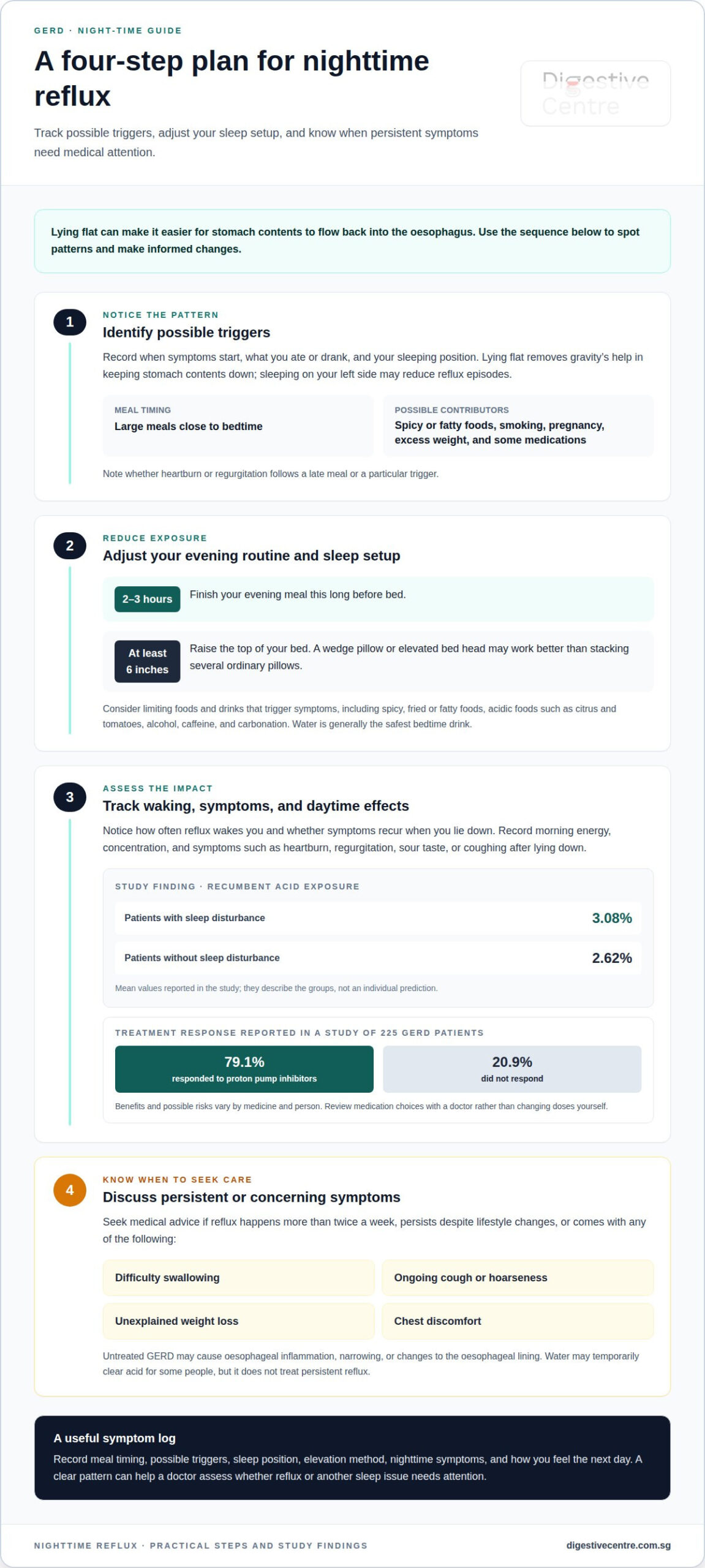
- Finish your evening meal two to three hours before bed and notice which foods or drinks tend to trigger symptoms.
- Try raising the top of your bed by at least 6 inches; a wedge pillow or elevated bed head may work better than stacking pillows.
- Pay attention to how reflux affects your sleep, concentration and daytime energy, not just nighttime discomfort.
- Seek medical advice for persistent symptoms or issues such as difficulty swallowing, ongoing cough or hoarseness, or unexplained weight loss.
Why Is Acid Reflux Worse at Night?
When you lie flat, stomach contents may flow back into the oesophagus more easily. Use these steps to identify possible triggers, reduce exposure and recognise when symptoms need medical attention.
-
Identify Causes of Nighttime Reflux
Track when symptoms start and your sleeping position. Lying flat removes gravity’s help in keeping stomach contents down, while sleeping on your left side may reduce reflux episodes. Large meals close to bedtime, spicy or fatty foods, smoking, pregnancy, excess weight and some medications may contribute. Note whether heartburn or regurgitation follows a late meal or a particular trigger.
-
Assess Nighttime Acid Exposure
Notice how often reflux wakes you and whether symptoms recur when you lie down. Frequent reflux may indicate gastroesophageal reflux disease (GERD), a chronic condition involving regular acid reflux. In a study, mean recumbent acid exposure was 3.08% among patients with sleep disturbance, compared with 2.62% among those without it. Water may temporarily clear acid for some people, but it doesn’t treat persistent reflux.
-
Review Eating and Medication Choices
Finish your evening meal two to three hours before bed. Limit spicy, fried and fatty foods, acidic foods such as citrus and tomatoes, and drinks that trigger symptoms, including alcohol, caffeine or carbonation. Water is generally the safest bedtime drink. Proton pump inhibitors reduce acid; in a study of 225 GERD patients, 79.1% responded to this treatment, while 20.9% did not. Benefits and possible risks vary by medicine and person, so review medication choices with a doctor rather than changing doses yourself.
- Seek medical advice if reflux happens more than twice a week, persists despite lifestyle changes, or comes with difficulty swallowing, an ongoing cough or hoarseness, unexplained weight loss or chest discomfort. Untreated GERD may cause oesophageal inflammation, narrowing or changes to the oesophageal lining.
Elevating the upper body during sleep
- Raise the top of your bed by at least 6 inches to reduce reflux symptoms while lying down. Elevating the upper body uses gravity to help limit stomach contents moving back towards the oesophagus. Focus on lifting the bed’s upper end, rather than changing only your head position. Make the adjustment part of your sleep setup and notice whether lying down feels more comfortable.
- Try a wedge pillow or raise the head of the bed instead of stacking several ordinary pillows. These approaches may reduce reflux more effectively than multiple pillows. A wedge supports the upper body along a slope, while raising the bed changes the sleeping surface itself. Choose one method that keeps your torso elevated through the night, rather than lifting only your head.
- Check your position after settling into bed. If you slide down or the support shifts, your upper body may no longer be elevated. Adjust the setup so your torso rests on the incline, not just your neck. Keep it consistent through the night, then note whether symptoms occur less often or still interrupt your rest.
- Assess the result over several nights by recording your sleep position, elevation method and reflux symptoms. For example, note whether heartburn occurs after lying flat, using a wedge or raising the bed head. This comparison can help you see which setup works better for you. If elevation doesn’t ease persistent symptoms, discuss them with a doctor rather than relying on positioning alone.
GERD symptoms and impact on daily life
Use the timing and nature of your symptoms to distinguish reflux-related waking from other sleep problems. This pattern can help you explain how nighttime symptoms affect your daily routine.
-
Identify GERD Symptoms
Record what you feel before bed, during the night and after waking. Common reflux symptoms include heartburn, a burning discomfort behind the breastbone, and regurgitation, when stomach contents rise into the throat or mouth. Nighttime episodes may also cause a sour taste or coughing after lying down. Note whether symptoms follow meals or ease when you sit upright.
-
Compare Symptoms With Sleep Disorders
Look for a link between waking and reflux sensations. Burning behind the breastbone, sour fluid or throat irritation may point to reflux as a trigger; waking without these symptoms may have another explanation. These patterns aren’t a diagnosis, and reflux can occur alongside a sleep disorder. Record what you experienced rather than assuming every awakening has the same cause.
- Track the next day’s effects, such as difficulty concentrating, low energy or disrupted work. In a study, the mean total GERD impact score was 23.32 among patients with sleep disturbance, compared with 13.82 among those without it. The scores show a difference in reported impact between the groups, not a prediction of any one person’s experience.
- Keep a brief log linking nighttime symptoms with daytime activities. For example, note whether heartburn woke you, how rested you felt and whether fatigue affected a meeting or routine task. Include when symptoms occurred and whether you noticed a sour taste or coughing. A clear record can help a doctor assess the pattern and consider whether reflux or another sleep issue needs attention.
How GERD affects sleep and daytime functioning
- Record nighttime waking alongside reflux symptoms and morning energy. GERD and sleep disturbances often occur together: one study classified 126 of 225 patients as having sleep disturbance. That finding describes this study group, not every person with GERD. Note whether heartburn, regurgitation or throat irritation coincides with waking, then describe the pattern during a medical assessment.
- Track specific daytime effects, such as losing focus during a meeting or feeling too tired for routine tasks. In a survey of people with frequent heartburn, more than 30% said it hurt their daytime functioning. Interrupted rest can leave less energy for work, study or daily responsibilities. A brief record helps connect nighttime symptoms with the activities they disrupt.
- Describe sleep quality and symptom intensity separately. In a study of GERD patients with sleep disturbance, the mean Pittsburgh Sleep Quality Index score was 11.50. Their mean heartburn score was 3.63, compared with 3.24 among patients without sleep disturbance. These group findings show an association, not proof that reflux alone explains each person’s poor sleep.
- Include mood and concentration changes in your symptom notes. In the same study, mean anxiety scores were 9.54 among patients with sleep disturbance and 5.56 among those without it; mean depression scores were 8.20 and 5.97, respectively. These differences don’t establish that reflux caused mood symptoms. If GERD and sleep disturbances are affecting your rest or daily life, discuss persistent reflux symptoms as part of a medical assessment.
GERD is estimated to affect 20% of adults, so sleep or daytime concerns are worth discussing even when symptoms vary from person to person.
Digestive Centre: GERD and Acid Reflux Treatment
Digestive Centre provides GERD and acid reflux treatment for people whose recurring symptoms disrupt sleep or daily activities. If lifestyle adjustments haven’t brought enough relief or reflux keeps returning, a medical discussion can help clarify suitable treatment options. Depending on your situation, options may include medical treatment or LINX for acid reflux. Gastroscopy may also be relevant when further examination of the upper digestive tract is needed.
Bring a clear account of when symptoms occur, what they feel like and how they affect rest. This helps make the discussion focused on your reflux pattern and treatment needs, rather than nighttime discomfort alone. Contact Digestive Centre to discuss persistent reflux symptoms and possible next steps.
Take the Next Step Towards More Restful Nights
Managing GERD and sleep disturbances starts with recognising when disrupted rest may be part of an ongoing reflux problem. If symptoms persist or interfere with daily life, consider a clinical assessment to discuss the pattern and suitable next steps. Understanding the possible cause can help you make informed decisions about care and sleep.
Digestive Centre provides GERD and acid reflux treatment, gastroscopy and colonoscopy, and medical weight management with GLP1s. These services address different needs, so a consultation can focus on the concerns affecting you rather than assuming one approach fits everyone.
Bring your observations about symptoms and sleep to the discussion, including what tends to happen at night and how you feel the following day. Contact Digestive Centre to discuss your next step. Better-informed care can help you move towards more comfortable nights and more restorative rest.
Frequently Asked Questions
Can acid reflux cause insomnia?
Yes, reflux symptoms can make it harder to fall asleep or stay asleep, although that isn’t the same as an insomnia diagnosis. For example, someone may wake with burning discomfort or a sour taste, then struggle to settle again. If sleep problems continue even when reflux is quiet, mention both issues during a medical assessment so other possible causes can be considered.
What Is GERD?
GERD, or gastroesophageal reflux disease, is a chronic condition in which acid reflux occurs regularly. Reflux happens when stomach contents flow back into the oesophagus, the tube connecting the mouth and stomach. Occasional reflux and persistent symptoms aren’t the same: recurring heartburn or regurgitation may warrant medical assessment, especially if symptoms keep returning or interfere with everyday activities.
How does GERD cause sleep disturbances and nighttime awakenings?
Reflux can disturb sleep when stomach contents move into the oesophagus and trigger discomfort, regurgitation or throat irritation. You might wake, sit upright, swallow repeatedly or cough before settling again. Repeated interruptions can leave you feeling unrefreshed the next morning. Note the symptom that accompanies each awakening, as this detail can help distinguish reflux-related waking from other sleep concerns.
Which lifestyle changes can reduce GERD symptoms at night?
Try adjusting your evening routine and tracking whether symptoms change. Leave time between dinner and bed, avoid foods or drinks that trigger reflux for you, and record patterns in a food and symptom diary. For example, note whether discomfort follows a late, rich meal. If changes don’t ease recurring symptoms, share the diary with a doctor to guide a discussion about further care.
What is the best sleeping position for GERD, and does raising the head of the bed help?
Sleeping on your left side may reduce reflux episodes. Raising the top of the bed can also help; an elevated bed head or wedge pillow keeps your upper body inclined. Choose a setup that supports your torso comfortably through the night, rather than placing support only beneath your head. If symptoms continue despite changing position, discuss them with a doctor.
Which medications can treat nighttime GERD, and what are their benefits and risks?
Proton pump inhibitors reduce acid, and 79.1% of GERD patients in one study responded to them. Benefits and possible risks vary by medicine and person, so review treatment with a doctor and don’t change doses yourself.
Medical disclaimer. This guide is general health information from Digestive Centre and is not a substitute for a consultation. Symptoms and treatment options differ from person to person. For advice about your own condition, book a consultation with the clinic. In an emergency, call 995.