Recurrent hernias can be harder to repair because earlier surgery may leave scar tissue and change the anatomy. Preventing hernia recurrence means limiting strain while the repair heals, managing factors that increase abdominal pressure, and returning to lifting gradually. After surgery, avoid heavy lifting for the first 6 weeks; passing that point doesn’t automatically mean every load is safe.
It’s understandable to want a clear date for returning to normal activities, especially if your work or routine involves lifting. The right pace depends on how you’re healing, the type of repair and the demands of the task. Follow your surgeon’s advice before resuming heavy or strenuous lifting.
This article explains why repeat repairs may be more complex, how excess weight and abdominal pressure can affect recurrence risk, and what to consider when returning to lifting after 6 weeks. It also covers practical ways to reduce strain, including addressing persistent coughing or constipation and building activity back up with care.
Key Takeaways
- Notice patterns that repeatedly strain your abdomen, and discuss persistent symptoms such as coughing or constipation as part of your recovery plan.
- Use the six-week point as a prompt to review your lifting duties and recovery progress, not as automatic clearance for every load.
- Previous surgery can change the anatomy and create scar tissue, making repeat repair more technically complex.
- Gradual, medically guided weight management can be part of a broader plan to reduce pressure on the abdominal wall.
1. Abdominal pressure from coughing, constipation, urinary difficulty, obesity and lifting
Repeated pressure inside the abdomen can strain a healing repair. Chronic coughing, sneezing and heavy lifting all place pressure on the abdominal wall and tissue. Persistent coughing after surgery deserves medical attention so its cause can be identified and managed. Treating allergies or other causes of coughing, and stopping smoking, can help reduce coughing and support wound healing.
Constipation can also cause straining. Support regular bowel movements with fibre-rich foods, adequate fluids and gentle activity, such as walking. If constipation continues, discuss treatment options with your doctor. Difficulty urinating may also lead to straining, so raise persistent urinary symptoms with your care team rather than repeatedly bearing down.
Excess weight adds pressure to the abdomen. A BMI over 30 increases strain on the abdominal wall, and people who are overweight or obese may face a higher recurrence risk. Gradual weight management can reduce this source of pressure over time.
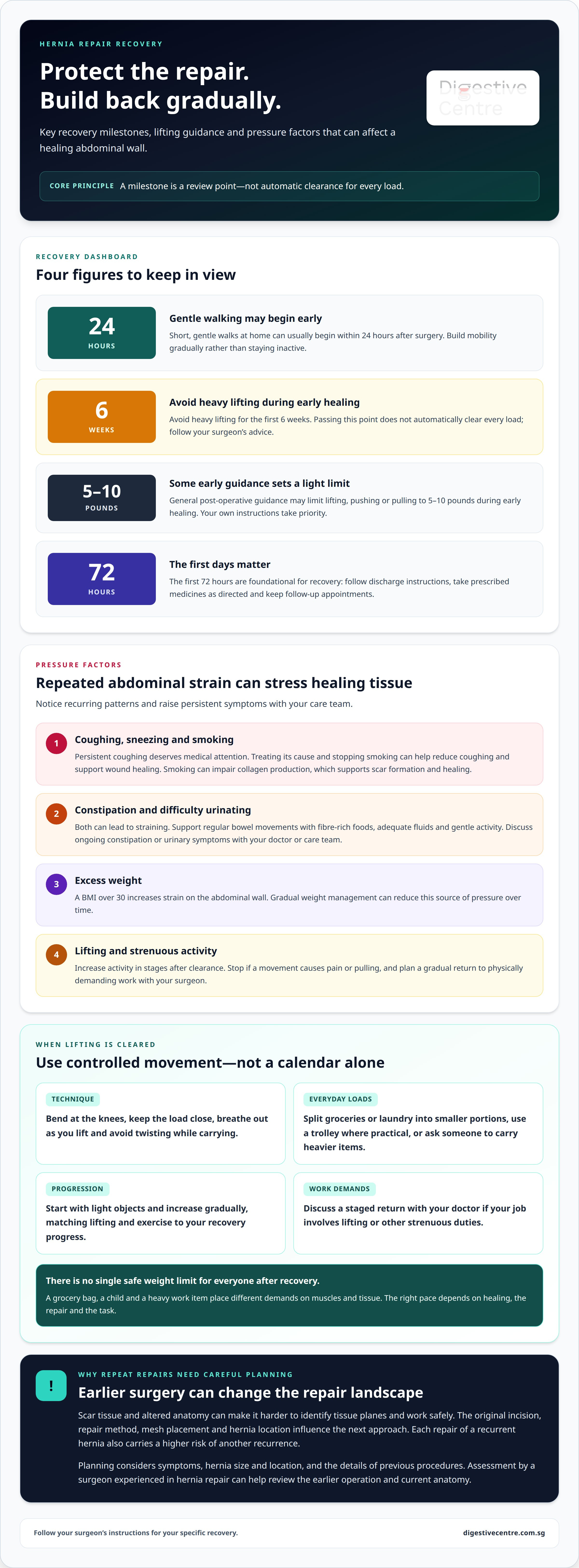
During the first 6 weeks after hernia surgery, avoid heavy lifting. Your surgeon’s instructions take priority, since healing and repair details affect when activity can increase. Short, gentle walks at home can usually begin within 24 hours after surgery; build mobility gradually rather than staying inactive.
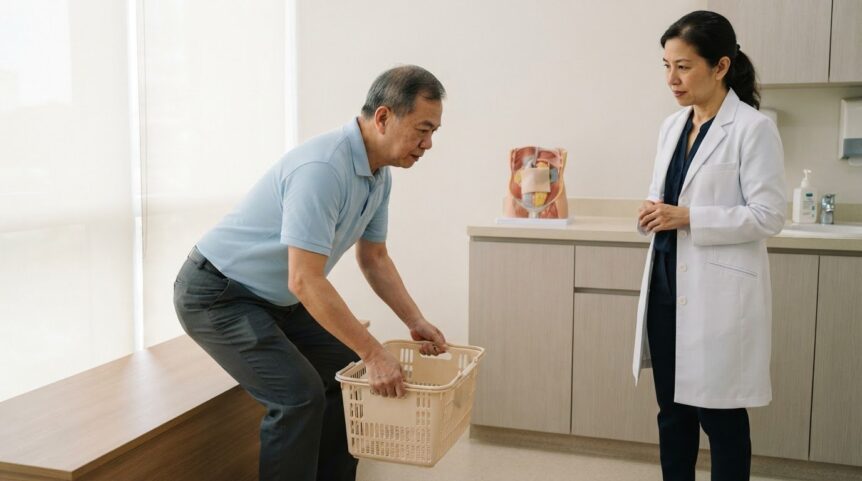
Once you’re cleared to lift, bend at the knees, keep the load close to your body and breathe out as you lift. Avoid twisting while carrying. For groceries or laundry, split loads into smaller portions, use a trolley where practical, or ask someone to carry heavier items. These steps can reduce strain but don’t replace your post-operative lifting restrictions. If lifting is part of your job, discuss a gradual return to those duties with your doctor.
2. How much weight can I safely lift after the 6-week recovery mark?
Six weeks does not automatically mean you’re cleared to lift every load. Your surgeon’s advice should reflect how the repair is healing, the operation performed and the physical demands of each task. Increase lifting gradually, starting with light objects, and stop if a movement causes pain or pulling. If your work is physically demanding, plan your return with your surgeon rather than resuming full duties at once.
There isn’t one safe weight limit for everyone after recovery. A grocery bag, a child and a heavy work item place different demands on muscles and tissue. Use controlled movements, keep loads close and avoid sudden twisting. Return to regular exercise gradually after clearance, and match strenuous lifting to your recovery progress.
A recurrent hernia may need surgery if it causes significant pain or bowel blockage, contains a large amount of tissue or intestine, or could be difficult to reach in an emergency. The surgeon considers your symptoms, the hernia’s size and location, and details of your previous repair. Scar tissue and changes from earlier surgery can affect the approach. For a repeat repair, seek assessment from a surgeon experienced in hernia repair, who can review the earlier procedure and your current anatomy.
In Singapore, recurrent hernias are treated by surgeons performing hernia repair in hospital surgical departments and specialist clinics. The appropriate surgeon and setting depend on the hernia’s location, symptoms, and complexity. Laparoscopic hernia repair is one surgical approach used to address a hernia.
Smoking can impair collagen production, which supports scar formation and wound healing. Stopping before surgery and avoiding smoking during recovery can support healing; discuss cessation support with your doctor. Gradual weight management also matters for preventing recurrence, because excess weight increases abdominal pressure. A planned return to lifting, exercise and everyday activity can help limit avoidable strain while the repair heals.
3. Are recurrent hernias more difficult to repair than first-time hernias?
Often, yes. Previous surgery can leave scar tissue and alter the anatomy around the repair, making it harder for a surgeon to identify tissue planes and work safely. The original incision, repair method, mesh placement and hernia location all influence the next approach. Each repair of a recurrent hernia also carries a higher risk of another recurrence, so planning takes account of both the current defect and the history of earlier procedures.
Protect the repair during early recovery by following the surgical team’s instructions, especially through the first weeks and early months. General post-operative guidance may limit lifting, pushing or pulling to 5-10 pounds during early healing. Avoid strenuous activity until your surgeon clears you. Returning too soon, or using poor exercise technique, can place unnecessary stress on healing tissue.
The first 72 hours after the procedure are foundational for recovery. Follow discharge instructions, take prescribed medicines as directed, and keep follow-up appointments. Contact your doctor about new or unusual symptoms, such as a new bulge or worsening discomfort. A lump can have other causes, but assessment helps determine whether the repair needs attention.
Begin core strengthening only after your surgeon approves exercise. Depending on your healing, recovery movements may include deep breathing, pelvic floor contractions and gentle core twists. Start gradually, use controlled technique and stop if an exercise causes pain or pulling. Don’t assume a familiar movement is automatically safe: your procedure and symptoms affect the right progression.
After clearance, build up activity in stages rather than returning straight to intense exercise. Pair gentle movement with recovery measures, such as attending scheduled reviews and managing conditions that cause repeated abdominal strain. If you smoke, discuss cessation support with your doctor, since smoking can impair wound healing. Steady weight management and a gradual return to physical activity can support the repair without overloading it.
4. Weight management and recurrence prevention
Weight management can support recovery because excess abdominal weight increases pressure around the repair. Aim for gradual change under medical supervision rather than a rapid diet or strenuous exercise while healing. A clinician can tailor a plan to your recovery, nutrition and activity level, then adjust it as you become more active. A sustainable approach to preventing hernia recurrence can continue after the incision has healed.
Consistency matters beyond the initial recovery period. A balanced diet, regular exercise after healing and maintaining a healthy weight can help reduce recurrence risk. Start with activity approved by your surgeon, then build duration or intensity gradually. Don’t treat exercise as a quick weight-loss fix while the repair is still healing.
Weight changes can affect the abdominal wall over time. Sudden weight gain may stretch tissue and jeopardise a previous repair, while a hernia may return months to years after surgery. About one in six people need another hernia repair within 10 years of their original treatment. These considerations make steady habits relevant well after the incision has healed.
For a practical plan, choose balanced meals, continue gentle activity approved for your recovery stage and discuss weight trends with your healthcare team. If pain or other symptoms limit movement, ask about suitable alternatives instead of pushing through discomfort. Addressing factors that make activity difficult can help you maintain a routine. These steps contribute to preventing hernia recurrence without relying on rapid changes.
Medical weight management may offer structured support alongside lifestyle changes. The approach should account for healing, current health and the hernia treatment received. Weight management is one part of recurrence prevention, not a substitute for follow-up or assessment of a new bulge or symptoms. For structured support, explore medical weight management as part of a broader health plan.
Digestive Centre: Laparoscopic Hernia Repair
Digestive Centre provides laparoscopic hernia repair for people who need assessment and surgical treatment for a hernia. If you notice a new bulge, ongoing discomfort or symptoms near an earlier repair, seek a clinical evaluation to understand the cause and discuss suitable next steps. A recurrent hernia can involve scar tissue and altered anatomy, so assessment considers your previous operation and current symptoms.
Laparoscopic hernia repair uses small incisions to close the hernia opening and reinforce the weakened area with mesh. Whether surgery is appropriate depends on factors such as the hernia’s size, location and symptoms, as well as your surgical history. Your recovery plan should also address lifting, activity and weight management to support healing and reduce avoidable strain.
For an assessment of hernia symptoms or to discuss laparoscopic repair, contact Digestive Centre.
Take a clear next step for your recovery
A practical approach to preventing hernia recurrence is one you can sustain beyond the initial healing period. At your next review, consider what you want to return to, such as work duties, exercise or everyday lifting. Sharing these priorities can help shape a recovery plan around your routine and the repair you’ve had.
If you notice a new bulge or changing symptoms, arrange an assessment rather than trying to judge the cause yourself. Details of your previous operation and current concerns can help guide the discussion about appropriate care. You can also raise questions about progressing your activity and managing your weight.
Contact Digestive Centre to discuss your hernia and the next step that fits your needs. A thoughtful plan can help you move forward with greater clarity and confidence.
Frequently Asked Questions
Are recurrent hernias more difficult to repair than first-time hernias?
Yes. A repeat operation can be more technically complex because scar tissue from earlier surgery may obscure tissue planes and alter the anatomy. The surgeon considers the previous approach, hernia location and any mesh already present. If the first repair was open, laparoscopic or robotic-assisted surgery may be considered, depending on the case. A new lump still needs assessment before assuming the repair has failed.
What Are the Signs That a Hernia Has Returned?
A new bulge near the previous repair, discomfort or pain during activity can suggest recurrence, but a lump alone doesn’t prove it. Scar tissue or fluid can look similar. Seek prompt assessment for new or unusual symptoms, even if a bulge is difficult to see. Severe pain warrants calling 995; bowel stoppage with vomiting requires emergency department care.
Can chronic allergies or hay fever cause a hernia to recur?
Allergies or hay fever don’t directly cause a recurrent hernia, but repeated coughing and sneezing can put force on a healing repair. If symptoms trigger frequent coughing, discuss ways to manage the underlying allergy with a doctor. Persistent coughing after surgery also deserves assessment, since treating its cause can reduce repeated strain on the abdominal wall.
Can the Risk of Recurrence Be Reduced?
Yes. Follow-up care, gradual activity and managing factors that strain the repair can help reduce avoidable risk. The patient guides, service descriptions and other health content on this website are general information… they are not medical advice, they do not create a doctor-patient relationship, and they are not a substitute for a consultation with a doctor who knows your history. Discuss your recovery plan with a qualified doctor.
Does having one recurrent hernia mean it will keep coming back?
No. A recurrence doesn’t mean another is inevitable, although each repair of a recurrent hernia carries a higher risk of another recurrence. The next steps depend on factors such as the hernia’s size and location, previous operations, healing and ongoing abdominal strain. Attend follow-up appointments and report changing symptoms so the repair can be assessed and care adjusted if needed.
Does the type of mesh used affect the chances of a hernia coming back?
Mesh can affect recurrence compared with repair using tissue alone. For incisional hernia repairs, reported recurrence rates are 39.4% with tissue alone and 14.6% with mesh. These figures compare mesh with tissue-only repair, not one mesh material or design with another. The surgeon considers the hernia’s size and previous operations when deciding whether mesh is appropriate and how to reinforce the repair.
Medical disclaimer. This guide is general health information from Digestive Centre and is not a substitute for a consultation. Symptoms and treatment options differ from person to person. For advice about your own condition, book a consultation with the clinic. In an emergency, call 995.