
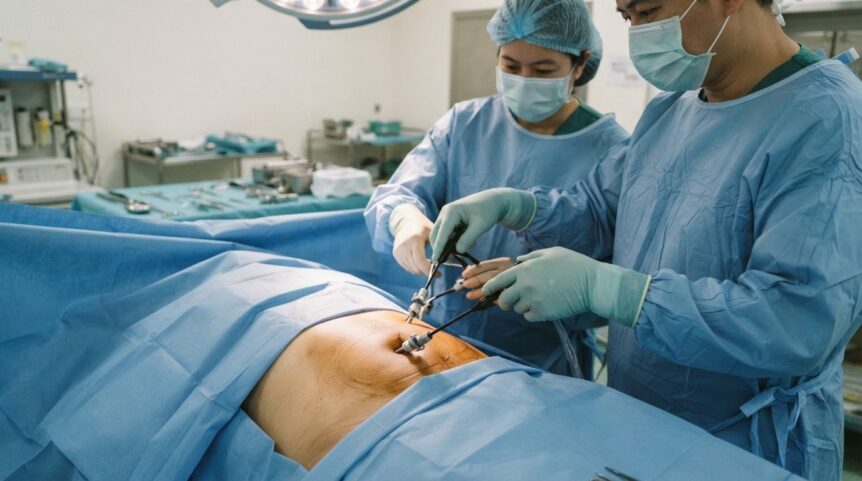
Umbilical hernias are three times more common in women, particularly around pregnancy. In adults, they rarely close without surgery, although a small hernia that causes no symptoms may sometimes be monitored. When repair is recommended, the approach depends on the hernia and the person’s health.
A bulge near your navel can raise understandable questions about treatment. This guide explains what umbilical hernia repair in adults involves, including how surgeons assess a hernia and how open suture repair differs from mesh repair.
You’ll also learn what recovery may involve and when a hernia needs prompt medical attention. This information can help you understand the options and prepare for a discussion with your surgeon.
Key Takeaways
- Understand how hernia size, symptoms and health can shape the choice between open and laparoscopic repair.
- Learn why surgeons may recommend mesh for larger defects and how it differs from closing the opening with stitches alone.
- Plan for a gradual return to work and activity, with full recovery potentially taking two to four weeks.
- Recognise changes such as worsening pain, vomiting or a bulge that will not go back in as reasons to seek prompt medical care.
Who Gets an Umbilical Hernia?
An adult umbilical hernia occurs when tissue pushes through a weak area in the abdominal wall near the navel. Pregnancy and excess weight are associated with adult cases, while abdominal muscles can weaken with age. Umbilical hernias are three times more common in women, particularly around pregnancy. Over 60 years, they are equally common in men and women.
Surgery is generally considered when an adult hernia enlarges or becomes painful. A small hernia without symptoms may sometimes be monitored rather than repaired immediately, since adult hernias rarely close without surgery. Seek immediate medical care if a painful bulge does not shrink when you lie down or cannot be pushed back in.
Open and laparoscopic repair use different routes to reach the weak area. In open surgery, the surgeon accesses the hernia through an incision near the navel. Laparoscopic, or keyhole, repair uses several small cuts for a viewing scope and surgical instruments. Laparoscopic repair uses general anaesthesia; smaller open procedures may use local or spinal anaesthesia.
Neither approach suits every hernia. Laparoscopic repair may be preferred for hernias larger than 4 cm, while the defect and a person’s health help guide the choice. For an average patient, reported pneumonia risk is 0.1% after open surgery and 0.2% after laparoscopic surgery. These figures describe pneumonia, not every possible complication or an individual’s overall risk.
Smoking cessation for 4-6 weeks before elective repair is advised. Weight loss to a BMI below 35 is also advised before elective repair. In Singapore, MediSave use and private insurance benefits depend on eligibility and policy terms. Review the applicable coverage before scheduling surgery.
Open suture repair and mesh repair
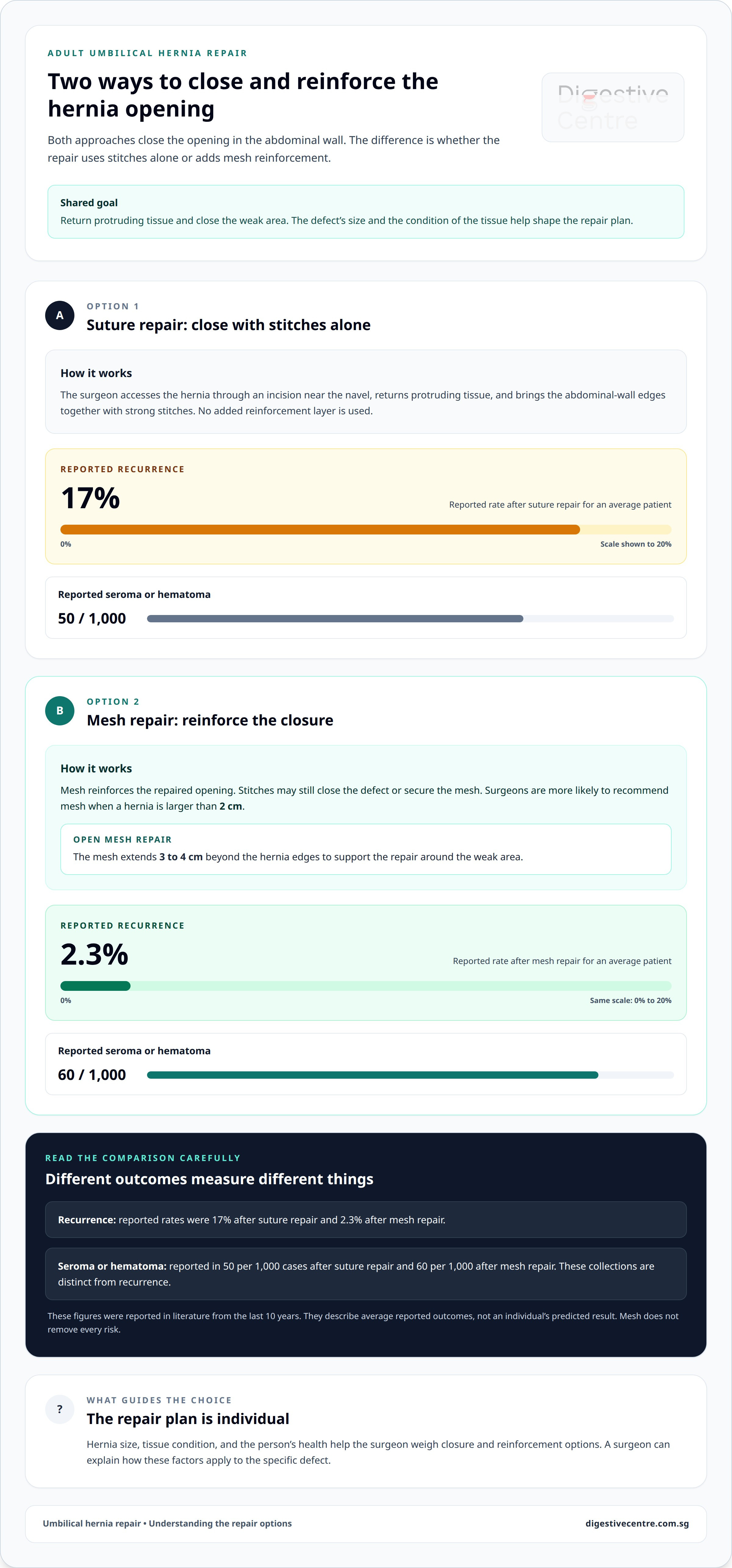
Both approaches close the opening in the abdominal wall. They differ in how the weak area is reinforced and in the risk of recurrence.
Suture Repair Without Mesh
In open suture repair, the surgeon accesses the hernia through an incision near the belly button. They return protruding tissue and close the opening with strong stitches. The stitches bring the edges of the abdominal wall together directly. This non-mesh method leaves out an added reinforcement layer. Understanding that distinction helps clarify what the repair uses to support the closure.
Mesh Use in Repair
Mesh reinforces the repaired opening, while stitches can still close the defect or secure the mesh. Surgeons are more likely to recommend mesh for a hernia larger than 2 cm. In open mesh repair, the material extends 3 to 4 cm beyond the hernia edges. That overlap supports the repair around the weak area.
Recurrence figures differ between the methods. For an average patient, reported rates are 17% after suture repair and 2.3% after mesh repair. These outcomes were reported in the last 10 years of literature. They compare average results, rather than predicting what will happen for one person. Defect size and tissue condition help shape the repair plan.
Mesh does not remove every risk. Seroma or hematoma is reported in 50 per 1,000 cases after suture repair and 60 per 1,000 after mesh repair. These figures are outcomes reported in the last 10 years of literature. Such collections differ from recurrence, so both potential benefits and complications matter when discussing the approach.
A surgeon can explain how the defect informs the choice. For information about the laparoscopic hernia repair approach, explore the procedure details.
Recovery and return to work or activities
Full recovery after hernia surgery may take two to four weeks. Some people return to office work within a few days, while most return to light work within a week. Driving is usually safe after a week, once pain is minimal and you can move with control.
Resume activities gradually. Avoid heavy lifting and strenuous exercise until your surgeon advises that it is safe to resume them. Light activities and exercise can usually resume after a couple of weeks, following medical advice. Walking 5 to 6 times per day after surgery helps reduce the risk of venous thrombosis.
After general anaesthesia, don’t drive, drink alcohol, use machinery or make important decisions for 24 hours. Contact your surgeon for fever or chills, wound redness, swelling or discharge, persistent or worsening pain, or nausea and vomiting. A fever over 101°F or 38.3°C warrants contacting the surgeon.
Before surgery, seek immediate medical care for a painful hernia, or a bulge that does not shrink when you lie down or cannot be pushed back in. After surgery, contact your surgeon if you have no bowel movement for three days. These symptoms need prompt attention rather than waiting for a routine follow-up.
Hernias can recur after repair, although recurrence risk is very low in healthy people. To support recovery, follow the surgeon’s activity limits and attend follow-up as advised. Smoking cessation for 4-6 weeks before elective repair and weight loss to a BMI below 35 are advised before elective repair. These measures help prepare for surgery; they don’t guarantee that a hernia won’t return.
Incisions usually heal in around two weeks, while scars can continue to soften and fade for up to a year. Healing takes time, so monitor the wound and report changes such as increasing redness or discharge.
What adult umbilical hernia repair involves
Planning umbilical hernia repair in adults begins with assessing the defect, symptoms and health history. These details help the surgeon choose an approach and plan anaesthesia. Surgery typically takes 30 to 60 minutes. Most repairs are outpatient procedures, so patients usually go home the same day. A very large hernia may require a short hospital stay.
For laparoscopic repair, the surgeon makes several small incisions in the abdomen. A viewing scope and surgical instruments pass through these openings to access and repair the hernia. General anaesthesia is used for this approach. Laparoscopic repair may be preferred for hernias larger than 4 cm.
Open surgery uses an incision near the navel to reach the defect directly. The surgeon returns protruding tissue and closes the opening with strong stitches, adding mesh reinforcement when appropriate. Open surgery usually takes about 30 to 45 minutes. Local or spinal anaesthesia may be used for smaller open procedures.
Before umbilical hernia repair in adults, follow the fasting instructions provided for surgery. The stated guidance is to fast for 6 hours beforehand. The repair method and anaesthesia shape the care plan. After surgery, the team monitors the patient before discharge. Healing continues at home, with full recovery potentially taking two to four weeks.
In Singapore, the cost depends on the case, hospital setting, repair method, anaesthesia and length of stay. The applicable price is provided after a quote request. For a discussion of the surgical approach, enquire about laparoscopic hernia repair.
Scars after keyhole umbilical hernia repair are usually 0.5 to 1cm long. Patients often return home the same day; a very large hernia can require a short hospital stay.
Digestive Centre: Laparoscopic Hernia Repair
Digestive Centre provides laparoscopic hernia repair for adults considering surgery. If a hernia is painful, enlarging or affecting daily activities, a consultation can help clarify the repair approach and what the procedure involves. You can discuss how the hernia, your symptoms and health history inform treatment planning, as well as recovery and follow-up.
Keyhole surgery uses small incisions to access the hernia with a viewing scope and surgical instruments. It is one repair option, not the right choice for every hernia. Understanding alternatives, including open repair and mesh reinforcement, can help you take part in an informed discussion about your care.
For information about laparoscopic hernia repair, contact Digestive Centre to discuss your next steps.
Take the Next Step with Clarity
A consultation can help turn general information into a plan that reflects your symptoms, health history and daily needs. Before deciding, consider what matters most to you: relief from discomfort, returning to work, or understanding the surgical options. These priorities can guide a focused discussion and help you raise the questions that matter.
For umbilical hernia repair in adults, useful questions include how the proposed approach suits the hernia’s location and size, what alternatives are reasonable, and what recovery concerns to discuss. You can also ask about personal factors that may affect preparation or healing. The goal is an informed decision, without pressure to proceed before you feel ready.
Digestive Centre provides laparoscopic hernia repair. If you’re considering treatment, arrange a conversation with Digestive Centre. You may find it helpful to note what activities affect your symptoms and what concerns you most about surgery or recovery. Share what matters in your daily routine, then decide on a next step with greater clarity.
Frequently Asked Questions
What are the steps involved in adult umbilical hernia repair?
The surgeon assesses the hernia and plans the approach and anaesthesia. During surgery, protruding tissue is returned and the abdominal wall defect is closed, with mesh reinforcement when appropriate. After the operation, the care team monitors you before discharge or a hospital stay. The patient guides, service descriptions and other health content on this website are general information… they are not medical advice, they do not create a doctor‑patient relationship, and they are not a substitute for a consultation with a doctor who knows your history.
How do open and laparoscopic umbilical hernia repair compare?
Open repair reaches the defect through an incision near the navel; laparoscopic repair uses several smaller incisions for a camera and instruments. The access route determines incision placement, while the hernia and your health help guide the choice. Laparoscopic repair uses general anaesthesia. Smaller open procedures may use local or spinal anaesthesia. Neither approach is automatically best for every adult.
When is mesh used for adult umbilical hernia repair, and how effective is it?
Mesh reinforces the abdominal wall around the repaired opening and is more commonly recommended for larger defects. Depending on the repair, stitches close the defect or secure the mesh. Compared with suture-only repair, mesh repair has a lower reported recurrence rate. Fluid or blood collections, called seroma or haematoma, are possible after either method.
How long does recovery take after umbilical hernia repair, and when can patients return to work or exercise?
Full recovery commonly takes two to four weeks, though the return to routine depends partly on job demands and healing. Office workers may resume work within a few days, while light work often resumes within a week. Avoid heavy lifting and strenuous exercise for 2-4 weeks, or until cleared by the surgeon. Light exercise can usually restart after a couple of weeks, guided by medical advice.
How much does adult umbilical hernia repair cost in Singapore, including public and private hospitals?
The total depends on the hospital setting, repair method, anaesthesia and length of stay; a quote provides the applicable price.
Medical disclaimer. This guide is general health information from Digestive Centre and is not a substitute for a consultation. Symptoms and treatment options differ from person to person. For advice about your own condition, book a consultation with the clinic. In an emergency, call 995.