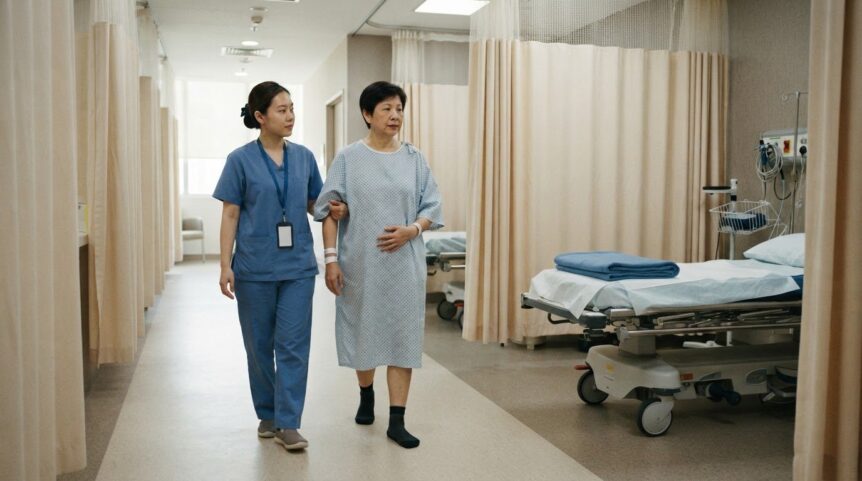
Feeling very gassy after a colonoscopy can be uncomfortable, but it’s common and usually short-lived. Air used to expand the colon during the procedure can cause bloating and cramps; most of it passes within 12–24 hours, and discomfort should generally settle within 24 hours. For post-colonoscopy bloating and gas relief, gentle movement and letting gas pass may help.
It’s understandable to wonder whether persistent bloating is still part of recovery. This guide explains why gas happens after a colonoscopy, how long it may last, and what may ease mild discomfort.
You’ll also learn when ongoing or worsening symptoms need medical attention, including signs that should not be dismissed as ordinary gas.
Key Takeaways
- Air used during the procedure commonly causes temporary gas and bloating as it leaves the colon.
- Gentle movement and passing gas when you feel the urge may help ease pressure and cramps.
- Notice how symptoms change over the first day, since discomfort that persists or worsens may need medical attention.
- Seek prompt care for severe pain, fever, vomiting, heavy bleeding, or difficulty passing gas.
1. Bloating and gas caused by air used to inflate the colon
During a colonoscopy, air is introduced into the colon to open its walls so the endoscopist can examine the lining. Some air may remain afterwards, stretching the bowel and causing pressure, fullness, visible bloating or mild cramps. The sensation may shift as air moves through the bowel and ease when you pass wind. These effects are common after the procedure.
Most gas from the procedure passes within 12–24 hours, and air-related bloating should settle within 24 hours. Gentle movement, such as walking around your home, may help air move through the bowel. Changing position can also ease pressure. For practical post-colonoscopy bloating and gas relief, let gas pass when you feel the urge instead of holding it in. Inability to pass gas alongside worsening pain needs prompt attention.
Don’t start simethicone or another medicine unless your discharge instructions or clinician recommends it. If your instructions don’t cover a medicine, contact your endoscopy team before taking it. This is safer than assuming a product is suitable after your procedure.
Once your doctor approves eating, begin with light food after bowel preparation. If you feel well, you can generally return to regular meals on day two, starting with small portions. You may also reintroduce coffee or tea on day two if tolerated. Drink fluids and include fibre, such as wholemeal bread or fruit. Too much fibre without enough fluids can contribute to bloating.
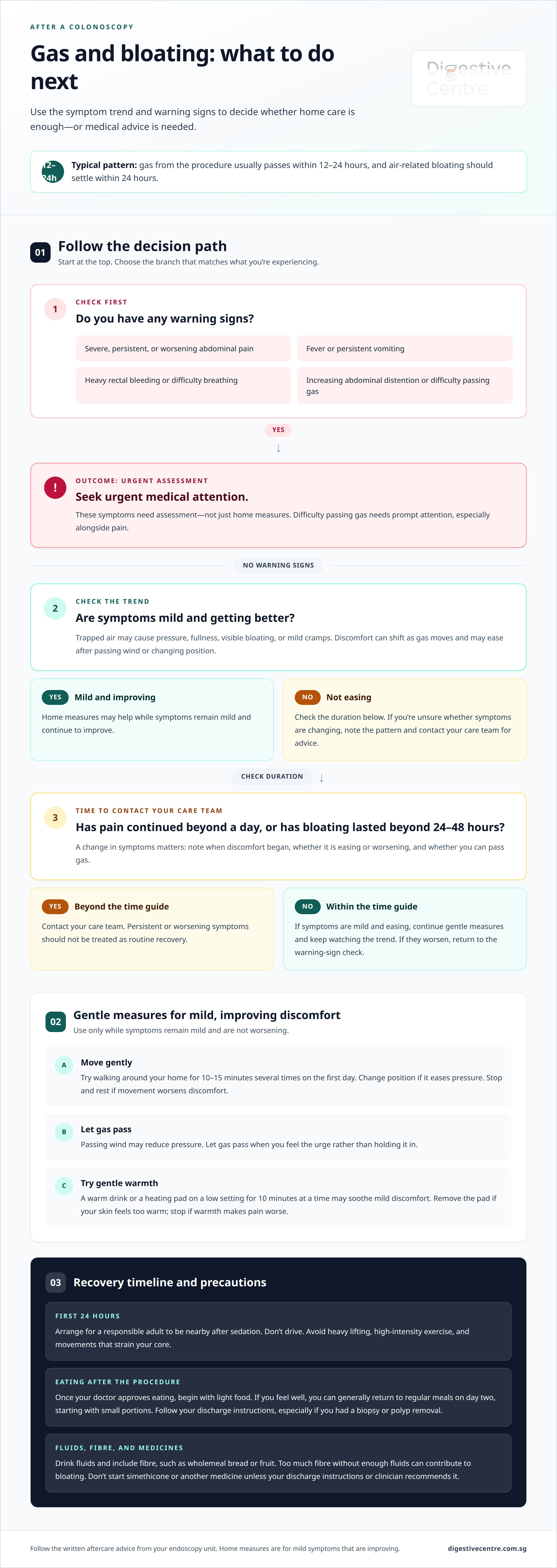
Seek urgent medical attention for severe, persistent or worsening abdominal pain, fever, persistent vomiting, heavy rectal bleeding or difficulty breathing. These symptoms need assessment, not just home measures. If you’re unsure whether your symptoms are changing, note when they began and whether they’re worsening. This information can help your care team advise you about post-colonoscopy bloating and gas relief.
2. Why does my abdomen hurt after a colonoscopy?
After a colonoscopy, trapped air can stretch the bowel and cause pressure or cramping. The discomfort may come in waves as gas shifts, then ease after you pass wind or change position. Mild cramps and brief spotting can also occur, particularly after a polyp is removed. Note whether the pain is easing or worsening, since that change helps distinguish routine discomfort from symptoms needing attention.
For gentle relief, walk around your home for 10–15 minutes several times on the first day. Passing gas when you feel the urge can reduce pressure, so don’t try to hold it in. A warm drink or a heating pad on a low setting for 10 minutes at a time may also soothe discomfort. Stop if movement or warmth makes the pain worse.
In Singapore, follow the written aftercare advice from your endoscopy unit. Once your doctor approves eating, start with light food. If you feel well, you can generally move towards regular meals on day two, beginning with small portions. Follow your discharge instructions about medicines and food, especially if you had a biopsy or polyp removal.
Sedation affects safety after the procedure, even if you feel alert. Arrange for a responsible adult to be nearby during the first 24 hours, and don’t drive for 24 hours. Avoid heavy lifting, high-intensity exercise, and movements that strain your core during that period. These precautions reduce avoidable strain while you recover.
Severe, persistent, or worsening abdominal pain, fever, persistent vomiting, heavy rectal bleeding, or difficulty passing gas needs urgent medical attention. If discomfort continues beyond a day, contact your care team. For concerns related to a colonoscopy, you can arrange a review through colonoscopy care.
3. How long bloating and discomfort may last
Gas-related bloating after colonoscopy usually fades within a day as air leaves the bowel. Most people feel back to normal within 24 to 48 hours after the procedure. Mild cramps may come and go, particularly before passing wind. Notice whether discomfort is easing over time or becoming more intense. That trend can help distinguish expected recovery from symptoms that need medical attention.
Passing wind can lower pressure by releasing trapped air. Try changing position or taking a gentle walk around your home. On the first day, short walks of 10–15 minutes several times may help gas move through the colon. Don’t force movement or strain; stop and rest if walking worsens discomfort. These simple steps can support post-colonoscopy bloating and gas relief while your bowel settles.
A heating pad on a low setting may soothe mild discomfort. Apply it for 10 minutes at a time, and remove it if your skin feels too warm. Heat can ease cramps, but it won’t address pain from another cause. Follow any different instructions you received after the procedure, especially if tissue was sampled or a polyp was removed. Use warmth only for mild symptoms that are not worsening.
Contact your care team if pain continues beyond a day or bloating lasts beyond 24–48 hours. Seek urgent medical attention for severe or worsening abdominal pain, fever, persistent vomiting, heavy rectal bleeding, or increasing abdominal distention. Difficulty passing gas also needs prompt attention, especially alongside pain. For post-colonoscopy bloating and gas relief, home measures are appropriate only while symptoms remain mild and improve. Worsening symptoms call for assessment rather than more self-care.
4. Persistent bloating after colonoscopy
Gas from colonoscopy usually eases as air passes through the bowel. Bloating that persists beyond 24–48 hours, worsens, or comes with increasing abdominal distention needs medical attention. Track when the discomfort began, whether it is changing, and whether you can pass gas. These details help your doctor assess the pattern rather than treating ongoing symptoms as routine recovery.
For mild symptoms that are improving, try changing position or taking a gentle walk around your home. Passing wind may ease pressure, and a warm drink may help settle discomfort. Choose gentle meals and drink fluids. Avoid adding large amounts of fibre without enough fluids, as this can worsen bloating. Don’t rely on home measures if pain is severe or symptoms are getting worse.
Ordinary trapped gas often shifts or eases after you pass wind. But the sensation of gas alone cannot rule out a complication such as perforation. Severe or worsening abdominal pain, fever, persistent vomiting or increasing distention requires urgent medical assessment, especially if you cannot pass gas.
Seek urgent care for heavy rectal bleeding, black or red stools, difficulty breathing, or vomiting that won’t stop. Contact your care team for persistent abdominal pain, fever, or blood clots continuing from the rectum. Symptoms that last beyond 24–48 hours deserve follow-up, even without severe pain. A doctor can assess your symptoms and decide whether further examination is needed.
If bloating continues or warning symptoms appear, arrange a clinical review rather than extending home care.
Digestive Centre: Gastroscopy and colonoscopy
Digestive Centre provides gastroscopy and colonoscopy for digestive assessment. If bloating continues beyond the expected recovery period, or symptoms return after initially easing, a clinical review can help determine what evaluation is appropriate. Tell the clinician when the discomfort started, whether it is worsening, and whether you have other symptoms, such as fever, vomiting or bleeding. This information helps guide the discussion and next steps.
Severe or worsening pain, persistent vomiting, fever, heavy bleeding or difficulty breathing requires urgent medical attention, not a wait for a routine appointment. For ongoing concerns after a colonoscopy, contact Digestive Centre to discuss your symptoms and care options.
Choose a clear next step for your recovery
Recovery is easier to navigate when you know what to do next. If symptoms are settling, follow your discharge advice and give your body time to recover. If discomfort lingers or changes, avoid guessing at the cause or adding treatments without guidance. Personalised advice can help you understand whether your symptoms fit the expected recovery pattern and what assessment may be appropriate. That support can be part of post-colonoscopy bloating and gas relief, especially when uncertainty makes it harder to feel comfortable.
Before speaking with a clinician, keep your discharge instructions nearby and note what has changed since the procedure. This can help focus the discussion on your concern and a suitable next step. Seek urgent care for severe or worsening symptoms rather than waiting for a routine review.
For support with ongoing digestive concerns, contact Digestive Centre. A clear plan can help you move forward with greater confidence.
Frequently Asked Questions
What if I feel very gassy?
If you feel very gassy, note whether pressure eases after passing wind and whether your abdomen becomes more swollen. Contact your care team if symptoms persist beyond 24–48 hours or worsen. Severe pain, fever, vomiting, heavy bleeding, or inability to pass gas needs urgent care. In Singapore, call 995 or go to the nearest Accident & Emergency department for emergencies.
Why does my abdomen hurt after a colonoscopy?
Abdominal pain can result from air stretching the bowel. Tissue sampling or polyp removal may also be followed by mild cramps. Notice whether discomfort is easing or worsening, and tell the clinician what was done during the procedure. Severe or worsening pain, especially with fever or vomiting, needs prompt medical assessment rather than continued home care.
How long do bloating and gas usually last after a colonoscopy?
Bloating and gas usually settle within 24 hours, while most people feel back to normal within 24 to 48 hours. If symptoms remain after that period, note whether they are improving, unchanged, or worsening, and contact your care team if they persist. Don’t assume prolonged or worsening discomfort is simply part of recovery.
What causes bloating and trapped gas after a colonoscopy?
Air is introduced during colonoscopy to expand the colon and help the endoscopist see its lining. Any air that remains can stretch the bowel and create pressure until it passes. Bowel preparation can also temporarily change bowel habits, including causing constipation or diarrhoea for a few days. Don’t automatically attribute persistent bloating to retained air alone.
Does walking help relieve gas after a colonoscopy?
Yes, gentle walking can help move retained air through the bowel. Try an easy walk around your home rather than a workout, and pause if movement increases pain or makes you feel unwell. Passing wind during or after a walk is a normal way for pressure to ease. Follow your procedure team’s instructions about activity during recovery.
Is it safe to use a heating pad for post-colonoscopy gas pain?
A heating pad on a low setting may help mild discomfort; use it for 10 minutes at a time and stop if pain worsens. Follow different instructions from your endoscopy team, particularly after tissue removal. The patient guides, service descriptions and other health content on this website are general information… they are not medical advice, they do not create a doctor‑patient relationship, and they are not a substitute for a consultation with a doctor who knows your history.
Medical disclaimer. This guide is general health information from Digestive Centre and is not a substitute for a consultation. Symptoms and treatment options differ from person to person. For advice about your own condition, book a consultation with the clinic. In an emergency, call 995.