
Portion control after bariatric surgery is about more than eating less. After the initial diet stages, many patients eventually eat about ½ to 1 cup of food per meal; early portions are much smaller. Adjusting to smaller portions after a weight loss procedure also means learning how to eat slowly, prioritise protein and recognise comfortable fullness.
It’s understandable if smaller meals feel unfamiliar or you’re unsure how often to eat. This guide covers four practical questions: how much to eat, what makes a healthy portion, how meal frequency may change, and how portion control supports weight loss. Learn how to approach each meal in a way that supports nutrition as you adjust to a smaller stomach capacity.
Key Takeaways
- Portion needs change as recovery progresses; use your post-surgery eating plan to guide how much you serve.
- Prioritise protein and eat slowly so you can notice fullness before continuing.
- Meal frequency may shift over time as you adapt to a smaller stomach capacity.
- Consistent portions can support weight-management goals; practical tools can help you stay mindful at meals.
1. How Much Should I Eat After Bariatric Surgery?
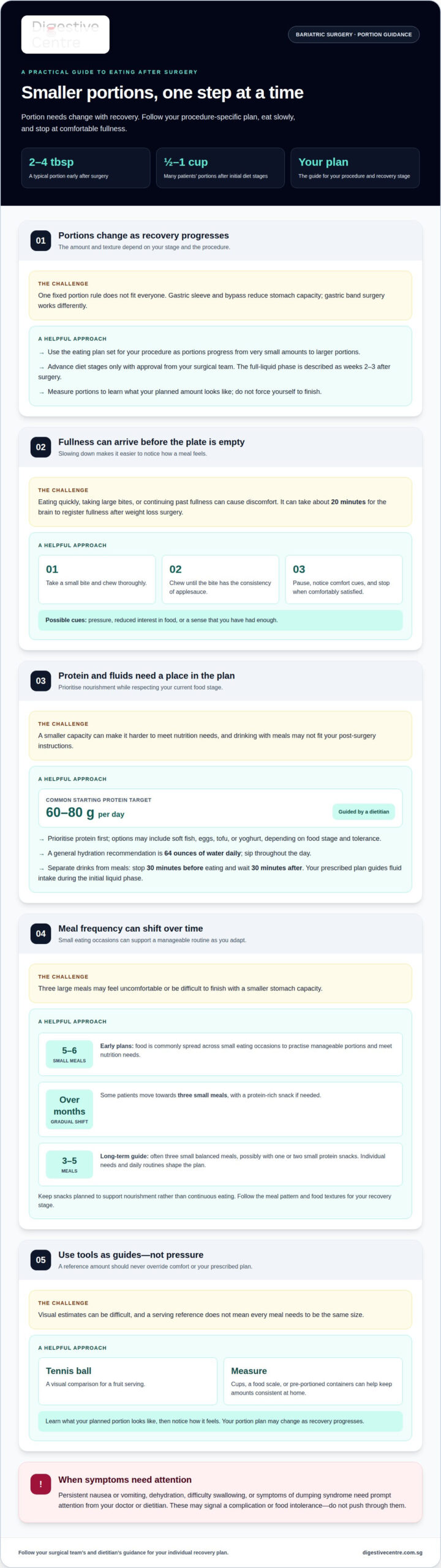
Portions depend on your recovery stage and the procedure. Early after surgery, a typical portion may be just 2–4 tablespoons. After the initial diet stages, many patients eventually eat about ½ to 1 cup per meal. Gastric sleeve and gastric bypass reduce stomach capacity; gastric band surgery has different mechanics. There isn’t one portion guideline that fits all three, so follow the eating plan set for your procedure.
Protein supports recovery and helps preserve lean muscle. A common starting target is 60–80 grams per day, guided by a dietitian. Prioritise protein first at each meal, then try other foods as your plan allows. Suitable choices may include soft fish, eggs, tofu or yoghurt, depending on your current food stage and tolerance. Measuring portions can help you keep track without forcing yourself to finish food.
Portions and food textures change as recovery progresses. According to the Ministry of Health Singapore, the full-liquid phase is described as weeks 2–3 after surgery. Don’t advance to another diet stage without approval from your surgical team. Once you reach later stages, increase variety and portion size according to your plan, stopping when comfortably satisfied.
For hydration, a general recommendation after bariatric surgery is 64 ounces of water daily. Sip fluids throughout the day, and separate drinking from meals by stopping 30 minutes before eating and waiting 30 minutes afterward. Your prescribed plan should guide fluid intake during the initial liquid phase.
Eating too quickly, taking large bites or continuing past fullness can cause discomfort and make smaller portions harder to manage. Persistent nausea or vomiting, dehydration, difficulty swallowing or symptoms of dumping syndrome need prompt attention from your doctor or dietitian. These symptoms may signal a complication or food intolerance rather than ordinary adjustment, so don’t push through them.
Sleeve and bypass surgery reduce stomach capacity, while gastric band surgery works differently, so portion needs depend on the procedure. Follow your procedure-specific plan as portions progress from very small amounts early in recovery to larger portions later.
2. What Is a Healthy Portion Size?
A portion is the amount of food placed on your plate; a serving is a defined amount. After surgery, a healthy portion fits your current eating plan and feels comfortable, rather than matching a fixed visual target for everyone. For example, a fruit serving is about the size of a tennis ball. This comparison can help you estimate food without assuming every meal needs the same amount.
Eat slowly and chew each bite thoroughly, following your post-surgery instructions. Try taking a small bite, putting down your utensil and finishing chewing before taking another. After surgery, chew each bite until it has the consistency of applesauce before swallowing. A slower pace can help you notice changes in comfort while eating.
Fullness may arrive before your plate is empty. It can take about 20 minutes for the brain to register fullness after weight loss surgery, so eating quickly may make it easier to consume more than feels comfortable. Pause during the meal and notice cues such as pressure, reduced interest in food, or a sense that you’ve had enough. Stop when comfortably satisfied, not uncomfortably full.
Visual estimates are useful, but measuring cups, a food scale or pre-portioned containers can help keep amounts consistent at home. Use them to learn what your planned portion looks like, then notice how that amount feels. A serving guide is a reference, not a reason to eat through discomfort. Your portion plan may also change as you move through recovery stages.
If fullness cues are difficult to interpret or eating regularly causes discomfort, discuss your eating pattern during follow-up care. Review portion guidance as part of building a sustainable routine that supports nutrition and progress.
3. Adjusting meal frequency to smaller stomach capacity
After bariatric surgery, a smaller stomach capacity can make three large meals uncomfortable or difficult to finish. Early eating plans commonly spread food across 5–6 small meals, helping patients practise manageable serving sizes while meeting nutrition needs. These are small eating occasions, not full-sized meals divided across the day. The plan for each recovery stage should guide the schedule and the amount served.
Meal frequency may change gradually as eating becomes more comfortable. Over several months, patients may move towards three small meals, with a protein-rich snack if needed. Noticing hunger, fullness and food tolerance can help you establish a sustainable routine. If a planned meal feels too large, don’t force the portion or skip later nourishment without guidance. Follow the recommended food textures and meal pattern for your recovery stage.
Long-term plans often include three small, balanced meals, possibly with one or two small protein snacks. A broader guide describes 3–5 meals as a typical long-term frequency, while individual nutrition needs and daily routines also shape the plan. For example, a person who finds it difficult to meet protein needs at meals may use a planned snack. Snacks should support nourishment rather than become continuous eating between meals.
Adjusting to smaller portions after a weight loss procedure also means building meal habits that fit your daily schedule. Set regular meal times, prepare a suitable serving and allow time to eat without rushing. If nausea or discomfort makes the plan difficult, note which foods, portions or timings came before the symptoms. Repeated vomiting or difficulty swallowing needs medical attention, not simply another change to meal frequency.
For some patients, adjusting to smaller portions after a weight loss procedure means reviewing the schedule as capacity and progress change. During follow-up, a dietitian can assess your intake and help refine meal timing so your routine continues to support nutrition and recovery.
4. How portion control supports weight loss
Portion control creates a practical structure for eating after bariatric surgery. Larger portions are associated with eating more food, so serving only the amount in your current plan can help prevent gradual increases. The goal isn’t to eat as little as possible. It’s to match each meal to your stomach capacity while still meeting nutrition needs and maintaining muscle mass.
Consistency matters beyond a single meal. After weight-loss surgery, repeatedly eating pre-surgery volumes may stretch the stomach to accommodate more food. This can slow or stop weight loss. Use your prescribed portion plan as a steady reference, and notice if serving sizes begin creeping upward. Measuring food at home can reveal changes before they become routine.
Eating outside the home calls for a simple plan. Restaurant meals can be large enough to feed two people, so set aside extra food when the meal arrives. Start with the portion that fits your plan rather than treating the full plate as one serving. This makes portion control easier without requiring you to avoid shared meals or familiar foods.
For example, if a meal includes protein, vegetables and a carbohydrate, serve the planned amount of each instead of filling your plate by habit. Eat at a pace that lets you notice fullness, then stop when comfortably satisfied. If you’re unsure whether your usual portions have increased, record what you serve and eat for a short period. That record can help you discuss patterns with your care team.
Small, repeatable decisions support sustainable progress more reliably than severe restriction. If weight loss has stalled or portions feel difficult to manage, explore personalised weight-management support to discuss a structured next step.
Digestive Centre: GLP1s and Medical Weight management and GLP1s
Digestive Centre provides medical weight management for people who need support beyond portion adjustments alone. If weight progress has stalled or maintaining a consistent eating routine feels difficult, a discussion about your health goals and treatment history can help clarify possible next steps. Medical weight management may include GLP1 treatment as part of a broader care plan, with suitability considered individually.
After bariatric surgery, ongoing difficulty with eating or digestive symptoms may also need clinical attention rather than further portion changes. Describe what you experience, such as persistent discomfort or trouble maintaining your planned intake, so the assessment can focus on your needs. The right support depends on the concern you want addressed and your medical history.
To discuss medical weight management or concerns about your progress, contact Digestive Centre.
Make Your Next Step Work for You
Progress after surgery comes from choices you can sustain, not from forcing every meal to fit a fixed ideal. As you continue adjusting to smaller portions after a weight loss procedure, focus on how your eating routine supports daily life, energy and confidence. If your needs change, bring that information into a conversation about your care.
Digestive Centre provides medical weight management, alongside services including gastroscopy and colonoscopy and GERD and acid reflux treatment. If you’d like to discuss support for your health goals or digestive concerns, contact Digestive Centre to discuss your options.
Build a manageable routine, one considered choice at a time.
Frequently Asked Questions
How Much Should I Eat After Bariatric Surgery?
After the initial diet stages, many patients eventually eat about ½ to 1 cup per meal; early portions may be 2–4 tablespoons. These are broad reference points, not a schedule for increasing intake. Your procedure, food texture stage and tolerance all affect what feels manageable. Follow the eating plan approved by your surgical team, and don’t increase portions simply because a certain recovery period has passed.
What Is a Healthy Portion Size?
A healthy portion fits your current eating plan and provides nourishment without causing discomfort. Rather than judging by a full plate, serve the amount your plan allows and consider whether it includes the foods you need. For example, use a smaller dish for a planned meal, then leave extra food aside instead of automatically adding more.
What are some tools that help with portion control?
Measuring cups, a food scale and pre-portioned containers can help make servings more consistent. Choose a method you can use regularly. For example, divide a prepared meal into containers, then take one when it’s time to eat. A familiar bowl can also provide a visual reference, but reassess the amount if your plan or food stage changes.
Can I ever eat normal portion sizes again?
You may return to a wider variety of foods as recovery progresses, but “normal” doesn’t have to mean your pre-surgery volume. Stomach capacity and comfort still matter when deciding meal size. For example, a meal that once fit on one large plate may work better as a smaller serving. Keep following the portions and food choices in your long-term plan instead of testing how much you can eat.
Do patients need professional guidance after surgery?
Yes. A surgical team or dietitian can help adapt your eating plan when food tolerance, intake or recovery needs change. Nutritional counselling can also support ongoing meal planning. The patient guides, service descriptions and other health content on this website are general information… they are not medical advice, they do not create a doctor‑patient relationship, and they are not a substitute for a consultation with a doctor who knows your history.
How Does Portion Control Aid in Weight Loss?
Consistent portions can make eating patterns easier to manage and reduce the chance of gradually serving more than intended. For instance, deciding what goes into a meal before sitting down makes the planned amount clear. Portion control supports a routine, not a guaranteed result; nourishment, activity and follow-up care also matter. If your usual servings are changing, discuss that pattern at your next appointment.
Medical disclaimer. This guide is general health information from Digestive Centre and is not a substitute for a consultation. Symptoms and treatment options differ from person to person. For advice about your own condition, book a consultation with the clinic. In an emergency, call 995.