
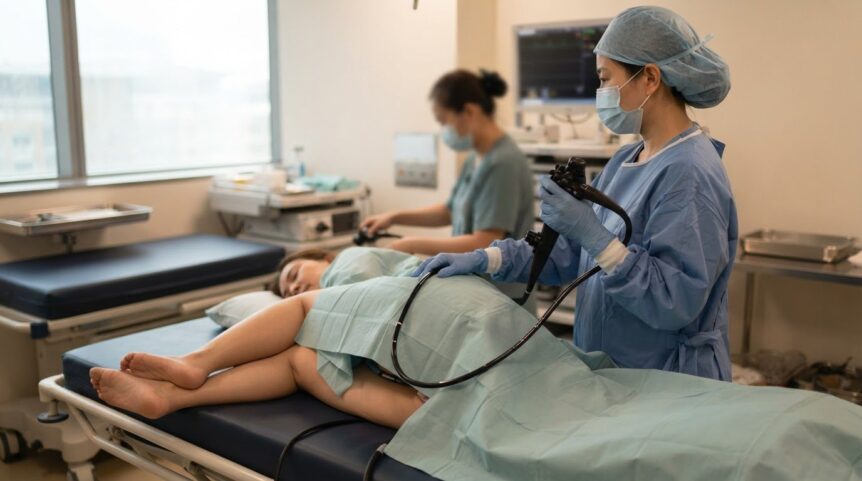
A positive stool test colonoscopy follow-up can investigate the cause of blood detected in your sample. In Singapore, a positive FIT means blood was found, and colonoscopy is usually recommended to locate its source. This matters because FIT detects hidden blood but cannot show the colon or rectum.
It’s understandable to feel concerned about an abnormal result. Blood can also come from non-cancerous conditions, so a positive test does not explain its cause. Colonoscopy lets a doctor examine the large intestine directly and assess what may need attention.
This article explains what stool screening can and cannot show, how to collect and return a FIT sample according to the instructions, and why colonoscopy may follow a positive result. It also covers how symptoms and personal risk factors can affect whether screening alone is appropriate.
Key Takeaways
- Understand what FIT can detect, and why a negative result may not settle concerns when symptoms or higher-risk factors are present.
- Learn how to collect and return a FIT sample according to the kit instructions, including what can affect the result.
- See how colonoscopy investigates an abnormal result and may allow a polyp to be removed during the same procedure.
- Get a clearer picture of colonoscopy preparation, sedation and possible complications before proceeding.
What are the benefits and limits of colorectal cancer screening tests?
Colorectal cancer screening can detect hidden blood and help identify disease, but a FIT result alone cannot diagnose cancer. The next step depends on the result, symptoms and risk factors.
Interpreting positive and normal FIT results
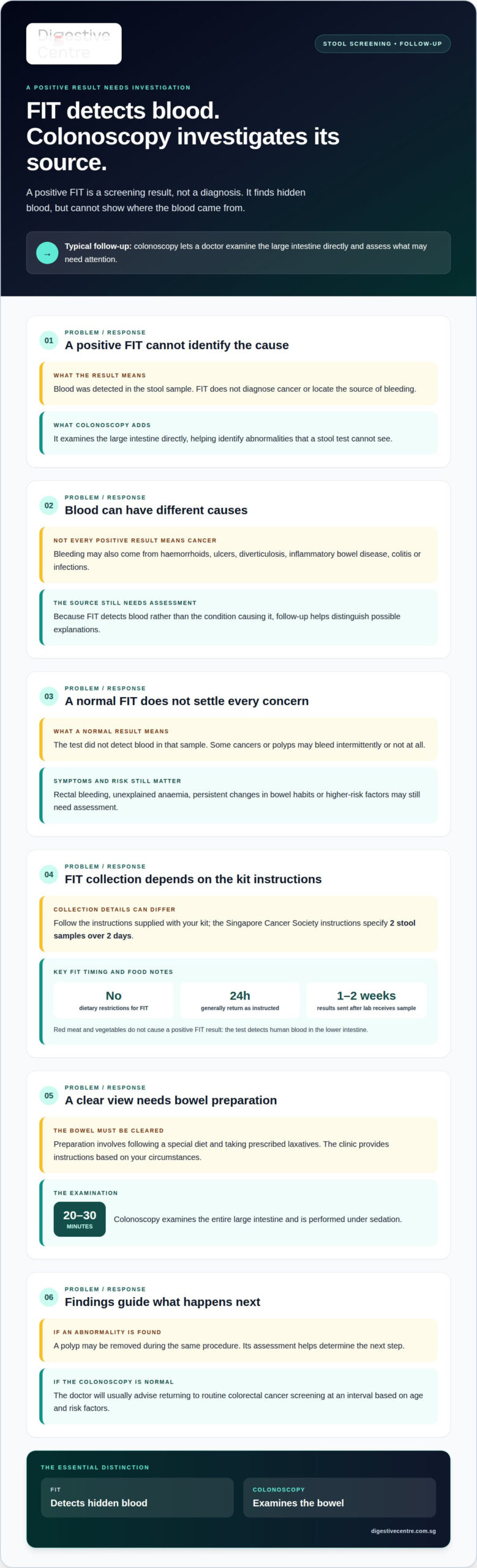
A positive FIT means the stool sample contains detectable blood; a negative or normal result means the test did not detect it. Neither result confirms or completely rules out colorectal cancer. Bleeding may come from non-cancerous conditions, while some cancers or polyps bleed intermittently or not at all. Symptoms or higher-risk factors may still need attention after a normal result.
Colonoscopy follow-up after a positive FIT
After a positive FIT, follow-up colonoscopy investigates the source of the blood. FIT detects hidden blood but cannot show the colon or rectum, so it cannot locate where the blood came from. Colonoscopy examines the large intestine and may allow abnormal polyps to be removed during the same procedure. Delaying or declining follow-up leaves the cause uninvestigated, including the possibility of colorectal disease.
Colonoscopy risks and complications
Colonoscopy has potential risks and complications, which should be discussed when planning the procedure. Preparation involves a special diet and prescribed laxatives to clear the colon. The procedure is performed under sedation. Prices and coverage depend on the procedure and applicable policy; final costs are confirmed in writing after consultation. MediSave cannot pay for routine FIT screening, and whether it applies to colonoscopy depends on the circumstances and relevant coverage.
Colonoscopy results and next steps
Colonoscopy results indicate whether the examination found an abnormality, such as a polyp, or appeared normal. The findings guide follow-up. If colonoscopy after a positive FIT is normal, the doctor will usually advise returning to routine colorectal cancer screening at an interval based on age and risk factors. If a polyp is found, its removal and assessment help determine the next step.
What is a faecal immunochemical test?
A faecal immunochemical test (FIT) checks a stool sample for small amounts of hidden human blood. In Singapore, it supports colorectal cancer screening but doesn’t examine the bowel directly.
How FIT detects hidden blood
FIT uses antibodies to detect human blood in stool, including amounts too slight to see. This makes it useful for detecting possible bleeding without a visual examination. Foods such as red meat and vegetables do not cause a positive FIT result because the test detects human blood in the lower intestine. A positive result identifies blood, not its source.
Early detection and removal of precancerous polyps
Some colon polyps can gradually develop into colorectal cancer if left untreated. Screening can help identify polyps early, while colonoscopy allows a doctor to examine the bowel and remove abnormal polyps during the same procedure. FIT itself cannot locate or remove a polyp. Its role is to flag hidden blood that may need further investigation.
Blood in a stool sample can have several causes. Haemorrhoids, ulcers, diverticulosis and inflammatory bowel disease may bleed, as can polyps or cancer. Colitis and infections can also irritate the digestive tract and cause bleeding. Because FIT detects blood rather than the condition causing it, a positive result needs to be considered alongside symptoms and further assessment.
FIT collection instructions depend on the kit. The Singapore Cancer Society’s instructions call for 2 stool samples collected over 2 days; other kits may differ. FIT requires no dietary restrictions, and samples should generally be returned as instructed within 24 hours of collection. Results are sent to the doctor within 1 to 2 weeks after the sample reaches the laboratory.
If further assessment is needed, colonoscopy assessment can help investigate the source of bleeding and identify abnormalities.
Colonoscopy after a positive stool test
A positive FIT is a screening result, not a diagnosis. Follow-up colonoscopy lets a doctor examine the large intestine and investigate possible bleeding. This is an important next step because FIT detects blood but cannot show where it came from. A positive result can have non-cancerous causes, but the test alone cannot distinguish them from polyps or colorectal cancer. Colonoscopy provides a more direct assessment.
In Singapore, colonoscopy examines the entire large intestine. It typically takes about 20-30 minutes. During the examination, the doctor can identify abnormal areas and may remove polyps during the same procedure. This can provide both a closer assessment and treatment of some findings. The result helps determine whether further care or routine screening is appropriate.
Preparation affects how clearly the doctor can see the bowel. It involves following a special diet and taking prescribed laxatives to clear the colon. The procedure is performed under sedation. The clinic provides preparation instructions, and the doctor considers your medical history and circumstances when planning the examination.
Symptoms can make colonoscopy appropriate even when screening is not the only concern. Rectal bleeding, unexplained anaemia or persistent changes in bowel habits may prompt investigation. These symptoms need assessment because they can have different causes, and colonoscopy can help identify abnormalities in the large intestine. A positive FIT alongside symptoms gives the doctor additional context, but does not determine the diagnosis.
Delaying follow-up leaves the source of detected blood unresolved. Colonoscopy is not simply a repeat stool test: it directly examines the bowel and can identify findings that FIT cannot locate. The result guides the next step, whether that means managing an abnormality found during the examination or returning to screening based on age and risk factors.
What are the risks and complications of colonoscopy?
Colonoscopy involves bowel preparation, an examination of the large intestine and typically sedation. The procedure takes about 20-30 minutes in Singapore. These steps have different considerations: preparation can be demanding, while sedation and the examination itself carry potential complications. Understanding both helps you weigh the benefits of investigating an abnormal stool test against the procedure’s possible downsides.
Before colonoscopy, preparation involves following a special diet and taking prescribed laxatives to clear the colon. This allows the doctor to examine the bowel. Follow the instructions carefully: incomplete preparation can make the examination less effective and affect what the doctor can see. Use the preparation plan provided for your procedure, including the timing of diet changes and laxatives.
Sedation is typically given to help ensure comfort during colonoscopy. As with the examination, sedation has potential risks, and the person’s medical circumstances matter when planning care. Share relevant medical history and medicines with the clinical team before the procedure. This information helps the team consider the preparation and sedation plan, rather than treating every patient as having the same needs.
Potential complications can arise from sedation or the examination itself. The nature of the risks depends on individual health factors and what happens during the procedure. If a polyp is removed or another intervention is needed, the doctor can explain how this affects the discussion of risks. Understanding the planned examination and any intended treatment helps you give informed consent.
After colonoscopy, follow the recovery instructions provided and seek medical advice if you experience symptoms that concern you. The clinical team can explain which changes are expected and which need prompt attention. Before proceeding, clarify how sedation, preparation and possible interventions apply to your circumstances. This helps you make an informed decision and understand what to expect.
Discuss colonoscopy care and the procedure’s potential risks with the clinical team.
Digestive Centre: Gastroscopy and colonoscopy
Digestive Centre provides colonoscopy for people who need further assessment after a positive stool test. The examination lets the doctor assess the large intestine and investigate possible causes of bleeding, helping clarify what the screening result alone cannot show.
If your FIT result is positive, or you have symptoms such as rectal bleeding or persistent bowel changes, colonoscopy may help guide the next step. The assessment can help determine whether an abnormality needs attention or routine screening is appropriate. Your medical history and examination findings inform the discussion about follow-up.
Contact Digestive Centre to discuss colonoscopy and your next steps after a positive stool test.
Make your next step a considered one
A colonoscopy after a positive stool test should be considered in light of the full clinical picture. The result is one part of it. Your symptoms, medical history and concerns can help shape a useful discussion about what comes next. Understanding the purpose of the proposed procedure can also help you feel prepared to make an informed decision.
For that discussion, bring your test report and share any relevant symptoms or changes you have noticed. You can also raise questions about the procedure, preparation, sedation and how findings will guide follow-up. These details help focus the conversation on your situation rather than treating every result as identical. Digestive Centre provides colonoscopy as part of its digestive care. If you’d like to discuss your next steps, arrange a discussion with Digestive Centre. A clear conversation can help you move forward with greater confidence.
Frequently Asked Questions
Is a FIT test better than a colonoscopy?
Neither test is best for every situation. FIT is a home screening option for people at average risk, while colonoscopy lets a doctor examine the bowel directly and remove some polyps. The right approach depends on whether you are screening without symptoms or investigating an abnormal result, symptoms or higher-risk factors. A positive FIT usually needs follow-up colonoscopy.
What do the test results mean?
A positive FIT means the test detected blood in the stool; a negative result means it did not detect blood in that sample. Neither result confirms or completely excludes colorectal cancer. FIT can miss growths that do not bleed or bleed intermittently. For average-risk screening, a negative test is generally repeated every year, while symptoms or higher risk may call for further assessment.
What happens if an FIT test is positive?
After a positive FIT, the next step is usually colonoscopy to investigate the source of blood. The finding may be due to a polyp or a non-cancerous cause, so the result alone is not a cancer diagnosis. Follow the clinician’s instructions for arranging assessment, and share relevant symptoms and medical history. Repeating FIT does not identify the source of bleeding.
What does a positive stool test mean?
A positive stool blood test means blood was detected, not that cancer has been diagnosed. Possible causes include haemorrhoids, ulcers and diverticulosis, as well as colorectal cancer or polyps. Different stool tests may have different collection instructions, so identify which test you took and bring its result to the follow-up discussion. Further assessment helps investigate the cause.
How can a clinician guide follow-up after a positive FIT or stool blood test in Singapore?
In Singapore, a clinician can review your test report, symptoms, medical history and risk factors, then explain suitable follow-up. Bring the result and describe persistent bowel changes or bleeding. This page is general information, not medical advice or a substitute for consultation with a qualified doctor. In an emergency, call 995 or go to the nearest Accident & Emergency department. Urgent-care symptoms: “Abdominal or chest pain; Difficulty breathing; Vomiting or abdominal bloating; Passage of blood with stools; High fever, especially if persistent or associated with pain, jaundice, swelling, etc.; Swelling, pain, or redness in one or both legs; Severe allergic reactions.”
How soon should I get a colonoscopy after a positive stool test?
Arrange follow-up after receiving a positive result rather than waiting for your next routine screening test. The information available here doesn’t establish a specific number of days for every case. Symptoms such as rectal bleeding, unexplained anaemia or persistent bowel changes also matter when planning assessment. If symptoms are severe or indicate an emergency, call 995 or go to the nearest Accident & Emergency department.
Medical disclaimer. This guide is general health information from Digestive Centre and is not a substitute for a consultation. Symptoms and treatment options differ from person to person. For advice about your own condition, book a consultation with the clinic. In an emergency, call 995.

































