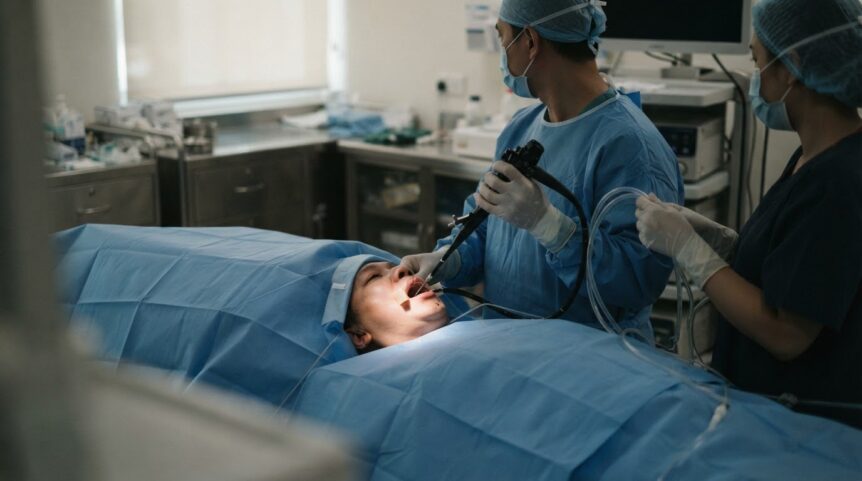
The biggest difference between ESG and LSG is how the stomach is reshaped, not just the weight-loss outcomes reported for each. For people considering endoscopic sleeve gastroplasty in Singapore, ESG uses a flexible camera and internal sutures to fold and reduce stomach capacity without an abdominal incision or scar; LSG is a laparoscopic operation.
It’s understandable to compare the procedures by their expected results, but the method matters too. This guide explains how ESG works, how it compares with LSG, gastric balloons and other weight-loss procedures, and what reported outcomes can look like. ESG combined with lifestyle changes has been associated with about 15% to 20% total body weight loss at 12 to 24 months. You’ll also learn what the procedure involves and how to understand the differences when considering your options.
Key Takeaways
- Compare ESG with LSG and other procedures by how each changes the stomach, not by expected weight loss alone.
- Learn how ESG’s internal sutures reshape the stomach and what the procedure involves.
- Understand why reported outcomes use different measures and timeframes, and how lifestyle changes fit into long-term results.
- Use the procedure’s recovery considerations and your weight-management goals to guide a discussion about suitable options.
ESG compared with other weight-loss procedures
ESG reduces stomach capacity with internal sutures, while LSG removes part of the stomach through laparoscopic surgery. The procedures differ in technique, recovery and reported weight-loss outcomes.
Procedure Duration and Anaesthesia
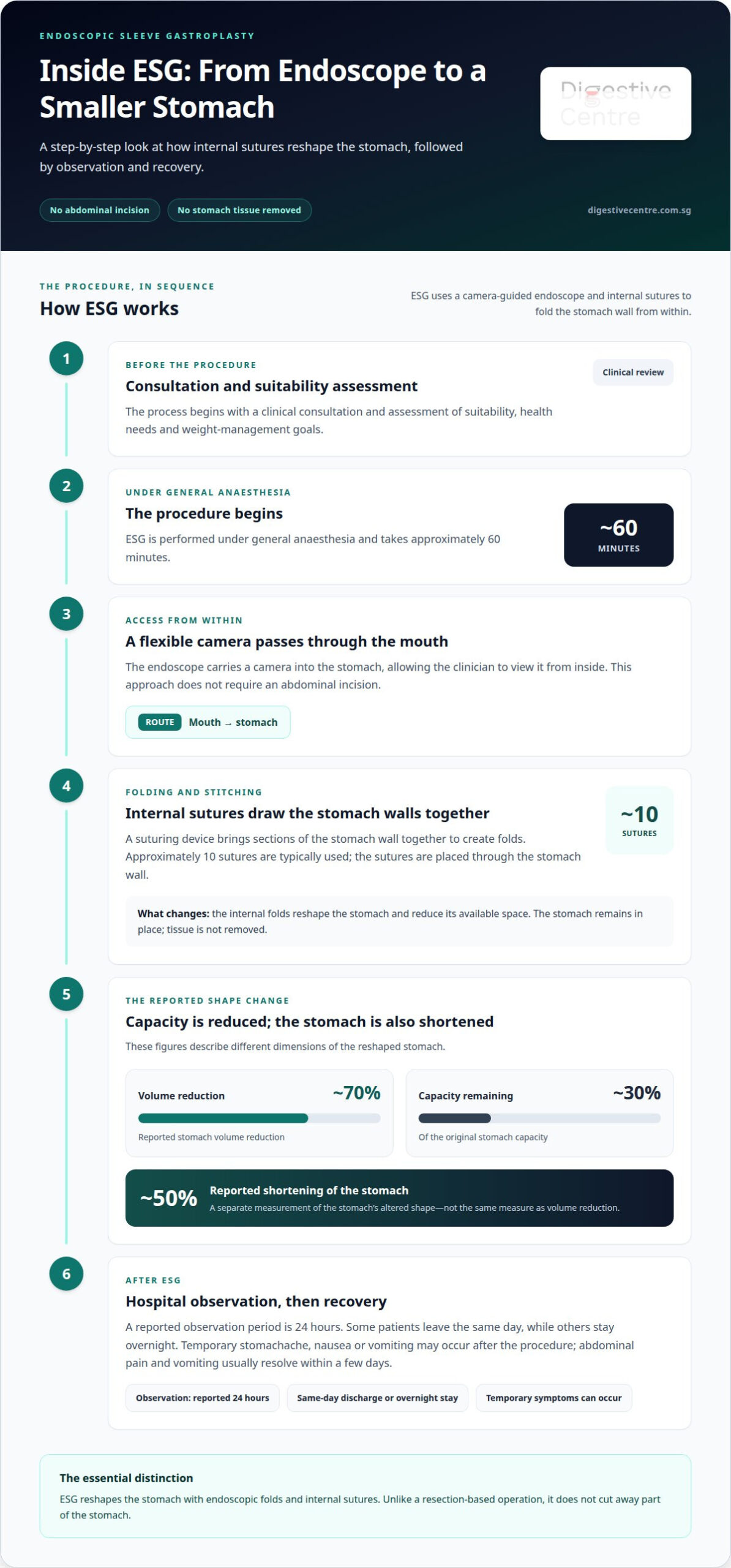
ESG is performed under general anaesthesia and takes approximately 60 minutes. A flexible endoscope passes through the mouth, so the procedure doesn’t require an abdominal incision. Plan for hospital observation afterwards: some patients leave the same day, while others stay overnight. A reported observation period is 24 hours after the procedure.
Weight-loss figures also vary by procedure. PanAsia’s comparison table lists expected total weight loss of 20% for ESG, 25-35% for laparoscopic sleeve gastrectomy, and 30-35% for laparoscopic Roux-en-Y gastric bypass. It lists 15% for a gastric balloon. These figures provide a comparison, not a promise of an individual result.
ESG may be considered for people with a BMI of 27.5 kg/m² or higher who haven’t achieved sustainable results through lifestyle changes alone. The decision also considers health needs and whether a less invasive approach suits the person’s goals.
MediSave or insurance coverage is not determined by BMI eligibility alone. Whether either can contribute depends on the applicable scheme criteria and policy terms.
The process includes a clinical consultation and suitability assessment, followed by the endoscopic procedure, hospital observation and recovery. Temporary stomachache, nausea or vomiting may occur after ESG; abdominal pain and vomiting usually resolve within a few days.
Risks and Complication Rates
Reported adverse-event risk with ESG is around 1-2%. Common side effects include mild pain and nausea, generally confined to the first week. The reported rate doesn’t mean every patient experiences a complication or capture every possible symptom. The distinction between expected, temporary discomfort and an adverse event matters when discussing procedure risks and recovery.
Reported weight-loss outcomes
Reported ESG results depend partly on how weight loss is measured. Total body weight loss compares the weight lost with a person’s starting weight. Excess weight loss measures the proportion of weight above an estimated healthy reference weight that has been lost. These are different calculations, so their percentages should not be compared as if they were interchangeable.
For ESG combined with lifestyle modification, reported total body weight loss is about 15% to 20% at 12 to 24 months. Another reported estimate is approximately 12% to 20% within one year. The timeframes overlap, but aren’t identical: one describes outcomes across a longer follow-up period, while the other focuses on the first year.
Clinical trials have reported 40% to 50% excess weight loss one to two years after ESG. That figure can look higher than total body weight loss because it uses excess weight, not starting weight, as its denominator. For example, a percentage of excess weight lost cannot be read as the same percentage reduction in a person’s total weight.
These outcomes are reported ranges, not a personal forecast. Starting weight, eating patterns, activity and ongoing lifestyle changes affect progress over time. The treatment goal stated for obesity is more than 10% to 15% total body weight loss; this uses the same measure as the first two estimates, allowing a clearer comparison.
Track progress against the measure and timeframe being discussed. A one-year total body weight figure answers a different question from an excess weight result measured after two years. Consistent follow-up and sustainable changes support long-term weight management. If you’re considering how lifestyle support fits into care, explore medical weight-management care as part of the discussion.
How ESG reduces stomach size
During ESG, a flexible camera guides the clinician as the stomach is folded and stitched from within. Multiple full-thickness sutures draw sections of the stomach wall together, reshaping the organ without removing tissue. This internal pattern reduces the stomach’s available volume and ability to stretch, creating a smaller, pouch-like space for food.
The procedure’s effect is described using several measurements. Stomach volume is reported to fall by approximately 70%, leaving roughly 30% of its original capacity. These figures describe the same volume change from opposite directions: about 70% less means about 30% remains. ESG is also reported to shorten the stomach by approximately 50%, a separate measurement of its altered shape.
Volume describes how much space the stomach holds; shortening describes its length after the folds are drawn together. Both result from the placement and tension of the sutures, which create a narrower, shorter shape. Unlike a resection-based operation, ESG does not cut away part of the stomach.
Reduced capacity can help limit how much you eat at one time. Reduced distensibility means the stomach expands less readily as it fills. Together, these changes support smaller meals, but eating habits and ongoing lifestyle changes remain important to weight management.
The internal sutures hold the folds in place and can be removed if clinically indicated. They maintain the reshaped stomach rather than remove it. In practical terms, ESG changes stomach capacity through endoscopic folding and stitching: the tissue remains, but its internal shape and available space change.
During ESG, multiple full-thickness sutures are placed within the stomach wall. This pattern reduces stomach size and distensibility, limiting capacity and resistance to stretching.
How endoscopic sleeve gastroplasty works
For people considering endoscopic sleeve gastroplasty in Singapore, the key detail is how the clinician reaches the stomach. A flexible endoscope with a camera passes through the mouth, allowing the clinician to view the stomach from inside. A suturing device then brings sections of the stomach wall together without an abdominal incision.
Typically, approximately 10 sutures draw the stomach walls together to create folds. ESG changes stomach shape without removing tissue, unlike laparoscopic sleeve gastrectomy. This difference helps explain why the procedures use distinct techniques, despite both aiming to reduce stomach capacity.
In Singapore, ESG is performed in a clinical setting under general anaesthesia, followed by hospital observation. The setting supports the endoscopic procedure and post-procedure monitoring. A specific hospital or clinic name should only be given when its ESG service is established.
Recovery also includes a planned return to eating. The first month is dedicated to gastric healing, with progression from liquids to soft foods. Follow the care plan provided for your procedure and advance through food textures as directed.
In short, ESG reshapes the stomach through endoscopic suturing rather than tissue removal. If you’re considering endoscopic sleeve gastroplasty in Singapore, discuss ESG and your weight-management goals as a next step.
Here, minimally invasive describes the route and the absence of an abdominal cut: the endoscope enters through the mouth, and ESG is minimally invasive and does not involve an incision or scar in the abdomen. The stomach is reshaped internally with the suturing approach already described, rather than through an abdominal opening. This distinction can help clarify what the term means when discussing the procedure, while keeping the endoscopic technique separate from the general anaesthesia and observation that accompany ESG in Singapore.
Digestive Centre: Endoscopic sleeve gastroplasty
Digestive Centre provides endoscopic sleeve gastroplasty for people considering an endoscopic approach to weight management. If you’re weighing ESG against laparoscopic surgery or other options, a consultation can help you discuss the procedure, reported outcomes and how it may fit your health goals.
Weight management options can also include medical weight management and GLP1s, or a gastric balloon. The appropriate approach depends on your circumstances and treatment goals. Discussing these options together can help you understand how ESG fits into a broader plan, including the lifestyle changes that support long-term weight management.
Contact Digestive Centre to discuss endoscopic sleeve gastroplasty and your next steps.
Plan a next step that fits your goals
Choosing a weight-management approach is a personal decision shaped by your health priorities and readiness for change. If you’re considering endoscopic sleeve gastroplasty in Singapore, use your consultation to clarify what you want treatment to help you achieve and what ongoing support may suit you. This keeps the decision focused on your needs, not just comparisons between procedures.
Digestive Centre also offers medical weight management with GLP1s, gastroscopy and colonoscopy, and GERD and acid reflux treatment. These services address other digestive and weight-management needs that may be relevant to your care. You can raise those concerns alongside questions about ESG.
Contact Digestive Centre to discuss ESG and take a considered next step toward care that reflects your goals.
Frequently Asked Questions
What is the difference between Endoscopic Sleeve Gastroplasty (ESG) and Laparoscopic Sleeve Gastrectomy (LSG)?
ESG reshapes the stomach from inside with endoscopic sutures, while LSG is performed laparoscopically. ESG does not require an abdominal incision or remove stomach tissue; LSG uses a different operative approach. The choice involves more than technique: reported weight-loss ranges differ, and your health profile, treatment goals and readiness for ongoing lifestyle changes all matter when comparing these options.
What to expect after ESG?
Hospital observation and a gradual return to eating are part of recovery after ESG. Temporary stomachache, nausea or vomiting may occur. The first month focuses on gastric healing, with food progressing from liquids to soft textures. Follow your care plan for eating and recovery, and contact your clinical team about symptoms that concern you rather than changing the plan independently.
Are there any long-term effects or considerations I should be aware of?
ESG changes stomach shape and capacity, so eating habits and lifestyle remain important after the procedure. The sutures hold the folds in place and can be removed if clinically indicated. Long-term weight management involves maintaining sustainable changes, rather than relying on the procedure alone. Discuss how your health goals and eating patterns fit into ongoing care.
How does ESG work?
During ESG, a clinician guides a flexible camera through the mouth into the stomach, then places internal sutures to bring sections of the stomach wall together. Approximately 10 sutures are typically used. The folds reduce stomach capacity without an abdominal incision. This endoscopic approach changes the stomach’s shape while leaving the organ in place.
How long will it take to recover after the ESG procedure?
Recovery has several stages rather than a single return-to-normal date. Plan at least three days of inactivity after the procedure; most people can return to occupational duties within seven days. The first month focuses on gastric healing, with liquids progressing to soft foods. Returning to work does not mean dietary progression or healing is complete.
How much weight can you lose with ESG?
Reported outcomes vary by measure and follow-up period. ESG combined with lifestyle modification has been associated with about 15% to 20% total body weight loss at 12 to 24 months. Clinical trials have also reported 40% to 50% excess weight loss one to two years after the procedure. Excess weight loss and total body weight loss use different calculations.
This content is general information only. It is not medical advice or a substitute for consultation with a qualified doctor.
Medical disclaimer. This guide is general health information from Digestive Centre and is not a substitute for a consultation. Symptoms and treatment options differ from person to person. For advice about your own condition, book a consultation with the clinic. In an emergency, call 995.