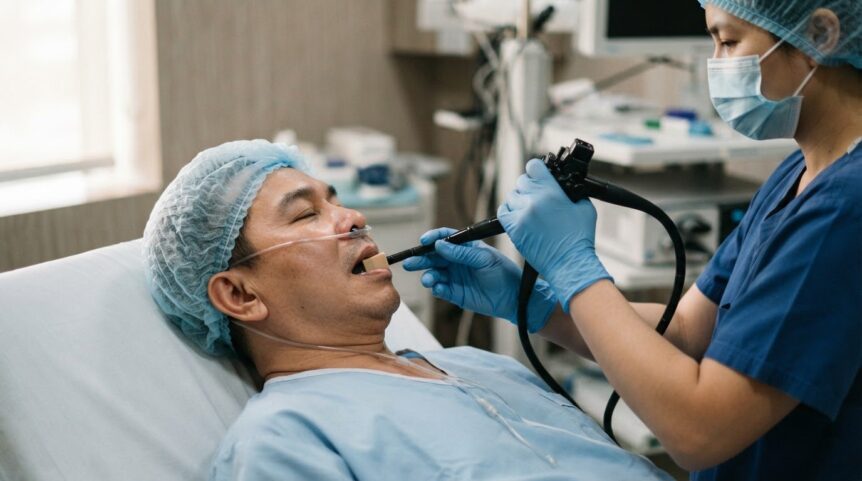
Could the tests before GERD surgery matter as much as the procedure itself? They help assess the oesophagus and identify what may be causing reflux. Understanding GERD surgery cost and insurance in Singapore starts with knowing how treatment is evaluated, not just which operation may be considered.
It’s reasonable to want clarity on expenses and coverage before deciding. GERD treatment may begin with lifestyle changes and medicines; surgery is considered when appropriate. A gastroscopy is commonly performed before surgery. Ambulatory pH monitoring or a barium swallow may also help evaluate reflux.
This guide explains factors that may affect the overall cost and insurance considerations, without quoting a clinic price. It covers tests used in pre-surgical assessment, how anti-reflux surgery works, and what treatment may come first. You’ll also find points to discuss as you consider your next step.
Key Takeaways
- See how insurance and MediSave may affect eligible bill amounts, and what to understand before estimating your out-of-pocket costs.
- Learn which factors can change the final bill, from the hospital setting to the care involved during admission.
- Understand how laparoscopic anti-reflux surgery works and what pre-surgery assessment can help clarify.
- Compare surgery with earlier treatment options so you can better understand when a surgical discussion may be appropriate.
Will the surgery cure my acid reflux permanently?
GERD surgery aims to control reflux, but it cannot be described as a guaranteed permanent cure. After surgery, many patients can stop taking acid reflux medication, but symptoms may return and some patients may continue medication. Treatment decisions depend on the diagnosis, symptoms and assessment results, including whether a hiatal hernia is present.
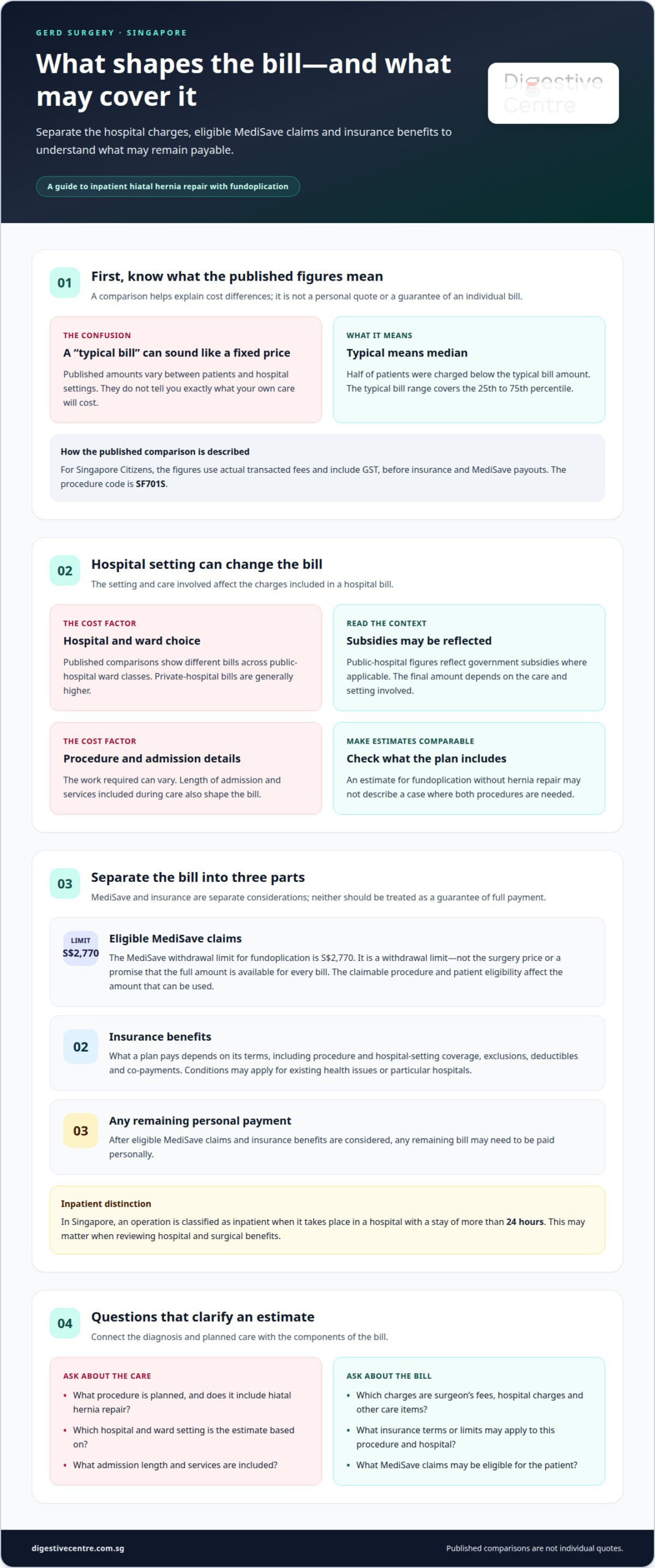
In Singapore, the MediSave withdrawal limit for fundoplication is S$2,770. This is a withdrawal limit, not a surgery price or a promise that the full amount will be available for every bill. MediSave can offset eligible expenses within applicable limits. The amount payable from MediSave depends on the claimable procedure and the patient’s eligibility. Any remaining bill may need to be covered through insurance or personal payment.
Insurance coverage is separate from MediSave. The amount an insurance plan pays depends on its terms, including coverage for the procedure and hospital setting, exclusions, deductibles and co-payments. A policy may also set conditions for claims involving existing health issues or particular hospitals. These details affect how much of the bill remains payable after insurance benefits are applied.
For inpatient care in Singapore, an operation is classified as inpatient when it takes place in a hospital with a stay of more than 24 hours. This distinction may matter when reviewing how a policy treats hospital and surgical benefits. A useful way to understand the bill is to separate the total charges into eligible MediSave claims, insurance benefits and the balance payable personally. The final figure reflects these separate parts, not the MediSave limit alone. Consider insurance coverage and MediSave eligibility alongside the expected procedure, rather than treating either as a guarantee of full payment.
Factors affecting the final bill
For inpatient hiatal hernia repair with fundoplication, published comparisons show different bills across public-hospital ward classes, with private-hospital bills generally higher. Public-hospital figures reflect government subsidies where applicable. These comparisons show how hospital setting can affect costs, but they are not an individual quote.
The Ministry of Health describes a typical bill as the median, with half of patients charged below that amount. Its typical bill range represents the 25th to 75th percentile. For this procedure, the published Singapore figures use actual transacted fees for Singapore Citizens and include GST, before insurance and MediSave payouts. These definitions help patients understand what a reported figure represents.
The procedure performed also matters. Fundoplication may include repair of a hiatal hernia when present, as well as tightening the valve between the stomach and oesophagus. The work required depends on the findings and surgical plan. A more involved operation may affect the resources and care included in the bill.
Hospital and ward choice shape the bill, as do the length of admission and the services included during care. A consultation and pre-surgery assessment clarify the planned procedure and relevant findings. For example, a bill estimate for fundoplication without hernia repair may not describe a case where both procedures are needed. The procedure code, SF701S, identifies inpatient hiatal hernia repair with fundoplication in the published comparison.
To understand an estimate, separate the surgeon’s fees from hospital charges and other items included in the proposed care. Then consider how insurance and eligible MediSave withdrawals affect the amount payable. A GERD assessment can help connect the diagnosis and treatment plan with the expected components of care.
Laparoscopic anti-reflux surgery and GERD
Laparoscopic fundoplication is the standard surgical treatment for GERD. It uses small incisions to access the upper abdomen, rather than one large incision. The operation typically uses 3 to 4 small incisions. The surgeon wraps part of the stomach around the lower oesophagus to strengthen the valve that helps prevent reflux. If a hiatal hernia is present, the operation may also repair it.
Pre-surgical assessment helps establish whether an operation is suitable for the reflux problem. A gastroscopy is commonly performed to look for inflammation, oesophageal damage or other signs of GERD. Ambulatory pH monitoring can measure acid reflux, while a barium swallow can help evaluate the oesophagus and stomach. The doctor considers these findings alongside symptoms and medical history when discussing treatment.
Surgery may not be the first step. Lifestyle modification is the initial treatment for GERD, and medicines such as antacids or proton pump inhibitors may also be used. Surgery may be discussed when assessment indicates that an operation is appropriate. The procedure should address the diagnosed problem, including whether a hiatal hernia needs repair, rather than symptoms alone.
For Nissen fundoplication, patients should prepare for a 2-3 day hospital stay. This gives the care team time to support recovery and monitor progress after the operation. The exact plan depends on the procedure selected and the patient’s assessment. Understanding the planned operation, hospital stay and tests can also help clarify which items may appear in a bill. Ask the doctor to explain how gastroscopy findings and any reflux-monitoring results relate to the surgical plan, and what recovery steps follow the procedure.
How much does GERD surgery cost in Singapore at public and private hospitals?
Published comparisons for inpatient hiatal hernia repair with fundoplication show lower typical bills at public hospitals than at private hospitals in Singapore. Public-hospital figures reflect government subsidies where applicable. The comparison helps show how hospital setting can affect expenses, but it is not a personal quote or a guarantee of what an individual will pay.
The procedure is identified as TOSP code SF701S. Published bill figures for it are based on actual transacted fees for Singapore Citizens, include GST, and are shown before insurance and MediSave payouts. A typical bill is the median: half of patients were charged below it. The typical bill range represents the 25th to 75th percentile. These definitions help explain why an individual bill may differ from a published benchmark.
Hospital type is only one part of the comparison. At a public hospital, ward class and applicable subsidies affect the bill, while private hospitals have a different billing context. The planned procedure matters too: fundoplication alone and fundoplication combined with hiatal hernia repair may involve different surgical work. Length of admission and services included can further change the total.
Singapore’s Ministry of Health publishes fee benchmarks for surgeons and inpatient doctors’ attendance for this procedure. These are separate from the overall hospital bill, which includes more than professional fees. When reviewing an estimate, identify the procedure, hospital setting, ward class, included services, GST treatment and whether subsidies have been applied. Consider insurance and eligible MediSave withdrawals separately, as published benchmarks are before those payouts.
For a clearer view of the surgical plan behind an estimate, arrange a GERD surgery consultation and discuss the procedure and relevant findings.
Digestive Centre: GERD and Acid Reflux Treatment
Digestive Centre provides GERD and acid reflux treatment for people seeking help with persistent symptoms or advice about possible surgery. Assessment can clarify whether further testing or a treatment discussion is appropriate. Gastroscopy is among the available services and can support evaluation of the oesophagus and stomach.
Care may include considering suitable options, such as LINX for acid reflux, based on the patient’s needs. For people also managing weight-related concerns, Digestive Centre offers medical weight management and bariatric surgery. These are distinct treatment pathways, not automatic parts of GERD care.
If reflux symptoms continue or you want to discuss diagnostic assessment and treatment options, contact Digestive Centre to discuss your next step.
Move forward with a treatment discussion
Understanding GERD surgery cost and insurance in Singapore is one part of planning care. A focused discussion can connect your symptoms, assessment findings and treatment priorities. Relevant test reports and details of treatments you have tried can make the conversation more specific. You can also discuss how your insurance policy applies to proposed care before making a decision.
Digestive Centre provides GERD and acid reflux treatment, as well as gastroscopy and colonoscopy. Its medical weight management services include GLP-1 treatments, which may be relevant when weight management is part of a patient’s care. These are options to discuss in context, not assumptions about which treatment is suitable.
A clear conversation can help you understand the clinical next steps and consider how they fit your circumstances. Contact Digestive Centre to discuss your options and take the next step with a clearer plan.
Frequently Asked Questions
When can I return to work, exercise, or normal activities?
Many patients can return to light work within a week after GERD surgery. Strenuous exercise and heavy lifting generally need a longer pause, often 2-4 weeks, depending on recovery and the surgeon’s advice. For example, desk duties and gym training have different physical demands. Follow the activity plan given for your operation, and increase exertion gradually rather than resuming strenuous routines immediately.
Will I need to follow a special diet after the surgery?
After Nissen fundoplication, patients usually move from liquids or soft foods towards solid foods over a few weeks. This gradual progression allows the diet to adapt during recovery. Follow the instructions provided for your procedure, as the suitable pace and food texture can differ between patients. If swallowing or eating causes concern during recovery, raise it with the care team.
What GERD surgeries are available in Singapore, such as fundoplication and LINX?
Fundoplication and LINX are surgical options for treating acid reflux in Singapore. Fundoplication is a standard surgical treatment and may also address a hiatal hernia when present. LINX is another option. These are distinct approaches, so a doctor considers the diagnostic findings and the patient’s circumstances when discussing suitability. The procedure name alone does not determine which option is appropriate.
What is the typical surgeon, anaesthetist, hospital, and diagnostic test cost for GERD surgery in Singapore?
There isn’t one total that applies to every patient. The bill may include surgeon and anaesthetist fees, hospital charges and diagnostic tests. The planned procedure and hospital setting can also affect the estimate. Understanding GERD surgery cost and insurance in Singapore means separating these components from insurance or MediSave payouts. The final cost is confirmed in writing after consultation. This general information is not medical advice or a substitute for consultation with a qualified doctor.
Does MediShield Life cover GERD surgery in Singapore, and what are the limits?
MediShield Life coverage and the payable amount depend on the patient’s eligibility and applicable policy terms. Coverage does not necessarily mean every charge is paid. The procedure, hospital bill and eligible components affect how a claim is assessed. Consider insurance benefits separately from MediSave withdrawals, as these are different payment sources. Review the expected bill alongside the applicable coverage before making a financial decision.
Can MediSave be used to pay for GERD surgery in Singapore, and what are the withdrawal limits?
MediSave may be used for eligible fundoplication expenses, subject to the patient’s eligibility and applicable claim rules. The withdrawal limit for fundoplication is S$2,770. This is a limit, not a guaranteed payout or the total price of surgery. For example, the amount used depends on eligible expenses and the patient’s available MediSave balance, with any remaining bill handled separately.
Medical disclaimer. This guide is general health information from Digestive Centre and is not a substitute for a consultation. Symptoms and treatment options differ from person to person. For advice about your own condition, book a consultation with the clinic. In an emergency, call 995.