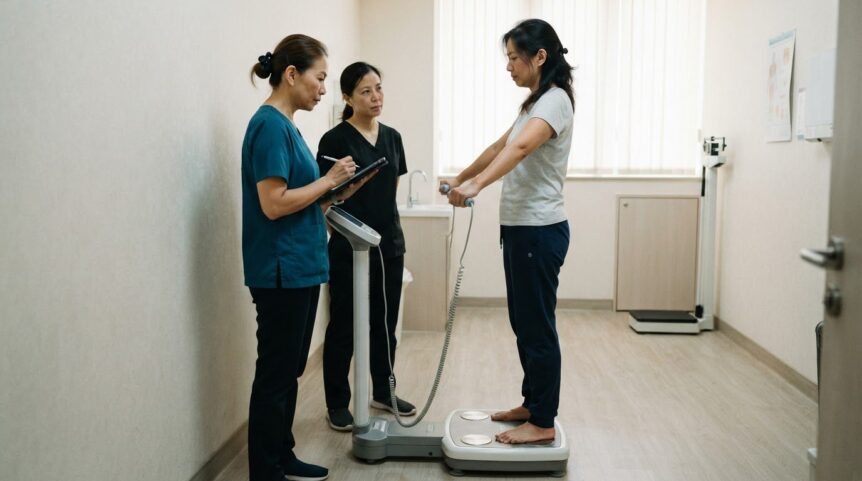
Prediabetes is an early warning, and timely action may help improve blood sugar before it reaches the range for type 2 diabetes. For many people, reversing pre-diabetes with medical help means combining appropriate weight loss and lifestyle changes with clinical assessment and follow-up, rather than relying on a quick fix.
A prediabetes result can be concerning, but it doesn’t mean type 2 diabetes is inevitable. Weight loss may help, particularly for people living with overweight or obesity, while medical care can help assess blood sugar and shape a suitable plan. The goal is to support healthier glucose levels and reduce the risk of progression, not to promise a particular outcome.
This article explains what prediabetes means, how it differs from type 2 diabetes, and how weight management and medical support can contribute to improving blood sugar. It also explores why early attention matters and what ongoing monitoring can involve, so you can better understand the options available in Singapore.
Key Takeaways
- Prediabetes raises the risk of type 2 diabetes, but it doesn’t make progression inevitable; understanding your blood sugar results can help guide next steps.
- Losing 5% to 7% of body weight can help prevent or delay type 2 diabetes, and regular physical activity supports blood sugar management.
- Prediabetes and type 2 diabetes have different blood sugar thresholds, so test results help clarify which condition you’re managing.
- Early medical care and ongoing blood glucose monitoring can help track progress and address risks before complications develop.
What happens when prediabetes becomes type 2 diabetes?
Prediabetes means blood sugar levels are higher than normal, but below the diabetes range. An A1C result of 5.7% to 6.4% falls in the prediabetes range; an A1C of 6.5% or above indicates diabetes. An oral glucose tolerance test reading above 11.1 mmol/L also indicates diabetes. A blood test helps determine whether glucose levels have crossed a diagnostic threshold.
Progression isn’t inevitable, but prediabetes signals increased risk of developing type 2 diabetes. Risk factors include being 45 or older, a BMI greater than 25, and exercising less than three times a week. Giving birth to a baby weighing more than 9 pounds is another listed risk factor. Prediabetes may have no obvious symptoms, so a person can be diagnosed only after screening despite feeling well.
For adults in Singapore, the Diabetes Risk Assessment is available to people aged 18 to 39 years. People aged 40 years and above are recommended to undergo health screening once every three years under HPB’s Screen for Life programme. These local pathways can help identify elevated blood sugar earlier, including among Asian adults. Regular physical activity, with 150 minutes a week as a target, can support healthier blood sugar levels.
In Singapore, screening, consultation and treatment costs vary according to the tests and care setting; subsidy eligibility depends on the applicable scheme and individual criteria. For example, the assessment may involve a blood test, while follow-up care may include repeat testing and lifestyle support.
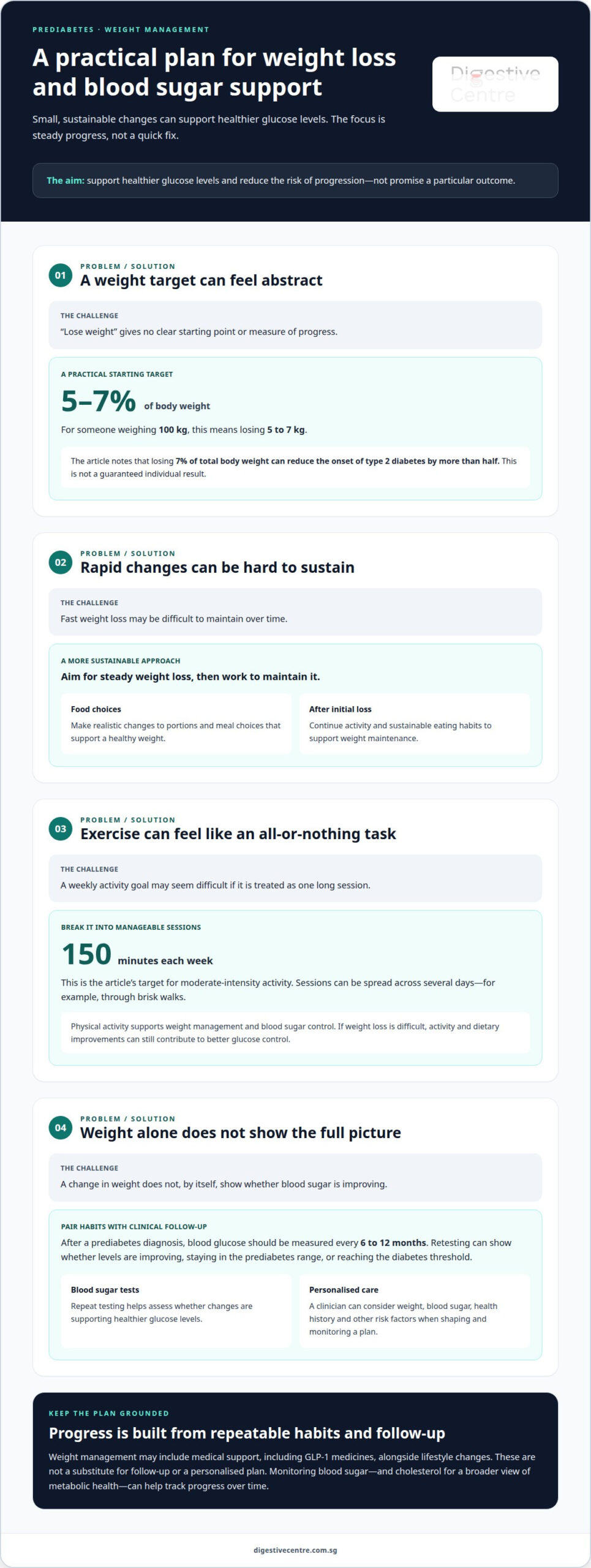
After a prediabetes diagnosis, blood glucose should be measured every six to 12 months. Retesting helps show whether levels are improving, remaining in the prediabetes range, or reaching the threshold for diabetes. A clinician can interpret results alongside risk factors such as BMI and activity.
Unmanaged high blood sugar can raise the risk of complications associated with diabetes, so early attention matters even without symptoms. A diagnosis of type 2 diabetes means glucose has crossed the diagnostic threshold, and ongoing care shifts to managing blood sugar and reducing health risks. Reversing pre-diabetes with medical help focuses on timely assessment, lifestyle changes and monitoring before that transition.
How much weight do you need to lose to reverse prediabetes?
A practical initial target is losing 5% to 7% of your body weight. For someone weighing 100 kg, that means 5 to 7 kg. Losing 7% of total body weight can reduce the onset of type 2 diabetes by more than half. The goal is steady, sustainable weight loss, followed by maintaining the change, rather than rapid loss that is difficult to keep off.
Physical activity supports weight management and blood sugar control. A target of 150 minutes of moderate-intensity activity each week can be divided into manageable sessions, such as brisk walks across several days. Pair exercise with realistic food changes, including portions and meal choices that support a healthy weight. If weight loss is difficult, activity and dietary improvements can still contribute to better glucose control.
GLP-1 medicines are one medical option used within weight management, alongside lifestyle changes. They are not a substitute for follow-up or a personalised plan. A care approach can consider weight, blood sugar levels, health history and other risk factors, then monitor progress over time. Screening and repeat blood tests help assess whether changes are supporting healthier glucose levels.
Weight reduction can lower the risk of developing type 2 diabetes, but maintaining progress matters. Continued physical activity and sustainable eating habits help support weight maintenance after the initial loss. Monitoring cholesterol and blood sugar can also provide a broader view of metabolic health. If weight loss feels difficult to achieve or sustain, medical weight management can be part of a structured approach that includes GLP-1 medicines.
Differences between reversing prediabetes and managing type 2 diabetes
Prediabetes describes elevated glucose below the diabetes threshold; type 2 diabetes requires ongoing blood sugar management. The distinction affects how clinicians interpret tests and plan care.
Prediabetes Progression and Blood Glucose Ranges
Prediabetes means blood sugar is above the usual range but below the threshold for diabetes. An A1C of 5.7% to 6.4% or an oral glucose tolerance result of 7.8 mmol/L to 11.0 mmol/L falls within the stated prediabetes ranges.
Blood glucose can rise over time, as insulin resistance makes it harder for the body to regulate blood sugar. Physical activity and weight management can support glucose control. A blood test can show whether a result falls in the prediabetes or diabetes range and help guide follow-up.
Reversal, Remission, and Ongoing Management
Reversing prediabetes means bringing elevated glucose back below the prediabetes range through health changes and monitoring. Type 2 diabetes remission means blood sugar returns to a healthy range without diabetes medication for an extended period.
These terms describe different situations: prediabetes may improve before diabetes develops, while remission follows a type 2 diabetes diagnosis. Neither removes the value of follow-up. Repeat testing can show whether glucose remains in a healthier range or rises again, while sustained habits support ongoing management.
Metformin for Some People
Metformin may be considered for some people with prediabetes alongside lifestyle changes. Factors that may make a healthcare provider more likely to recommend it include a BMI of 35 or greater, being younger than 60 years, fasting blood glucose of 110 mg/dL or higher, or A1C of 6.0% or higher.
These factors can inform a discussion, but do not determine treatment on their own. A GP or polyclinic can assess screening results and risk factors, while specialist care may help with more complex needs. Healthier SG and the National Steps Challenge are programmes relevant to prevention, but activity support does not replace blood tests or clinical assessment.
Diabetes complications and early treatment
Prediabetes is a warning to act before glucose reaches the type 2 diabetes range. Lifestyle changes and follow-up can be useful parts of managing prediabetes and the risk of developing diabetes. Early attention also creates a chance to address related health factors, including obesity, blood pressure and cholesterol, as part of a broader prevention plan.
High blood sugar can contribute to health complications over time, which makes testing more than a way to label a result. It helps show whether glucose is moving towards normal levels or progressing into the diabetes range. A1C reflects average blood glucose over the previous two to three months, so repeat results can help reveal trends that one test alone may not show.
Follow-up timing can vary with the result and care plan. A physician may repeat A1C testing every three or six months to monitor progress. This gives lifestyle changes, such as adjustments to eating and physical activity, time to affect glucose before the next measurement. If results rise, the care plan can be reassessed rather than waiting for symptoms to prompt attention, whether through public healthcare pathways or private community services like Merali Pharmacy & Clinic for routine monitoring and advice.
For someone living with overweight or obesity, weight management may be one part of reducing risk. Prevention is not limited to weight loss: sustainable eating habits and regular movement also support metabolic health. Blood pressure and cholesterol measurements provide useful context, since glucose is only one part of overall health.
The practical takeaway is to treat a prediabetes result as a reason for consistent monitoring, not as a diagnosis of type 2 diabetes. Keep follow-up appointments, review blood test trends, and discuss changes to the plan when results move away from normal. This measured approach can help identify progression early and support timely care, while recognising that “reverse prediabetes” describes improved glucose readings, not a reason to stop monitoring.
Digestive Centre: GLP1s and Medical Weight management and GLP1s
Digestive Centre provides medical weight management, including GLP-1 treatment, for people seeking structured support with weight loss. For someone with prediabetes and overweight or obesity, managing weight can be part of a broader effort to improve blood sugar and reduce progression risk. Treatment choices depend on clinical assessment and should be considered alongside sustainable eating habits, physical activity and follow-up monitoring.
Medical support may be useful when lifestyle changes alone have been difficult to maintain or when weight-related health concerns need closer attention. GLP-1 medicines are not a replacement for healthy habits or blood glucose monitoring; they are one possible component of a care plan. Contact Digestive Centre to discuss medical weight management and whether it may suit your needs.
Make your next step a sustainable one
A practical next step is to turn your test result into a plan that fits daily life. Consider which changes feel manageable, what support would help, and how progress will be reviewed. A care plan should suit your health needs and routines rather than rely on a short burst of effort. If weight management is one of your goals, medical guidance can help you understand the options and how they may complement lifestyle changes.
Reversing pre-diabetes with medical help involves informed decisions and ongoing attention, not just a single appointment or test. Discuss your concerns, health goals and possible approaches with a medical team, then choose a practical next step at a considered pace.
Contact Digestive Centre to discuss medical weight management and the support that may suit your needs. A clear plan can make it easier to move forward with confidence.
Frequently Asked Questions
What Is Prediabetes?
Prediabetes is a blood sugar result above the usual range but below the level used to diagnose type 2 diabetes. It can be identified through tests such as A1C, fasting blood glucose or an oral glucose tolerance test. Because it may not cause noticeable symptoms, a person can feel well and still have an abnormal result. A clinician interprets the test alongside health history and risk factors.
How can I prevent or delay Type 2 diabetes?
Build routines you can maintain, such as regular activity and food choices that support a healthy weight. A practical starting point is dividing exercise into shorter sessions across the week; moderate aerobic activity can be done in periods of at least 10 minutes. Keep follow-up appointments too. Reviewing test results over time can show whether your approach is helping, and whether your plan needs adjustment.
What is Pre-diabetes?
“Pre-diabetes” and “prediabetes” are alternative spellings for blood glucose that is elevated but not in the diabetes range. The term describes a risk state, not a certainty that diabetes will develop. If a screening result is elevated, discuss what it means, which test was used and how it relates to your individual risk factors.
Is there a higher risk for prediabetes at certain times in life?
Risk can rise with age and with certain health or pregnancy histories. Being 45 or older is a recognised risk factor, as is having given birth to a baby weighing more than 9 pounds. Risk assessment also considers factors such as body mass index and physical activity. These details can help determine whether screening is appropriate, even if you feel healthy.
What Lifestyle Changes Can Help Reverse Prediabetes?
Regular physical activity and sustainable eating habits can support healthier blood glucose. Rather than making several abrupt changes, choose practical adjustments you can repeat, such as scheduling walking sessions and planning balanced meals. Activity can be accumulated in shorter bouts of at least 10 minutes. If you have a medical condition or have not exercised for a long time, seek medical advice before starting a new exercise programme.
What can I expect if I have this condition?
Prediabetes often causes no clear symptoms, so expect assessment to focus on blood tests and your health history. If fasting blood glucose testing is planned, it requires at least eight hours without food or drink other than water. After diagnosis, repeat glucose testing is generally advised every six to 12 months. This content is general information, not medical advice or a substitute for consultation with a qualified doctor.
Medical disclaimer. This guide is general health information from Digestive Centre and is not a substitute for a consultation. Symptoms and treatment options differ from person to person. For advice about your own condition, book a consultation with the clinic. In an emergency, call 995.