
About one in 10 people in Singapore suffers from gastroesophageal reflux disease (GERD). Explaining GERD to family and friends can start with a simple point: reflux happens when stomach contents flow back into the oesophagus and irritate it. The condition can recur, so managing it may involve ongoing changes rather than a quick fix.
Diet changes can be difficult to explain, especially when others see them as preferences or assume the same foods affect everyone alike. Your needs may depend on which foods trigger your symptoms. Support works best when you can say clearly what helps and what you prefer to keep private.
This guide explains how to describe GERD and reflux in everyday language, discuss food and daily routines, and explain possible long-term complications without causing unnecessary alarm. You’ll also find practical ways to ask trusted people for help, respond to questions or unsolicited advice, and set boundaries. A calm, clear explanation can help people close to you understand what you’re managing and how they can support you.
Key Takeaways
- Explain reflux in everyday language and share only the details you feel comfortable discussing.
- Describe how food and daily routines affect your symptoms, and make clear that triggers can differ from person to person.
- Ask trusted people for specific, practical support and let them know which comments or advice aren’t helpful.
- Learn which changes may signal a need for medical attention and how to discuss longer-term concerns calmly.
GERD and reflux explained
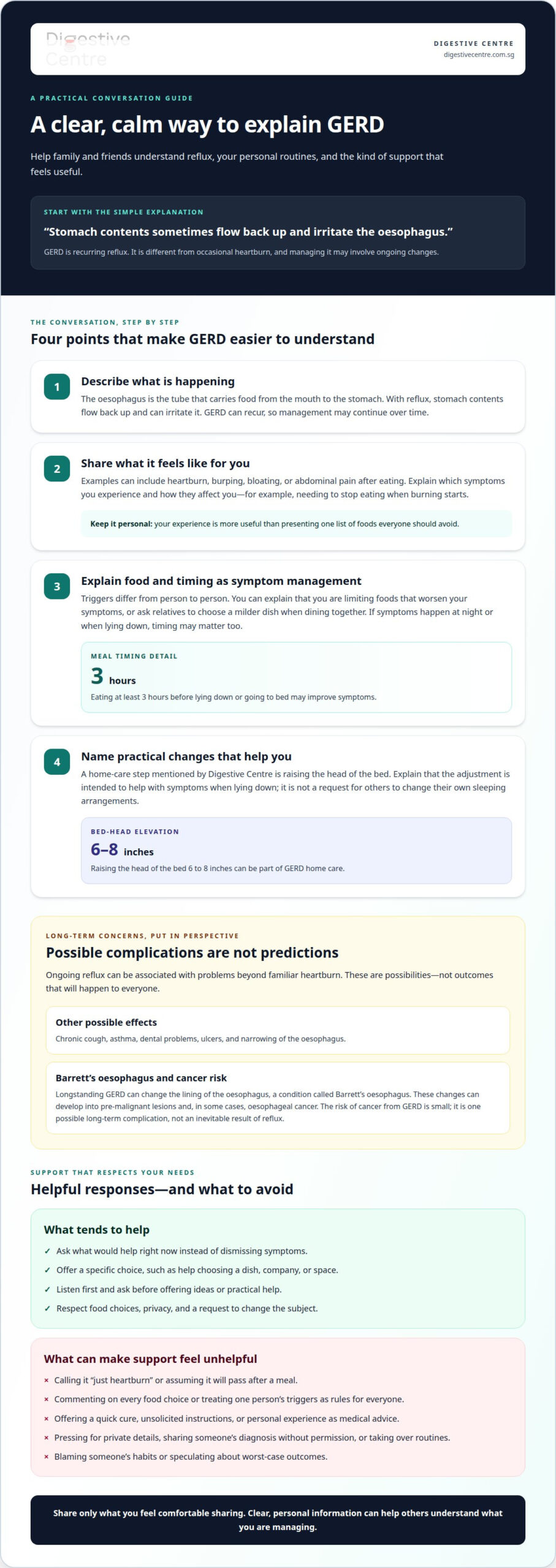
- Start with a plain-language description. Explain that GERD is recurring reflux that irritates the oesophagus, the tube that carries food from the mouth to the stomach. You could say, “Stomach contents sometimes flow back up and cause symptoms.” This distinguishes GERD from occasional heartburn without implying that every meal causes a problem. GERD can be recurrent and chronic, so management may continue over time.
- Give one or two examples of what it feels like for you. GERD can cause heartburn, burping, bloating, or abdominal pain after eating. Explain which symptoms you experience and how they affect a shared meal or evening routine. For example: “I may need to stop eating when the burning starts,” or “I’m avoiding certain foods because they worsen my symptoms.” Your own experience is more useful than a general list of foods everyone should avoid.
- Describe food changes as personal symptom management, not a preference or a rule for the whole household. You might ask relatives to choose a milder dish when dining together, or explain that you’re limiting foods that trigger your symptoms. If symptoms occur at night or when lying down, say that timing matters too. According to Digestive Centre, eating meals at least 3 hours before lying down or going to bed may improve symptoms.
- Share practical steps that make your routine easier to understand. According to Digestive Centre, raising the head of the bed 6 to 8 inches can be part of GERD home care. Explain that this adjustment is intended to help with symptoms when lying down; it isn’t a request for family members to change their own sleeping arrangements. Keep the conversation focused on what helps you, and invite questions without feeling obliged to share details you’d rather keep private.
Long-term complications of GERD
- Explain that ongoing reflux can affect more than the familiar burning sensation. GERD can be associated with chronic cough, asthma, dental problems, ulcers, and narrowing of the oesophagus, also called the food pipe. These are possible complications, not predictions about what will happen to everyone. Making that distinction helps family members understand the concern without assuming the worst.
- Describe Barrett’s oesophagus in plain language if it comes up. Longstanding GERD can cause changes in the lining of the oesophagus called Barrett’s oesophagus. These changes can develop into pre-malignant lesions and, in some cases, oesophageal cancer. Explain that this is a possible pathway, not an inevitable result of having reflux.
- Put concerns about cancer in perspective. The risk of cancer from GERD is small, although it remains one possible long-term complication. You might say: “I know persistent reflux can have complications, but cancer isn’t what happens to everyone.” This gives relatives context without dismissing the issue or presenting a possibility as certain.
- Use specific examples to explain why GERD matters in daily life. Acid reaching the mouth can damage teeth, while irritation in the oesophagus may contribute to ulcers or narrowing. A chronic cough or asthma-related symptoms can also affect sleep and conversations. Explain which concerns relate to your experience, and don’t imply you have complications you haven’t been diagnosed with.
- Keep conversations focused on accurate information and practical support. If a relative asks whether GERD will cause cancer, explain that the risk is small and that longstanding reflux can be associated with Barrett’s oesophagus. If the discussion becomes frightening, return to what you know about your condition and current care. You can also ask family members to listen rather than speculate about worst-case outcomes.
What should people avoid saying or doing when supporting someone with GERD?
- Don’t dismiss symptoms as “just heartburn” or assume they’ll pass after a meal. GERD can recur and disrupt someone’s plans. Try saying, “I’m sorry this is bothering you. What would help right now?” This acknowledges their experience without minimising it or deciding what their symptoms mean.
- Avoid commenting on every food choice or treating one person’s triggers as rules for everyone. Asking, “Are you sure you should eat that?” can sound judgemental at dinner. When explaining GERD to family and friends, clarify that support means respecting someone’s choices, not policing their plate.
- Don’t offer a quick cure or present personal experience as medical advice. Saying, “I had heartburn too, so just stop eating spicy food,” may not address another person’s symptoms or care plan. Listen first, then ask whether they’d like ideas, company, or help with a practical task.
- Don’t press for private details or discuss someone’s diagnosis in front of others without permission. They may want to share only a brief explanation at a family gathering. Explaining GERD to family and friends can also mean setting a boundary, such as asking to discuss health matters privately or change the subject.
- Don’t take over when support hasn’t been requested. Repeatedly changing meals, rearranging routines, or checking symptoms can feel intrusive. Offer a specific choice instead: “Would you like help choosing a dish?” or “Would you prefer some space?” If they decline, accept their answer without asking them to justify it.
- Resist turning the conversation into blame. Linking GERD to someone’s habits can create shame rather than offer useful support. Focus on what the person says helps, and ask before making suggestions. Calm listening, respect for privacy, and practical help are more constructive than criticism or unsolicited instructions.
Symptoms that require medical attention
- Tell someone you trust which symptoms need prompt attention. GERD can involve symptoms that shouldn’t be dismissed as ordinary heartburn. Seek medical attention for chest pain or upper abdominal pain, difficulty swallowing, breathing problems, or unintended weight loss. Sharing these warning signs helps family members understand when support means helping you seek care, not simply waiting for discomfort to pass.
- Seek medical attention if you vomit material that looks like blood or coffee grounds. Describe what you noticed and when it happened, rather than guessing at the cause. If someone is with you, ask them to help explain the symptom. Don’t let embarrassment about an unusual change stop you from describing it plainly.
- Contact your doctor if your symptoms are getting worse or you’re not feeling better in 2 to 3 days. This timeframe is a reason to follow up, not a reason to delay care for chest pain, swallowing difficulty, blood-like vomit, breathing problems, or unintended weight loss. Explain that distinction to relatives who may otherwise suggest waiting.
- Write a brief symptom timeline before speaking with a healthcare professional. Note what happened, whether symptoms are worsening, and how they affect eating, swallowing, breathing, or sleep. A family member can help you recall details, but your account should remain central. Keep it factual, for example, “swallowing has become difficult,” rather than trying to identify a complication yourself.
- Make a simple support plan with a trusted person. Agree on who can accompany you or help explain symptoms if you feel unwell. Be clear that severe or changing symptoms deserve medical attention, even if they resemble previous reflux episodes. If persistent reflux needs assessment, arrange an assessment for ongoing reflux symptoms.
Digestive Centre: GERD and Acid Reflux Treatment
Digestive Centre provides GERD and Acid Reflux Treatment for people seeking clinical support with ongoing reflux symptoms. If symptoms continue to affect meals, sleep, or daily routines, a consultation can help you discuss your concerns and possible next steps. Depending on your situation, care may include a discussion of LINX for acid reflux. Gastroscopy and colonoscopy are also available as diagnostic services.
Bring a clear account of your symptoms, the changes you’ve noticed, and the questions you want answered. This can keep the discussion focused on your experience and treatment options. Contact Digestive Centre to discuss GERD and acid reflux care.
Make the next conversation your own
Before your next conversation, decide what you want from it. Choose someone you trust, find a comfortable setting, and write down the main point you want them to understand. A short note can help you stay focused if emotions or questions make it harder to find the right words.
As you practise explaining GERD to family and friends, remember that you can share information gradually. You can pause, decline to answer a question, or return to the conversation later. The aim isn’t to give a perfect explanation. It’s to make room for honest communication that respects your comfort and supports the relationship.
If reflux symptoms are affecting your wellbeing, discussing your concerns with a specialist can help you consider appropriate care. Contact Digestive Centre to discuss your next step. You can move forward at a pace that feels right for you.
Frequently Asked Questions
What changes to diet are needed?
There isn’t one GERD diet that suits everyone. Notice whether caffeine or acidic, spicy, fatty, or fried foods worsen your symptoms, then discuss a practical approach with your healthcare professional. For example, you might choose a less spicy option at a family meal rather than avoid every dish. The aim is to identify your personal triggers without making mealtimes unnecessarily restrictive.
What drugs may be needed?
Medication may be part of long-term GERD management, alongside lifestyle changes or other treatment. The appropriate medicine and plan depend on your symptoms and clinical assessment. Share what you’ve tried and whether it has helped, and discuss any concerns about taking or changing medication with a qualified doctor. This article provides general information only, not medical advice or a substitute for consultation.
What problems could happen?
Persistent reflux can be associated with complications affecting the oesophagus, teeth, or breathing, including narrowing of the food pipe and Barrett’s oesophagus. These possibilities don’t mean every person with GERD will develop them. If you’re discussing concerns with loved ones, distinguish a potential complication from a diagnosis. For severe or urgent symptoms in Singapore, call 995 or go to the nearest Accident and Emergency department.
Where can I learn more?
For information specific to your symptoms, discuss your concerns with a qualified doctor and use Digestive Centre’s GERD resources to help prepare questions. Write down what you want clarified, such as how treatment options are considered or which symptoms to report. Online health information is general only; it doesn’t create a doctor-patient relationship or replace a consultation.
What is GERD and what causes it?
GERD occurs when stomach contents flow back into and irritate the oesophagus. This backflow is the process behind reflux symptoms; it isn’t simply a matter of someone choosing the wrong meal. When explaining the diagnosis, a plain description of what happens inside the body can help relatives understand why symptoms may need ongoing attention.
What are common GERD symptoms and how can they affect daily life?
Heartburn, burping, bloating, and abdominal pain after eating are among the symptoms associated with GERD. Their impact varies: discomfort may interrupt a meal, prompt someone to leave a social gathering early, or affect concentration during daily activities. Ask what support would help in the moment instead of assuming the person needs a particular food, remedy, or change of plans.
Medical disclaimer. This guide is general health information from Digestive Centre and is not a substitute for a consultation. Symptoms and treatment options differ from person to person. For advice about your own condition, book a consultation with the clinic. In an emergency, call 995.