A gastroscopy doesn’t end when the examination is over; recovery and results are part of the process too. Good follow up care after gastroscopy includes knowing what to expect: a routine report is typically available within 1-2 working days after the procedure, while biopsy results may take 5-7 working days.
It’s understandable to want clear answers quickly, especially if tissue samples were taken. Mild throat soreness or bloating can occur during recovery. Knowing what to watch for and which symptoms need prompt medical attention can help you respond calmly.
This guide explains what to note as you recover, how to watch for possible bleeding, and what to know about gastroscopy and biopsy results. It also covers eating after the examination, precautions after sedation, and how to follow up so you can understand what comes next.
Key Takeaways
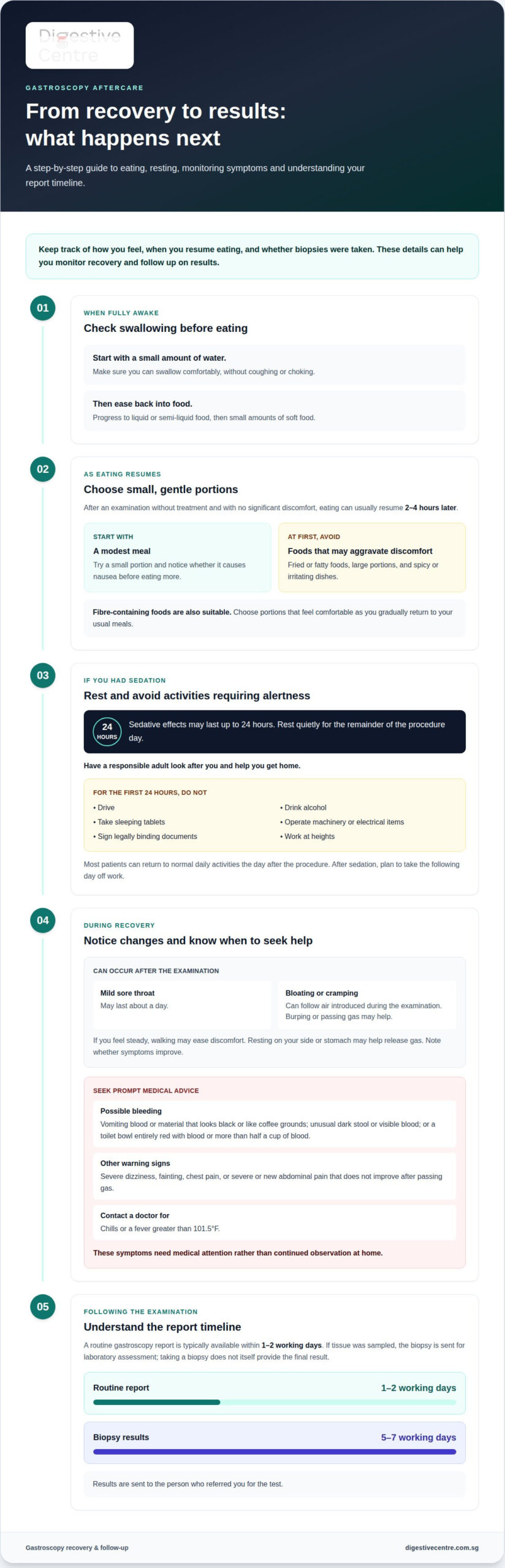
- Once fully awake, try a small amount of water first; if swallowing feels normal, ease back into food with small portions of soft or liquid options.
- After sedation, rest for the remainder of the day and have a responsible adult look after you. Avoid driving and other activities that require alertness for the first 24 hours.
- Watch for unusual stool darkening or visible bleeding. Vomiting blood or material that looks black or like coffee grounds needs prompt medical attention.
- Know which symptoms call for urgent medical advice, including severe abdominal pain that doesn’t improve after passing gas, chills, or a fever above 101.5 F.
What should be noted after undergoing a gastroscopy?
After gastroscopy, note how you feel, when you resume eating, and whether biopsies were taken. These details can help you track your recovery and follow up on results.
Soft and Liquid Food Choices
Liquid or soft foods are easier-to-digest choices for easing back into eating after gastroscopy. Once fully awake, try a small amount of water and check that you can swallow without coughing or choking. If it goes down comfortably, progress to liquid or semi-liquid food, then soft foods in small amounts. After an examination without treatment and with no significant discomfort, eating can usually resume 2-4 hours later.
Light Foods During Recovery
A light diet means starting with a modest meal rather than a large or heavy one. Try a small portion and notice whether it causes nausea before eating more. At first, avoid fried or fatty foods, large portions, and spicy or irritating dishes, which may aggravate stomach discomfort. Fibre-containing foods are also suitable after the procedure. Choose portions that feel comfortable as you gradually return to your usual meals.
Procedure and Biopsy Considerations
During gastroscopy, a clinician examines the upper digestive tract and may take tissue biopsies from its lining when needed. A biopsy is a small tissue sample sent for laboratory assessment, so taking one does not itself provide the final result. A routine gastroscopy report is typically available within 1-2 working days, while biopsy results may take 5-7 working days. They are sent to the person who referred you for the test.
A mild sore throat may last about a day, and bloating can follow air introduced during the examination. Note whether these symptoms improve as you recover.
Getting Home After the Procedure
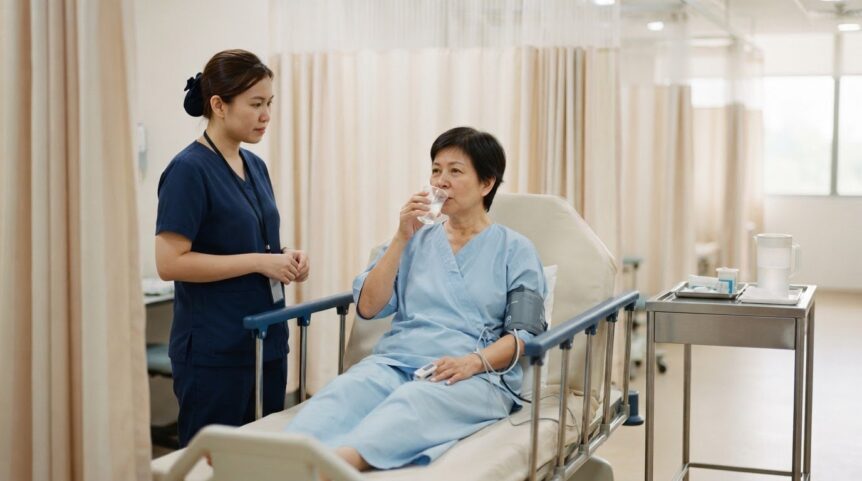
If you had sedation, arrange for a responsible adult to look after you and help you get home. Rest quietly for the remainder of the day, as sedative effects may last up to 24 hours. During the first 24 hours, don’t drive, drink alcohol, take sleeping tablets, operate machinery or electrical items, or sign legally binding documents. These precautions reduce risk while sedation may affect alertness and judgement.
Gastroscopy recovery and monitoring
After gastroscopy, track how you feel and whether any discomfort improves. A mild sore throat or bloating can occur after the examination.
After sedation, effects may last up to 24 hours, so rest quietly for the rest of the day. Most patients can return to normal daily activities the day after the procedure.
Rest After Sedation
Rest after sedation means taking it easy while the medicine may still affect alertness. Have a responsible adult look after you and help you get home. For the first 24 hours, don’t drive, drink alcohol, take sleeping tablets, operate machinery or electrical items, or sign legally binding documents. Avoid work at heights during this period too.
These precautions help reduce the risks of impaired judgement or coordination. After sedation, plan to take the following day off work so you have time to recover before returning to routine tasks.
Recovery Time After Sedation
Recovery after gastroscopy with sedation includes the rest of the procedure day, with sedative effects lasting up to 24 hours. Most patients feel ready for normal daily activities the day after, although the next day is advised off work after sedation. Don’t use the end of the examination as a signal that your alertness has fully returned.
Mild bloating or cramping can follow air introduced during the examination. Burping or passing gas may help. If you feel steady, walking can also ease discomfort. Resting on your side or stomach may help release gas.
Monitor symptoms as you recover. Contact a doctor for chills or a fever greater than 101.5 F. Seek prompt medical advice for severe or new abdominal pain that doesn’t improve after passing gas, vomiting blood or black, coffee-ground-like material, severe dizziness, fainting, or chest pain. These symptoms need attention rather than home monitoring.
For questions about an examination or next steps, explore gastroscopy services.
Monitoring stool colour for signs of bleeding
After gastroscopy, watch for changes in stool colour or visible blood. Bleeding and other concerning symptoms may require prompt medical assessment.
Changes in Stool Colour
Monitor your stool for colour changes or visible blood after the examination. Dark or otherwise unusual changes can signal bleeding and should not be ignored. Pay attention each time you use the toilet rather than assuming a change is part of routine recovery. If you notice an unusual colour or blood, seek prompt medical attention.
Visible rectal bleeding also needs a clear response. Call a doctor right away if the toilet bowl turns entirely red with blood or the amount is more than half a cup. Don’t wait for your scheduled discussion of the gastroscopy findings before seeking advice about this amount of blood.
Warning Signs Needing Medical Attention
Warning signs need urgent medical advice, not continued observation at home. Call a doctor right away if you vomit blood or material that looks black or like coffee grounds. Severe dizziness, fainting, chest pain, or severe or new abdominal pain that does not improve after passing gas also requires prompt attention.
A fever greater than 101.5 F or chills after the procedure are reasons to contact a doctor. These signs matter even if other recovery symptoms seem mild. Describe when the symptom began and whether it is worsening, so the doctor can assess the situation.
Gastroscopy and sedation involve different aftercare concerns. Signs of bleeding and persistent or severe symptoms need timely assessment, while sedative effects can affect alertness during recovery. Track changes rather than relying on a single symptom, and seek medical advice promptly if a warning sign appears. If you are unsure whether a symptom is urgent, contact a doctor rather than waiting for it to pass.
What should I expect immediately after a gastroscopy in Singapore?
Immediately after gastroscopy, follow your discharge instructions and return to eating gradually. Good follow up care after gastroscopy starts with understanding whether you had sedation, treatment, or biopsies.
Don’t eat immediately after the examination. Once fully awake, try a small amount of water and check that swallowing doesn’t cause coughing or choking. If it feels comfortable, progress to liquid or semi-liquid food, then soft food. After gastroscopy without treatment and significant discomfort, eating can usually resume 2-4 hours after the examination.
A gastroscopy examines the oesophagus, stomach, and duodenum. The clinician records visible findings in the procedure report. A biopsy may also be taken from the lining if needed. The sample requires laboratory assessment, so visual findings and tissue results may be available separately.
A routine gastroscopy report is typically available within 1-2 working days after the procedure. Biopsy results may take 5-7 working days and are sent to the person who referred you. As part of follow up care after gastroscopy, keep track of who will discuss the findings with you.
Arrange a follow-up appointment with the doctor who referred you or your specialist to review the report and discuss any further treatment. Bring the procedure findings and biopsy result to the conversation. If a result is still pending, the clinician can explain what is available and how the remaining result fits the overall assessment.
A mild sore throat may pass within a day, while bloating can follow air introduced during the examination. Monitor how these symptoms change. Seek medical advice promptly for vomiting blood, severe dizziness, fainting, chest pain, or severe abdominal pain that does not improve after passing gas.
For support with your next steps after an examination, arrange a gastroscopy consultation.
Digestive Centre: Gastroscopy and colonoscopy
Digestive Centre provides gastroscopy and colonoscopy for diagnostic examination of the digestive tract. If you need an examination or have ongoing digestive concerns, a specialist consultation can help guide your next steps.
After gastroscopy, follow up with the doctor who referred you to put the examination report and any biopsy findings into context. The discussion can clarify what the results mean and whether further treatment is appropriate. If symptoms persist or you have questions about an upcoming examination, a consultation can help you understand the diagnostic options.
For an appointment or to discuss your needs, contact Digestive Centre.
Take your next step with confidence
Use any questions that remain after your examination to guide a focused conversation about your digestive health. Thoughtful follow up care after gastroscopy can connect your concerns with the findings and clarify what to discuss next. If symptoms continue or you need an examination, a specialist consultation can help you understand the options relevant to your situation.
Digestive Centre offers gastroscopy and colonoscopy, GLP1 treatments and medical weight management, and GERD and acid reflux treatment. These services address different needs, from diagnostic examinations to care for reflux or weight management. The right starting point depends on the concern you want to discuss.
Take the next step at a pace that feels appropriate for you. Contact Digestive Centre to discuss your care. A clear conversation can help you move forward with greater confidence.
Frequently Asked Questions
What can I do when I get home?
Rest, follow your discharge instructions, and keep the contact details for your referring doctor accessible. If you had sedation, have a responsible adult stay with you and help with practical tasks. Note any new symptoms and when they begin. This information is general and isn’t a substitute for medical advice. In a Singapore emergency, call 995 or go to the nearest Accident & Emergency department.
What may I eat?
Start with small portions of soft or liquid foods, such as soup, and choose foods that feel comfortable to swallow. Avoid starting with a heavy meal, fried or fatty foods, or spicy dishes. Gradually add other foods as eating feels comfortable. Fibre-containing foods are also permitted after the procedure. If you feel nauseated or bloated, pause and follow your discharge instructions.
When can I return to normal activities?
After sedation, avoid activities requiring alertness for the first 24 hours. This includes driving, drinking alcohol, taking sleeping tablets, operating machinery or electrical items, and signing legally binding documents. Most patients feel able to resume normal daily activities the day after the procedure. Plan a quiet day after sedation, and return to work or routine tasks only when you feel steady and your discharge instructions allow.
When can I eat?
After a gastroscopy without a therapeutic procedure and significant discomfort, eating can usually resume 2-4 hours after the examination. Wait until you’re fully awake, then try a small amount of water first. Check that you can swallow without coughing or choking before moving on to liquid or semi-liquid food. Follow any different timing instructions given for your procedure, especially if treatment was performed.
When can I shower or take a bath?
You may shower or bathe after you have rested, eaten something, and feel steady on your feet. Assess how alert and balanced you feel before getting into the shower or bath. If you had sedation and still feel drowsy, ask the adult looking after you to stay nearby. Wait until you feel stable enough to bathe safely.
What can I eat and drink after a gastroscopy?
Begin with water, then try small amounts of liquid or soft food if swallowing feels normal. Soup is one liquid option; you can try soft foods as tolerated. Keep portions light at first and avoid spicy or greasy choices, which may irritate your stomach. Fibre-containing foods are also suitable. If eating causes nausea or bloating, stop and resume gradually when comfortable.
Medical disclaimer. This guide is general health information from Digestive Centre and is not a substitute for a consultation. Symptoms and treatment options differ from person to person. For advice about your own condition, book a consultation with the clinic. In an emergency, call 995.