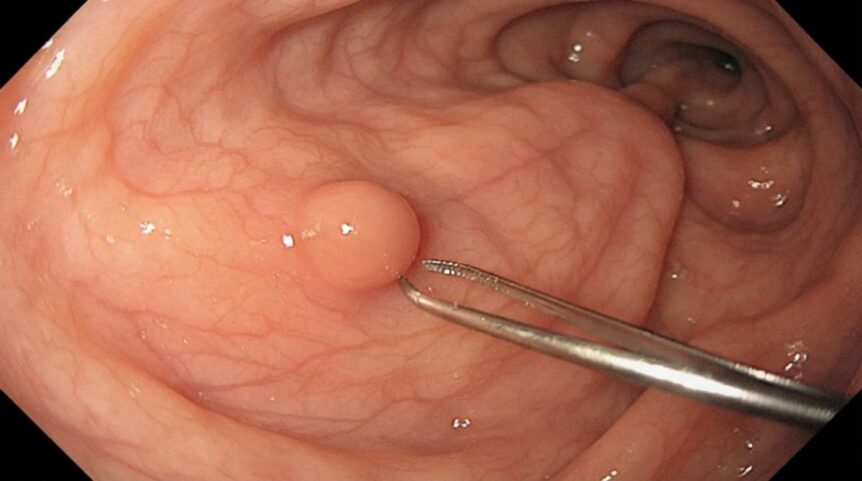
A stomach polyp can sound alarming, but it doesn’t automatically mean cancer. Understanding what gastric polyps are can help put the finding in context: they’re growths on the stomach’s inner lining, and most are benign, although some types can become cancerous.
It’s understandable to wonder what a gastric polyp means for your health, especially since these growths often cause no symptoms and may be found during an examination for another reason. Their significance depends on factors such as the polyp’s type and whether abnormal cells are present.
This article explains the common types of gastric polyps, their symptoms and possible complications, and how upper endoscopy and biopsy help identify them. It also explains how results guide decisions about monitoring or treatment based on the specific findings.
Key Takeaways
- Learn how stomach polyps differ and which risk factors may be associated with their development.
- Understand how upper endoscopy and biopsy help identify a polyp’s type and check for abnormal cells.
- Recognise symptoms that may occur with larger polyps, while keeping in mind that many cause no noticeable symptoms.
- See why a polyp’s type, size and biopsy findings help guide decisions about monitoring or treatment.
What are gastric polyps?
Gastric polyps are abnormal growths on the stomach’s inner lining. The main types are fundic gland, hyperplastic and adenomatous polyps. Identifying the type helps determine whether further assessment may be needed.
Causes and Risk Factors
Some conditions and exposures are associated with gastric polyp growth. Chronic inflammation, including gastritis linked to H. pylori, is associated with hyperplastic polyps and adenomas. Long-term proton pump inhibitor use has been linked to fundic gland polyps. Other factors include pernicious anemia, stomach ulcers, smoking, older age and a family history of gastric polyps. Familial adenomatous polyposis, an inherited condition, can increase polyp risk throughout the digestive system. These associations help explain why medical and family history matter when interpreting a finding.
Types of Gastric Polyps
Gastric polyps are classified by their tissue and cell features, not by appearance alone. Fundic gland polyps occur in the upper stomach and are associated with proton pump inhibitor use. Hyperplastic polyps can develop alongside chronic gastritis or H. pylori infection. Adenomatous polyps are important to identify because they are more likely than other common types to become cancerous. Knowing the type helps clarify a polyp’s potential significance and inform decisions about assessment and follow-up.
Size and location also describe a polyp, but they don’t establish its cell type. Gastric polyps can range from 1 millimetre to a few centimetres, and more than one may be present. Some are found incidentally during an endoscopy performed for another reason, so a person may have no symptoms that point to a polyp. A visible growth is not enough to determine its nature: tissue examination can distinguish benign changes from abnormal or precancerous cells.
The risks differ by polyp type. Fundic gland polyps have a small chance of becoming cancerous, while adenomatous polyps raise greater concern. Hyperplastic polyps generally carry a low risk, though certain features, including larger size, can increase it. Appearance offers useful clues, but classification and cellular findings provide a clearer basis for understanding what a polyp may mean.
Diagnosis by upper endoscopy and biopsy
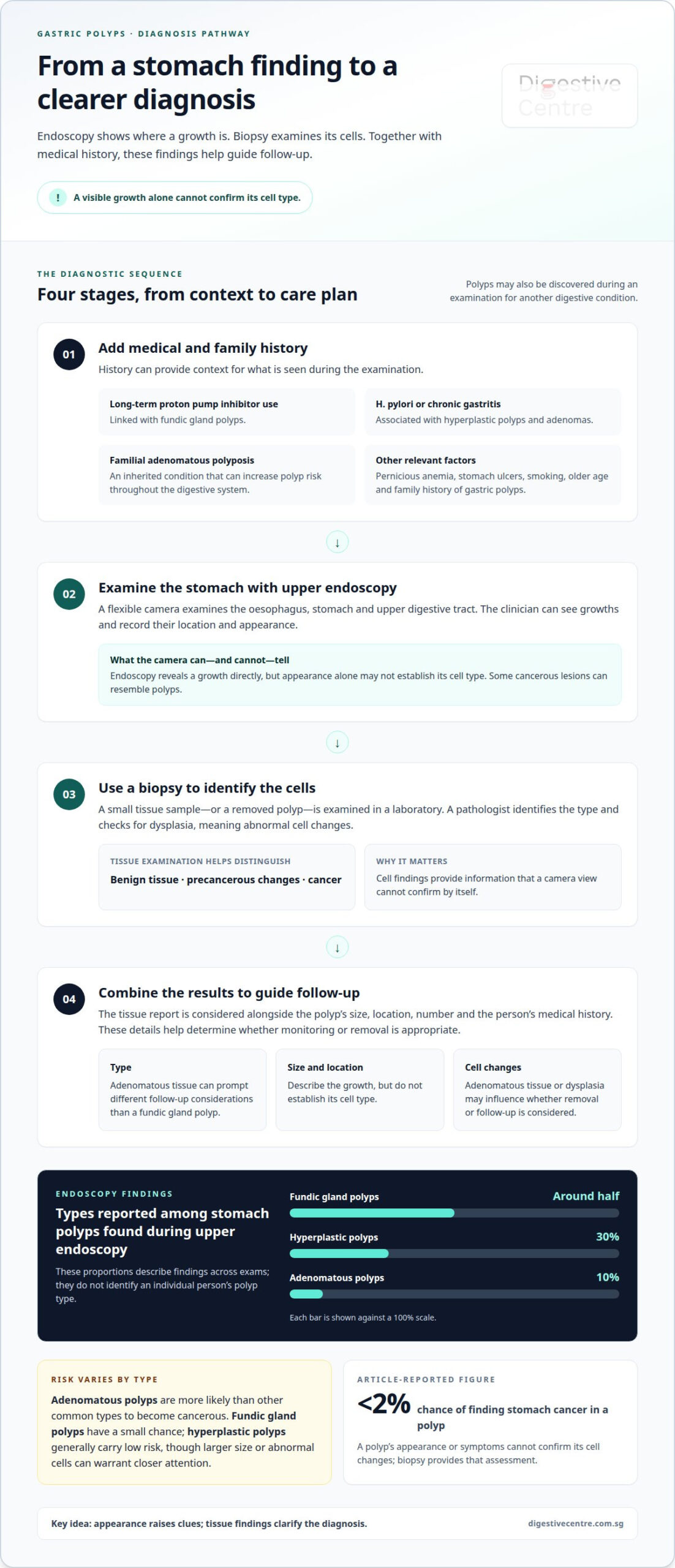
Upper endoscopy uses a flexible camera to examine the oesophagus, stomach and upper digestive tract. It can reveal growths directly and is the most common way gastric polyps are diagnosed. Polyps may also be found during a procedure investigating another digestive condition, rather than because of symptoms specific to a polyp.
During the examination, the clinician views the stomach lining and records the growths’ location and appearance. A visible growth alone cannot reliably establish its cell type. Some cancerous lesions can resemble polyps, so visual inspection offers important clues but may not settle the diagnosis.
Among stomach polyps found during upper endoscopy exams, around half are fundic gland polyps, 30% are hyperplastic polyps and 10% are adenomatous polyps, according to Cleveland Clinic. These proportions describe findings in upper endoscopy exams; they don’t determine the type of an individual person’s polyp.
A biopsy collects a small tissue sample, and a polyp may also be removed for laboratory examination. A pathologist assesses the cells to identify the polyp type and check for dysplasia, meaning abnormal cell changes. This analysis helps distinguish benign tissue from precancerous changes or cancer, which appearance on camera cannot confirm by itself.
Results are interpreted alongside the polyp’s size, location and number. For example, identifying an adenomatous polyp may prompt different follow-up considerations than finding a fundic gland polyp. The tissue report helps guide whether removal or monitoring is appropriate, rather than relying on appearance alone.
Medical history provides useful context. Long-term proton pump inhibitor use is linked with fundic gland polyps, while H. pylori infection is associated with hyperplastic polyps. A history of familial adenomatous polyposis also matters because this inherited condition can increase the risk of polyps in the digestive tract. These details help clinicians interpret endoscopy and biopsy findings together.
If an upper endoscopy is being considered to investigate digestive symptoms, explore gastroscopy and diagnostic assessment as a next step.
Symptoms and complications
Gastric polyps often cause no symptoms, but larger growths may cause pain, nausea, vomiting, bleeding or early fullness. Most are benign, though adenomatous polyps can become cancerous and some polyps may contain precancerous changes.
Possible Symptoms
Symptoms may occur when a polyp grows or bleeds. They can help explain why an examination is needed, but symptoms alone can’t identify a polyp. Larger growths may cause upper abdominal pain, bloating, nausea, vomiting or feeling full after eating only a small amount. Slow bleeding can lead to iron deficiency and fatigue; visible blood in vomit or stool can also occur.
Depending on its size and position, a polyp may also contribute to stomach blockage. Unexplained weight loss or persistent digestive discomfort can have other causes, so neither confirms that a polyp is present. Some growths are found during an endoscopy performed for another reason: the camera can reveal a polyp even when no symptoms have drawn attention to it.
Cancerous and Precancerous Potential
Gastric polyps vary in their potential to become cancerous. Adenomatous polyps are the type most likely to develop into stomach cancer, while fundic gland polyps have only a small chance. Hyperplastic polyps generally carry low risk, but larger ones or those with abnormal cells may warrant closer attention. The chance of finding stomach cancer in a polyp is less than 2%.
A polyp’s appearance or symptoms cannot confirm its cell changes. A biopsy can identify the type and check for dysplasia, meaning abnormal cell development. Findings such as adenomatous tissue or dysplasia can influence whether removal or follow-up is considered. Even a symptom-free polyp may need assessment to clarify its risk.
Removal can cause complications, including bleeding, infection or a hole in the stomach tissue. These are procedural risks, not risks that apply to every polyp. The potential benefit of removing a growth is weighed against its type, size and biopsy findings. Results help distinguish a polyp that can be monitored from one that may need treatment.
Definition of gastric polyps
A gastric polyp is a growth that projects from the stomach’s inner lining. It usually develops from abnormal cell growth in the innermost epithelial layer. “Polyp” describes the growth’s form and location, not its biological behaviour. The term alone does not establish whether a growth is benign, precancerous or cancerous. That distinction depends on its cells and examination findings.
Size and appearance can vary: stomach polyps range from 1 millimetre to a few centimetres. Some are raised bumps; others have a broader base. These visual differences describe how a growth sits on the lining, not what type of cells it contains. A larger polyp may draw attention during an upper endoscopy, but size alone doesn’t identify its tissue type or determine its cause.
Clinicians classify polyps by the tissue and cells involved. Fundic gland, hyperplastic and adenomatous polyps are distinct categories, not interchangeable names for the same growth. Each label describes a different finding. For example, “hyperplastic” refers to one tissue type, while “adenomatous” identifies another category with different possible implications. A biopsy helps establish the classification by examining sampled or removed tissue.
The difference between a visible growth and a confirmed diagnosis is important. During upper endoscopy, a camera shows the stomach lining and where a polyp appears. The image can identify a growth, but tissue analysis clarifies its cellular features. This is why an endoscopy finding may be described as a suspected polyp until further examination provides more detail. The result helps explain the finding; the word “polyp” alone is not a complete diagnosis.
If a stomach growth or endoscopy result has raised questions, discuss your digestive health concerns and the next steps for understanding the finding.
Digestive Centre: Gastric Balloon
Digestive Centre offers a gastric balloon as part of its medical weight management services. It may be relevant if weight management is a separate health goal, but it is not a treatment for gastric polyps. Polyp assessment follows a different path: gastroscopy examines the stomach, while biopsy findings help identify a polyp’s type and guide care.
If you’re considering weight management alongside questions about a stomach finding, discuss each as a separate clinical goal. Digestive Centre also offers gastroscopy and colonoscopy for digestive assessment. Keeping these purposes distinct helps you focus on the service that fits your needs.
Contact Digestive Centre to discuss your questions and the next step.
Take the Next Step With Clarity
Understanding gastric polyps can help you prepare for the next conversation, but your own findings and symptoms should guide it. Keep your endoscopy or biopsy report and note what you want clarified, such as what the findings mean or whether follow-up is recommended. This gives the discussion a practical starting point.
It can also help to describe any digestive symptoms and how they affect you. Mention discomfort, early fullness or any changes that concern you. These details help keep the conversation focused on your situation, rather than treating a polyp finding as the only relevant factor.
Digestive Centre offers gastroscopy and colonoscopy for digestive assessment, as well as GERD and acid reflux treatment. For a separate weight-management goal, its services include medical weight management and GLP-1 treatments. These options address different needs, so the next step should match your reason for seeking care.
If you’d like to discuss your digestive health concerns, contact Digestive Centre. A focused conversation can help you decide what to address next and move forward with greater clarity.
Frequently Asked Questions
When should I call my doctor?
Call your doctor about persistent upper abdominal discomfort, early fullness, unexplained weight loss, fatigue, or blood in vomit or stool. Seek urgent care for: Abdominal or chest pain; Difficulty breathing; Vomiting or abdominal bloating; Passage of blood with stools; High fever, especially if persistent or associated with pain, jaundice, swelling, etc.; Swelling, pain, or redness in one or both legs; Severe allergic reactions. In a Singapore emergency, call 995 or go to the nearest Accident & Emergency department.
How Is It Diagnosed?
Upper endoscopy lets a clinician inspect the stomach lining, while a biopsy or examination of a removed polyp identifies its cells. If you receive a report, note the polyp type, whether it mentions dysplasia, and any recommended follow-up. These details help explain the result and guide the next discussion. The camera’s view alone cannot confirm the tissue diagnosis.
How Is It Treated?
Treatment depends on the polyp’s type, size, cause and cellular findings. Small growths with low cancer risk may be monitored, while adenomatous polyps or growths with concerning changes may be removed during endoscopy. Addressing an underlying cause, such as H. pylori infection, may also be part of care. Ask how the biopsy result affects the proposed plan and follow-up.
What are stomach polyps?
Stomach polyps are growths arising from the stomach’s inner lining. They are a finding, not a diagnosis of cancer: their significance depends on the tissue type and whether abnormal cells are present. For example, endoscopy may reveal a raised area, while laboratory examination of a tissue sample clarifies what kind of growth it is.
When should I see my healthcare provider?
Arrange a medical review if digestive symptoms persist, worsen or interfere with eating, or if an examination has identified a stomach polyp. Even an incidental finding deserves a clear explanation of its type and any recommended monitoring. Bring the endoscopy or biopsy report if available. This content is general information only, not medical advice or a substitute for consultation with a qualified doctor.
What are gastric polyps and where do they develop?
Gastric polyps are abnormal growths on the stomach’s inner lining. Fundic gland polyps occur in the upper portion of the stomach; other types can arise in different areas. Location is one part of the endoscopy findings, while tissue examination identifies the cell type. Together, these details distinguish where a polyp is from its potential significance.
Medical disclaimer. This guide is general health information from Digestive Centre and is not a substitute for a consultation. Symptoms and treatment options differ from person to person. For advice about your own condition, book a consultation with the clinic. In an emergency, call 995.