
A rich, fatty or fried meal can trigger more than indigestion. To understand what a gallbladder attack is, know that it often happens when a gallstone temporarily blocks a duct, causing biliary colic, or severe pain. The pain may start in the upper right or middle abdomen and spread to the back or right shoulder.
It’s easy to mistake this discomfort for reflux: upper abdominal pain can overlap, and nausea may occur with either. This guide covers common triggers, how gallbladder pain may feel and differ from reflux, and when to seek medical care. Pain lasting more than four hours warrants immediate medical attention. Fever, chills or yellowing of the skin or eyes are also reasons to seek urgent care. Recognising these signs can help you respond calmly and get an appropriate assessment.
Key Takeaways
- Fatty or fried foods can trigger gallbladder pain, so notice whether discomfort follows a meal.
- Pain often affects the upper right or middle abdomen and may spread to the back or right shoulder, making it easy to confuse with reflux.
- Seek urgent medical care for severe or persistent pain, jaundice, or fever with chills.
- A warm compress may offer some comfort, but ongoing pain needs medical assessment rather than relying on home relief alone.
Can gallbladder problems mimic gastroesophageal reflux disease (GERD)?
Yes. Gallbladder pain can occur in the upper abdomen or chest, where it may resemble GERD discomfort. A gallbladder attack often starts when a gallstone temporarily blocks a bile duct, causing biliary colic. The gallbladder stores bile, which helps break down fats. After a fatty or fried meal, it contracts to release bile. If a stone obstructs the flow, that contraction can worsen pain. Symptoms may appear after eating, but pain location alone cannot confirm the cause.
Common symptoms include sudden, intensifying pain in the upper right abdomen or beneath the breastbone. It may spread to the back between the shoulder blades or to the right shoulder. Nausea and vomiting can accompany the pain. A temporary blockage may ease when the stone shifts, but recurring pain can indicate symptomatic gallstones. Standard blood work may still be normal, so clinicians may use an ultrasound to look for stones. If a stone keeps blocking bile flow, gallbladder disease can become complicated.
An attack may last from a few minutes to a few hours. Frequency varies: if stones remain, symptoms can recur, but there is no predictable schedule. Repeated episodes warrant assessment, even when the pain settles between attacks.
Some symptoms need urgent attention. Seek immediate medical care if the pain is so severe you cannot sit still or find a comfortable position, or if you develop jaundice, a high fever or chills. Yellowing of the skin or eyes can signal a bile duct blockage; dark urine or pale bowel motions may also occur. Pain lasting more than four hours warrants immediate medical attention because it may indicate complicated gallbladder disease. Persistent pain with fever can point to inflammation or infection, while a blocked duct can lead to pancreatitis. These warning signs call for prompt assessment, not home observation.
Gallbladder attack pain location and sensation
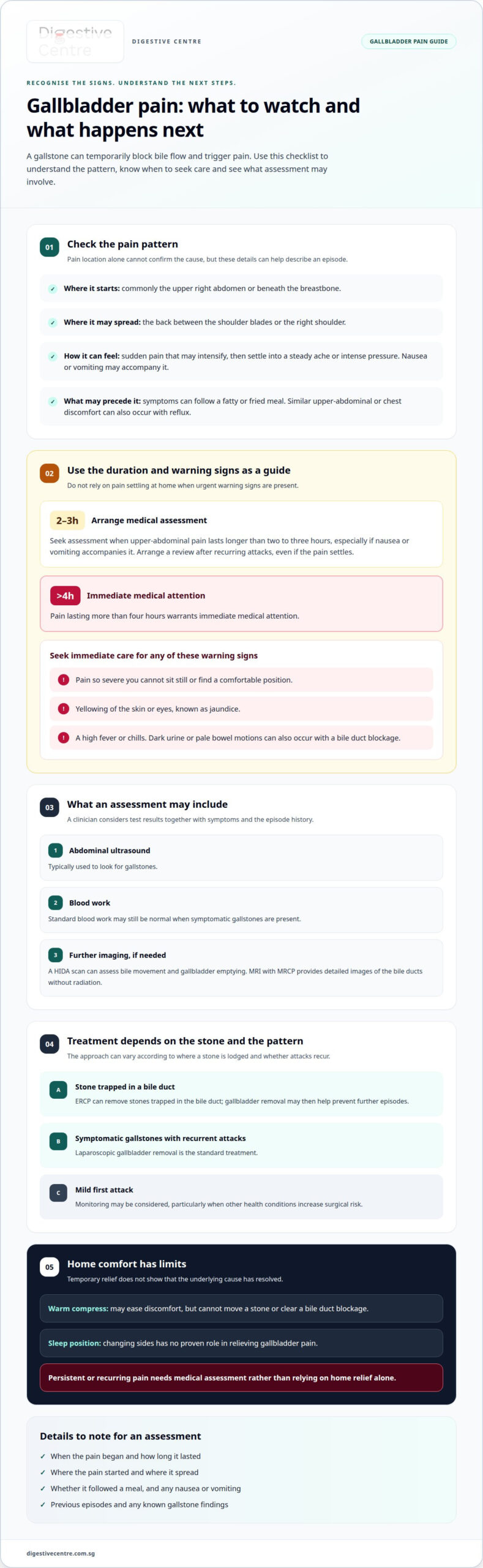
A gallbladder attack is sudden pain that commonly starts in the upper right abdomen or beneath the breastbone. People often ask, “What is a gallbladder attack?” It usually refers to pain caused when a gallstone temporarily blocks bile flow. The discomfort may build over 15 to 30 minutes, then settle into a steady ache or intense pressure. It can feel different from brief, cramping stomach pain.
The pain may travel from the abdomen to the back between the shoulder blades or to the right shoulder. For example, someone may first notice a deep ache below the ribs, then feel it spreading behind the shoulder. Understanding what a gallbladder attack is can help explain this pattern, but pain location alone cannot identify its cause. A stone lodged in a duct can produce similar pain, while inflammation may cause persistent pain.
Other conditions can cause similar discomfort. Gastroesophageal reflux disease (GERD) may cause upper abdominal or chest discomfort, while pancreatitis can cause sudden, severe upper abdominal pain that often reaches the back. How the pain starts, how long it lasts, and any accompanying symptoms can help distinguish possible causes. Yellowing of the skin or eyes, known as jaundice, can indicate a bile duct obstruction and requires prompt medical attention.
Gallstones are the most common cause of gallbladder pain. An ultrasound is typically used to look for stones, although standard blood work may be normal even when symptomatic gallstones are present. If stones repeatedly cause symptoms, laparoscopic gallbladder removal is the standard treatment. For unexplained upper abdominal pain, clinical assessment of abdominal pain can help clarify the cause.
Episodes can last from minutes to hours. Pain may occur sporadically in the centre of the upper abdomen, often after heavy or fatty meals or at night.
When to seek medical care
Seek medical assessment if upper abdominal pain lasts longer than two to three hours, especially if nausea or vomiting accompanies it. Even if an episode settles, arrange a review after recurring attacks. A doctor can assess whether gallstones, reflux or another cause best explains the pattern. Note when the pain began, where it spreads and whether it followed a meal. These details help you describe the episode clearly during assessment. Also share any previous episodes and known gallstone findings.
Treat certain symptoms as an emergency. Get immediate medical care for pain so severe you cannot sit still or find a comfortable position, yellowing of the skin or eyes, or a high fever with chills. Dark urine and pale bowel motions can accompany a common bile duct blockage. Fever and chills may indicate infection. Don’t wait at home for the pain to ease when these warning signs appear.
Assessment may include an abdominal ultrasound to look for gallstones. Standard blood work can still be normal despite symptomatic gallstones. If initial findings leave questions, a HIDA scan can assess bile movement and gallbladder emptying. MRI with MRCP provides detailed images of the bile ducts without radiation. A clinician considers these results alongside your symptoms, not in isolation.
Treatment depends on where a stone is lodged and whether attacks recur. ERCP can remove stones trapped in the bile duct; gallbladder removal may then help prevent further episodes. For symptomatic gallstones and recurrent attacks, laparoscopic cholecystectomy is standard treatment. A mild first attack may instead be monitored, particularly when other health conditions increase surgical risk. Persistent or repeated pain warrants a timely discussion of these options with a doctor.
Home relief options and their limitations
A warm compress may ease discomfort during a gallbladder episode, but it cannot move a stone or clear a bile duct blockage. Use it only for comfort. Short-lived improvement does not show that the underlying cause has resolved. Persistent pain needs medical assessment because inflammation can progress to cholecystitis.
Changing your sleep position has no proven role in relieving gallbladder pain. There’s no scientific evidence that lying on either side stops an attack. Rest in a comfortable position, but don’t rely on posture to treat gallstones. Home measures cannot treat a serious blockage or complications such as pancreatitis.
Some non-surgical treatment is used for selected gallstones. Ursodeoxycholic acid may dissolve cholesterol stones measuring 2 to 3 millimeters, but treatment may continue for up to two years. It isn’t an immediate way to relieve an attack. Gallstones without symptoms typically don’t need treatment. After a mild first attack, watchful waiting may be considered, particularly if another health condition makes surgery risky.
In hospital, treatment depends on whether a stone blocks the gallbladder or a bile duct, and whether inflammation or infection has developed. A clinician may use imaging and blood tests to guide care. For symptomatic gallstones and recurrent attacks, laparoscopic cholecystectomy is the standard treatment. It removes the gallbladder through small incisions; recovery may take a few days to a few weeks. After an acute attack, removal is usually performed within 24-72 hours. Home relief should never delay urgent care for worsening symptoms. For recurring discomfort that may instead be reflux, seek GERD and acid reflux assessment.
Digestive Centre
Digestive Centre can help assess ongoing upper digestive symptoms that may resemble reflux. Because gallbladder pain and GERD can overlap, a clinical assessment can help clarify whether reflux may be contributing. Digestive Centre offers GERD and acid reflux treatment, alongside gastroscopy and colonoscopy. These services address digestive concerns, while suspected gallbladder attacks with severe or persistent pain, fever, chills, or jaundice need urgent medical attention rather than routine reflux care. If symptoms recur or you remain unsure what may be causing them, contact Digestive Centre to discuss your concerns.
Choose a Clear Next Step
Understanding what a gallbladder attack can involve is useful, but the next step is finding out whether recurring digestive discomfort needs clinical assessment. Upper abdominal symptoms can have different causes, so a focused review helps put your experience in context. Describe when episodes occur, what seems to trigger them, and how they affect eating or daily activities. These details give the discussion a practical starting point.
The appropriate care pathway depends on the suspected cause and your individual findings. Digestive Centre provides digestive care, including GERD and acid reflux treatment, gastroscopy and colonoscopy. These services may be relevant when reflux or other digestive conditions are being assessed. Suspected gallbladder disease needs appropriate clinical evaluation.
If you’re ready to discuss ongoing symptoms or uncertainty about next steps, contact Digestive Centre. A clear conversation can help you understand relevant assessment and treatment options without assuming every digestive symptom has the same cause. Take the next step with confidence and clearer information to guide your decisions.
Frequently Asked Questions
What triggers a gallbladder attack?
Fatty or fried foods can trigger symptoms because the gallbladder contracts to release bile after eating. Skipping meals or fasting can also increase gallstone risk. Note what and when you ate before symptoms began, then share this pattern during assessment. Food timing may offer clues, but it cannot confirm that gallstones caused the pain.
Could it be gallstones?
Yes, gallstones are a common cause of a gallbladder attack, but symptoms alone can’t confirm their presence. An ultrasound is typically used to look for stones. If pain recurs after earlier scans or assessments, explain how the episodes have changed, including their timing and associated symptoms. Stones that cause no symptoms typically don’t need treatment, so finding them doesn’t automatically mean surgery is needed.
What is gallbladder pain?
Gallbladder pain is discomfort associated with a problem affecting the gallbladder or bile flow. It may be felt in the upper abdomen, and its spread or accompanying symptoms can help a clinician assess possible causes. For example, pain with nausea differs from isolated burning after a meal, but that distinction isn’t enough to diagnose the source. Assessment considers the full symptom pattern and relevant examination or imaging findings.
Diet changes to surgery: What are my treatment options?
Treatment depends on symptoms, stone characteristics and whether complications develop. Eating more fibre-rich foods, such as vegetables, fruits and whole grains, may support gallstone risk reduction; avoiding fasting is also relevant. Ursodeoxycholic acid may dissolve selected small cholesterol stones, but treatment can take a long time. For symptomatic stones with repeated attacks, laparoscopic gallbladder removal is the standard treatment. Diet changes alone don’t remove an obstructing stone.
What’s the outlook?
The outlook depends on whether stones cause symptoms or complications. Stones found incidentally may need no treatment if they remain symptom-free. People can have normal, healthy digestion without a gallbladder, though digestive changes can occur after removal. Recovery after surgery varies. Follow-up can help address persistent symptoms and determine whether they relate to the original problem or another digestive condition.
When do symptoms point to something more serious?
Seek immediate care for severe abdominal pain, jaundice, or high fever with chills. Persistent pain may signal inflammation or a blocked duct, and a stone can also lead to pancreatitis. In a Singapore emergency, call 995 or go to the nearest Accident & Emergency department. This information is general and isn’t medical advice or a substitute for consultation with a qualified doctor.
Medical disclaimer. This guide is general health information from Digestive Centre and is not a substitute for a consultation. Symptoms and treatment options differ from person to person. For advice about your own condition, book a consultation with the clinic. In an emergency, call 995.