
The easiest vitamin to take may not be the right one after bariatric surgery. Gummy multivitamins may not provide appropriate nutrient amounts for post-surgery needs, and the vitamin supplements needed after bariatric procedures depend on the operation and, for some bypasses, the length of intestine bypassed. After gastric bypass or sleeve gastrectomy, multivitamin and mineral supplements are recommended for life.
It’s understandable to assume one standard multivitamin will cover every procedure. In practice, supplement plans can differ, and calcium, iron, vitamin D and vitamin B12 may need particular attention. This article explains why gummies may fall short, how recommendations can vary with procedure type and bypassed limb length, and what makes gastric band surgery a distinct case. You’ll also learn why supplement form and timing matter, so you can better understand the long-term plan discussed with your bariatric care team.
Key Takeaways
- Understand why gummy vitamins may not meet post-surgery needs and which nutrients may require added attention.
- See how lifelong supplement plans differ after gastric bypass and sleeve gastrectomy.
- Learn why bypassed intestinal limb length can change which recommendations apply after a one-anastomosis gastric bypass.
- Find out what to consider about supplement form, timing and ongoing nutrient monitoring after bariatric surgery.
Why No Gummy Vitamins after Bariatric Surgery?
Gummy multivitamins may not provide appropriate nutrient amounts after bariatric surgery. Chewable tablets are different: recommendations may include a complete chewable multivitamin with iron. The formula matters, not just the texture. Post-surgery guidance discourages gummies and vitamin skin patches. Vitamin supplements needed after bariatric procedures should match the operation and the person’s nutrition plan.
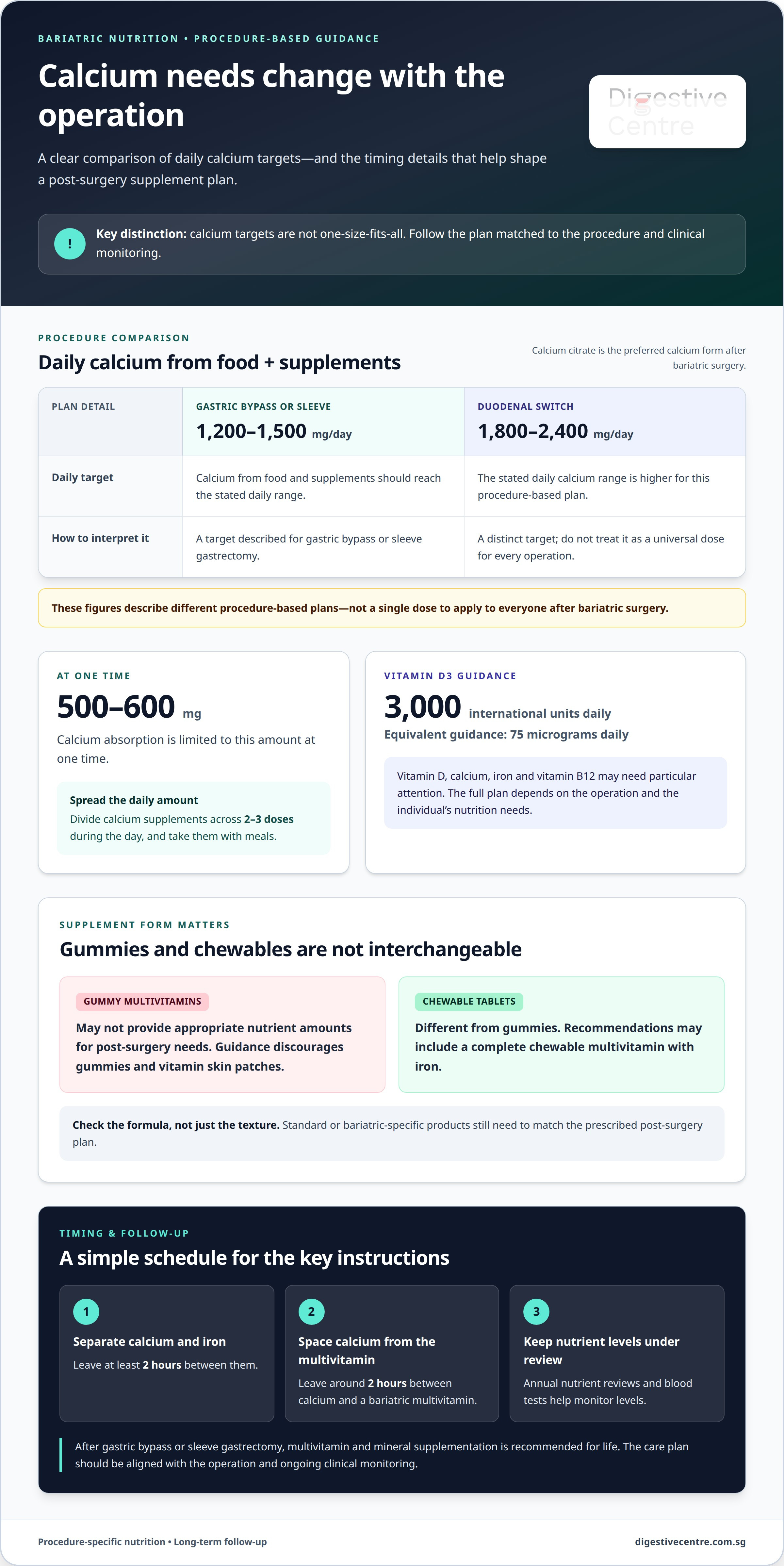
Iron, calcium and vitamin D may need specific attention. The National Institutes of Health Office of Dietary Supplements notes that gastrointestinal surgery can increase iron-deficiency risk through malabsorption or blood loss. Calcium citrate is the preferred calcium form after bariatric surgery. After gastric bypass or sleeve gastrectomy, calcium from food and supplements should reach 1200-1500 mg/daily. After a duodenal switch, the recommended daily intake is 1,800-2,400 milligrams.
Calcium absorption is limited to 500-600 milligrams at one time. Spread supplements across two to three doses during the day, and take them with meals. Separate calcium and iron by at least 2 hours, and leave around two hours between calcium and a bariatric multivitamin. Vitamin D3 guidance after bariatric surgery is 3,000 international units or 75 micrograms daily.
Requirements differ by procedure and bypassed limb length. The vitamin supplements needed after bariatric procedures after a one-anastomosis bypass may follow different recommendations depending on whether the bypassed limb is longer than 150 cm or 150 cm or less. In Singapore, follow the plan aligned with your operation and clinical monitoring.
Supplement costs depend on the product and prescribed combination, while insurance coverage depends on the individual policy. Gastric surgery can increase deficiency risks, including iron deficiency. Annual nutrient reviews and blood tests help monitor levels. If your bariatric team cannot provide a review, tell your primary care provider about the surgery and arrange an annual blood test. Deficiency symptoms vary by nutrient, so testing can help assess levels even when symptoms are unclear.
Lifelong multivitamin and mineral supplementation after gastric bypass or sleeve gastrectomy
After gastric bypass or sleeve gastrectomy, lifelong multivitamin and mineral supplementation is recommended. A complete daily formula helps meet nutritional needs when smaller meals make them harder to fulfil.
Lifelong Complete Multivitamin and Mineral Formula
A complete A-to-Z formula provides a broad range of vitamins and minerals in one daily supplement. After surgery, reduced food intake can make it difficult to meet daily nutrient needs and increase deficiency risk, according to UPMC. Because use is lifelong, supplements are part of ongoing care, not just short-term recovery. A care plan may also include nutrients beyond the multivitamin.
Daily Multivitamin Options
Daily options include a complete multivitamin with minerals or an over-the-counter multivitamin taken at a double dose. UPMC describes a gastric-bypass plan that includes a complete multivitamin, calcium with vitamin D, iron and vitamin C, vitamin D, and vitamin B12. These components may be separate supplements rather than one tablet. Taking supplements evenly across the day can support absorption; a regular routine may also help with memory.
Standard and Bariatric-Specific Supplements
Standard over-the-counter vitamins may be suitable, but the formula and serving must match the prescribed post-surgery plan. A general multivitamin may not provide the full combination or amounts an individual needs. Bariatric-specific products are one option, but their nutrient content still needs review. Some plans use a complete chewable multivitamin with iron; others use a double-dose multivitamin alongside additional mineral supplements.
For clarity, record each supplement, serving and time in a daily schedule. Keep separate vitamin and mineral products visible together, and follow the dietitian’s instructions if the plan changes. A discussion of bariatric surgery care can help connect procedure planning with long-term nutritional follow-up.
Supplement needs by bypassed intestinal limb length
The amount of intestine bypassed can affect nutrient absorption and supplement planning. Recommendations for one-anastomosis gastric bypass and Roux-en-Y gastric bypass should therefore be tailored to the specific operation and limb length.
Gastric Bypass Supplement Doses
Gastric bypass supplement doses are the planned daily amounts of vitamins and minerals taken after surgery. The bypassed limb matters because it affects how much of the digestive tract is involved in food digestion and nutrient absorption. A longer bypass may call for a plan closer to duodenal switch recommendations, while other bypass configurations may follow a Roux-en-Y approach.
For gastric bypass or sleeve gastrectomy, calcium from food and supplements should reach 1200-1500 mg/daily. Duodenal switch recommendations call for 1,800-2,400 milligrams of calcium per day. These figures describe different procedure-based plans, not a single dose to apply to every person after weight loss surgery.
Daily Needs for Key Vitamins and Minerals
Key nutrients include calcium, vitamin D, iron and vitamin B12, with folate also considered in a complete nutritional assessment. Vitamin D3 guidance after bariatric surgery is 3,000 international units or 75 micrograms daily. Oral vitamin B12 guidance is 500 micrograms daily. The appropriate iron and folate amounts depend on the individual supplement plan and nutrient status.
Gastric banding, sleeve gastrectomy and bypass procedures do not automatically share the same supplement schedule. For example, calcium recommendations differ between sleeve or gastric bypass and duodenal switch plans. Calcium citrate is preferred after bariatric surgery, and dividing calcium into doses throughout the day supports absorption. A clinical nutrition review considers the operation, bypassed anatomy, weight changes and blood test results, then aligns supplements with those findings rather than applying another procedure’s doses.
UPMC recommends supplements after bariatric surgery to help ensure proper nutrition; Health New Zealand advises taking them every day. Start vitamin and mineral supplements immediately. Take calcium in three divided doses; UPMC recommends B12 because some procedures hinder the stomach’s release during digestion.
Supplements recommended after gastric band surgery
After gastric band surgery, supplement choices should follow the person’s procedure and nutritional needs. Don’t assume doses listed for Roux-en-Y gastric bypass or duodenal switch automatically apply to a gastric band. Post-operative recommendations include attention to vitamin D, vitamin B12 and iron, with the schedule shaped by the individual plan.
One recommendation after bariatric surgery is vitamin D3 at 20,000 IU once each week or 2,000-4,000 IU daily. Vitamin B12 may be taken under the tongue or by injection, with the option discussed with the health care team. A separate recommendation lists a 1 mg intramuscular hydroxycobalamin injection every 3 months. Follow the prescribed schedule rather than combining approaches independently.
Daily iron is recommended after bariatric surgery for women of menstrual age or people with anaemia. Iron needs matter because gastrointestinal surgery can increase deficiency risk through malabsorption or blood loss, according to the National Institutes of Health Office of Dietary Supplements. Calcium citrate is the preferred form after bariatric surgery, but the dose should reflect the specific procedure and care plan.
Form can change during recovery. Chewable or liquid supplements are preferable during the first three to six months after bariatric surgery, and supplements begin when the blended-food stage starts. A soluble multivitamin and mineral formula may be provided for 1 month after discharge. These timing details help distinguish early recovery needs from longer-term supplement routines.
Prolonged vomiting, poor dietary intake or excessive weight loss can raise concern about thiamine needs. After bariatric surgery, the body requires at least 12 mg of thiamin. In those situations, contact a dietitian or GP because additional thiamine may be needed. Annual nutrient review helps identify deficiency and guide adjustments; don’t switch to a gastric-bypass schedule without a clinical reason.
Digestive Centre: Bariatric surgery
Digestive Centre provides bariatric surgery for people considering a surgical approach to weight management. Understanding how supplement needs differ by procedure can help inform a discussion about surgery and long-term nutrition. The type of operation, including whether it involves intestinal bypass, affects which recommendations may apply.
Consider a bariatric surgery consultation if you’re weighing procedure options or want to understand how surgery may affect your ongoing care. The discussion can focus on your medical circumstances and the differences between procedures, rather than applying one supplement schedule to everyone. Digestive Centre also offers medical weight management for people comparing surgical and non-surgical approaches.
Contact Digestive Centre to discuss whether bariatric surgery may suit your goals.
Make your next discussion specific to your care
Your supplement plan is easier to discuss when it’s considered alongside the procedure and your ongoing nutritional needs. The vitamin supplements needed after bariatric procedures are not a one-size-fits-all list; use what you’ve learned to guide a conversation about which recommendations fit your circumstances. Digestive Centre provides bariatric surgery, medical weight management with GLP1s, gastroscopy and colonoscopy, and GERD and acid reflux treatment.
If you’re considering bariatric surgery or want to discuss your weight-management options, contact Digestive Centre to take the next step. A focused discussion can help you consider your options with greater clarity and plan your care with confidence.
Frequently Asked Questions
What type of bariatric multivitamin is recommended after surgery?
A complete daily multivitamin and mineral formula is recommended after gastric bypass or sleeve gastrectomy. A chewable option should be complete and contain iron; the cited guidance does not recommend gummy vitamins or vitamin skin patches. A supplement plan may, for example, pair a multivitamin with separate calcium or vitamin D. The nutrient content matters more than the format alone.
When should patients start supplements after bariatric surgery, and how should doses be spaced?
Start supplements according to the post-operative plan, which may begin after surgery or when the blended-food stage starts. Spread doses across the day; separate calcium and iron by at least 2 hours. The patient guides, service descriptions and other health content on this website are general information… they are not medical advice, they do not create a doctor-patient relationship, and they are not a substitute for a consultation with a doctor who knows your history.
What blood tests and monitoring are recommended to check nutrient levels after bariatric surgery?
Have your nutrient levels reviewed and checked with blood tests annually. If your bariatric team cannot provide this review, tell your primary care provider about the surgery and arrange an annual blood test.
What are the risks and symptoms of vitamin and mineral deficiencies after bariatric surgery?
Reduced food intake and malabsorption can increase deficiency risk. Gastrointestinal surgery can also raise the risk of iron deficiency through malabsorption or blood loss. Symptoms vary by nutrient, so blood testing can help assess levels even when symptoms are unclear.
How do supplement recommendations vary by country or local bariatric guidelines?
Recommendations can reflect local guidance and the operation. In New Zealand, a one-anastomosis bypass with a limb longer than 150 cm follows duodenal switch recommendations; at 150 cm or less, it follows Roux-en-Y recommendations. In Singapore, follow a plan aligned with the operation and clinical monitoring.
Medical disclaimer. This guide is general health information from Digestive Centre and is not a substitute for a consultation. Symptoms and treatment options differ from person to person. For advice about your own condition, book a consultation with the clinic. In an emergency, call 995.