
Some colorectal cancer risks are outside your control, but daily habits can still matter. Colorectal cancer affects the colon or rectum, and steps for reducing your risk of colorectal cancer include staying physically active, avoiding smoking and limiting alcohol. Screening also matters because colorectal cancer can develop without symptoms at first.
It’s understandable to focus on family history, but colorectal cancer risk is shaped by more than inherited factors. Food choices, physical activity, smoking and alcohol use can also play a role, alongside certain health conditions.
Learn how these factors relate to colorectal cancer and which everyday changes may help reduce risk. You’ll also see why screening and paying attention to changes in bowel habits are important for digestive health.
Key Takeaways
- Colonoscopy can identify and remove polyps before they become cancerous, while screening needs may differ for people with a family history or other risk factors.
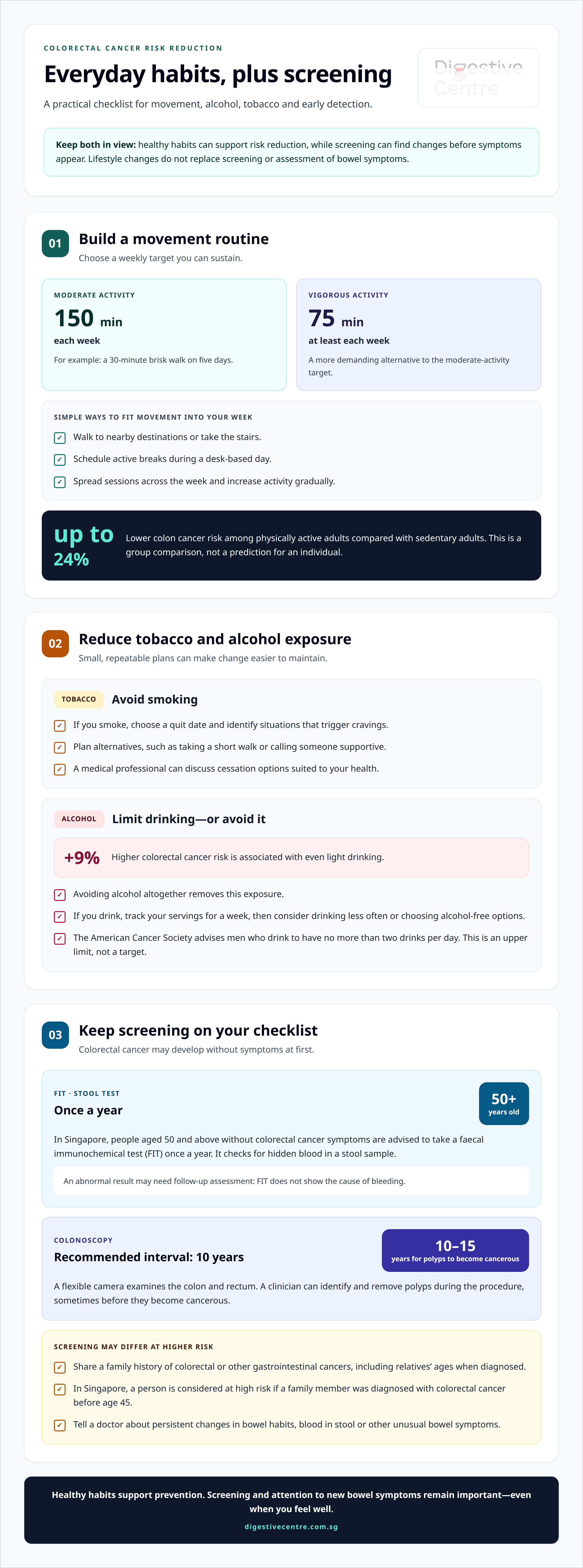
- Aim for 150 minutes of physical activity every week, and build movement into your routine in ways you can maintain.
- Singapore’s Ministry of Health recommends at least five servings of vegetables and fruits daily; limiting red and processed meat can also support healthier food choices.
- Family history, inflammatory bowel disease and diabetes can affect colorectal cancer risk, so understanding your personal health factors can help guide screening discussions.
1. What is colorectal cancer (colon cancer)?
Colorectal cancer begins in the colon or rectum, parts of the large intestine. It often develops from polyps, small growths in the bowel lining. These growths usually take about 10 to 15 years to become cancerous, so screening can find changes earlier. During colonoscopy, a clinician can identify and remove polyps before they become malignant.
Screening can detect possible cancer before symptoms appear. In Singapore, people aged 50 years and above without colorectal cancer symptoms are advised to take a faecal immunochemical test (FIT) once a year. FIT checks a stool sample for hidden blood, which may indicate colorectal cancer. It doesn’t show the cause of bleeding, so follow-up assessment may be needed when a result is abnormal.
Colonoscopy examines the colon and rectum using a flexible camera, allowing polyps to be seen and removed during the procedure. A recommended colorectal cancer screening interval for colonoscopy is 10 years. Screening plans can differ for people at higher risk, including those with a family history or inflammatory bowel disease. In Singapore, a person is considered at high risk if a family member was diagnosed with colorectal cancer before age 45.
Tell a doctor about persistent changes in bowel habits, blood in your stool or other unusual bowel symptoms. Colorectal cancer may not cause symptoms at first, so discuss screening even if you feel well, particularly if you have a family history or a condition such as Crohn’s disease.
A family history of colorectal or other gastrointestinal cancers may also point to inherited conditions, including Lynch syndrome or familial adenomatous polyposis. Sharing relatives’ diagnoses and their ages when diagnosed can help clarify your risk. Screening is one part of prevention: it works alongside healthy habits, such as eating fruit and maintaining a healthy weight, but cannot prevent every case.
2. Physical activity
Regular moderate-to-vigorous physical activity can lower colorectal cancer risk. Physically active adults have up to a 24% lower risk of colon cancer than sedentary adults. This comparison describes group differences, not an individual outcome. Movement supports prevention, but it doesn’t replace regular screening or attention to new bowel symptoms.
Aim for 150 minutes of moderate activity every week. Brisk walking is one example. Alternatively, target at least 75 minutes of vigorous activity each week. Spread sessions across the week to build a sustainable routine. A 30-minute brisk walk on five days reaches the moderate-activity target. Choose an effort that raises your breathing while allowing conversation; vigorous activity feels more demanding.
Body weight and physical activity are linked aspects of overall health. Maintaining a healthy weight is one lifestyle measure associated with lower colorectal cancer risk. Regular movement can support weight management, and an activity routine that fits your schedule may be easier to maintain. Try walking to nearby destinations, taking the stairs or scheduling active breaks during a desk-based day.
For lifestyle-based prevention, pair regular movement with nutritious meals that include vegetables, avoid smoking and limit alcohol. These habits address several factors linked to colorectal cancer risk, rather than relying on exercise alone. You don’t need to start with strenuous workouts: increasing activity gradually can make a routine easier to sustain.
If a medical condition or persistent symptoms affect your ability to exercise, seek medical advice rather than pushing through discomfort. Otherwise, choose an activity you enjoy, set a weekly target and track your sessions in a calendar. For example, record your walking days and minutes, then adjust your plan around work and family commitments. Regular activity complements, but never replaces, recommended screening.
3. Smoking and alcohol
Smoking and alcohol are changeable habits to address as part of a healthy lifestyle. Avoiding tobacco supports cancer prevention, but does not replace colorectal screening. If you smoke, choose a quit date, identify situations that trigger cravings and plan alternatives, such as taking a short walk or calling someone supportive. A medical professional can discuss cessation options suited to your health.
Alcohol consumption is also relevant: even light drinking is associated with a 9% higher colorectal cancer risk. Avoiding alcohol altogether removes this exposure. If you drink, track each serving for a week to understand your usual intake. Then consider reducing how often you drink, choosing alcohol-free options, or setting drink-free days.
The American Cancer Society advises men who drink to have no more than two drinks per day. This is an upper limit, not a target; drinking less or not at all means less alcohol exposure.
Plan ahead for social occasions. For example, decide whether you’ll choose a non-alcoholic drink and alternate alcoholic drinks with water. Avoid keeping alcohol at home if having it there encourages frequent drinking. Small, repeatable changes may be easier to maintain than relying on willpower at each occasion.
Smoking and drinking can go together, such as when you smoke while socialising with friends. Plan how to handle that trigger differently: step outside without cigarettes, ask friends not to offer them or leave early. If you’re receiving treatment or taking medication, discuss alcohol use with a medical professional because it may affect your care. Lifestyle changes and avoiding alcohol do not replace screening or assessment of bowel symptoms.
4. Colorectal cancer risk factors
Some colorectal cancer risk factors can’t be changed, while others relate to daily habits or health conditions. Age matters: gastrointestinal cancers usually become more common after 50. Diabetes is also associated with higher risk; people with diabetes are up to 40 per cent more likely to develop colon cancer than those without diabetes. These figures describe population-level risk, not an individual diagnosis.
Inflammatory bowel disease, including Crohn’s disease and ulcerative colitis, can increase colorectal cancer risk. The condition and how long you have had it can affect your individual risk profile. A family history of colorectal or other gastrointestinal cancers may also indicate an inherited syndrome, such as Lynch syndrome or familial adenomatous polyposis. Sharing relevant diagnoses with a healthcare professional can inform screening discussions.
Inherited gene defects account for less than 10 per cent of colorectal cancer cases. Most cases therefore aren’t explained by inherited mutations alone. This distinction matters: a person without a known family history can still develop the disease, while a family history may warrant earlier or more frequent screening.
Food choices are another potential factor. A diet high in vegetables, fruits and whole grains, and low in red and processed meats, probably lowers risk. Singapore’s Ministry of Health recommends at least five servings of vegetables and fruits daily. If you eat red meat, the World Cancer Research Fund recommends limiting intake to about three portions per week. Choose fish or other lean proteins more often, and reduce processed meats such as sausages.
Maintaining a healthy weight and staying physically active are practical cancer-prevention steps, though neither removes every risk factor. Focus on sustainable changes alongside appropriate screening. For support with weight-related health goals, explore medical weight management.
Digestive Centre
Digestive Centre provides colonoscopy and medical weight management services that support different aspects of digestive health. If you’re due for colorectal screening, have a family history or notice persistent bowel changes, colonoscopy can examine the colon and identify polyps for assessment and removal. Screening decisions depend on your history and health needs.
Daily habits matter too. If you’re seeking support with weight-related health goals, medical weight management is a clinical option to discuss alongside sustainable activity and food choices. These services can complement prevention efforts, but do not replace recommended screening or assessment of concerning symptoms.
Digestive health questions can feel personal. Sharing your symptoms, family history and screening concerns can help focus a discussion on suitable next steps. Contact Digestive Centre to discuss your colorectal health concerns.
Take the Next Step for Your Digestive Health
Reducing your risk of colorectal cancer is an ongoing process shaped by the choices and care decisions you make over time. A practical plan can include sustainable habits and appropriate screening. If you have questions about your personal risk or digestive health, a focused medical discussion can help you consider what to do next.
Digestive Centre offers colonoscopy and gastroscopy, medical weight management including GLP-1 treatments, and GERD and acid reflux treatment. These services address different digestive health needs; weight management or reflux care does not replace colorectal screening. Sharing your concerns and relevant health history can help make a conversation about your care more useful.
You don’t need to resolve every concern at once. Start with the question that matters most to you, whether it’s screening, symptoms, or support with weight management. Contact Digestive Centre to discuss your digestive health concerns and possible next steps.
Frequently Asked Questions
What is colorectal cancer (colon cancer)?
Colorectal cancer develops in the colon or rectum, which form part of the large intestine. It can begin when abnormal cells grow in the bowel lining, sometimes within a polyp. Early disease may cause no noticeable symptoms, so screening can matter even when you feel well. Discuss persistent bowel changes or blood in your stool with a doctor.
How does diet affect colorectal cancer risk, including red and processed meat, fibre, and alcohol?
A dietary pattern rich in vegetables, fruit and whole grains, and lower in red and processed meat, probably helps reduce risk. Fibre-rich choices include beans, oats and wholegrain bread; try swapping processed meats for fish or legumes more often. The World Cancer Research Fund advises no more than about three portions of red meat weekly. Alcohol consumption is also relevant, so reducing or avoiding it limits exposure.
Does regular exercise or maintaining a healthy weight lower colorectal cancer risk?
Yes. Regular moderate-to-vigorous activity and maintaining a healthy weight are lifestyle measures associated with lower colorectal cancer risk. Choose an activity you can sustain, such as brisk walking, cycling or swimming, and build it into your routine. For example, walking part of your journey to work adds movement without requiring a separate workout. These habits support prevention but do not replace screening.
How does smoking affect colorectal cancer risk?
Smoking is a modifiable factor associated with colorectal cancer risk, so avoiding tobacco is a practical prevention step. If you smoke, consider choosing a quit date and identifying situations that prompt cravings, such as social gatherings or work breaks. Plan a substitute activity, such as a short walk. Quitting supports broader health, but does not remove the need for age-appropriate screening.
At what age should average-risk adults in Singapore start colorectal cancer screening?
In Singapore, people aged 50 years and above who have no colorectal cancer symptoms are advised to take a faecal immunochemical test (FIT) once a year. FIT checks for hidden blood in a stool sample. People with symptoms or higher-risk factors, such as a family history or inflammatory bowel disease, may need a different screening plan or earlier assessment.
What colorectal cancer screening tests are available in Singapore, and how do they compare?
Screening options include stool-based FIT and visual examinations such as colonoscopy. FIT detects hidden blood in stool and is repeated annually for asymptomatic people aged 50 and above. Colonoscopy examines the bowel directly and allows polyps to be removed; its recommended screening interval is 10 years. CT colonography uses imaging, but cannot take biopsies or remove polyps during the test.
Medical disclaimer. This guide is general health information from Digestive Centre and is not a substitute for a consultation. Symptoms and treatment options differ from person to person. For advice about your own condition, book a consultation with the clinic. In an emergency, call 995.