

Stress can affect digestion by changing how quickly food moves through the digestive tract and how strongly gut sensations are felt. To understand how stress affects digestion, start with the brain-gut connection: stress may contribute to nausea, abdominal discomfort, constipation or diarrhoea.
If digestive symptoms tend to appear during tense periods, the pattern can feel unsettling. The relationship works both ways: stress can trigger or worsen digestive discomfort, and ongoing symptoms can add to stress.
This article explains how the brain and gut communicate, how the body’s stress response can affect digestion, and how exercise, meditation and relaxing hobbies may support wellbeing. It also covers when persistent symptoms warrant medical attention, helping you consider what may be contributing to discomfort and what to do next.
Key Takeaways
- Stress can affect gut movement and sensitivity, contributing to symptoms such as nausea, discomfort, constipation or diarrhoea.
- The brain and gut communicate in both directions, which can make digestive symptoms and stress reinforce each other.
- Gentle exercise, meditation and enjoyable hobbies may help you manage stress and support digestive wellbeing.
- Persistent pain, bleeding, unexplained weight loss or lasting changes in bowel habits warrant medical assessment.
How Does Stress Affect the Digestive System?
Stress can change gut movement and sensitivity, contributing to abdominal pain, cramping, nausea, constipation or diarrhoea. Symptoms may ease when stress passes, but their timing alone cannot identify the cause.
For example, urgent bowel movements may coincide with a tense meeting, while persistent symptoms call for a broader assessment.
Stress-Related Pain and Bowel Changes
Stress-related pain and bowel changes occur when the body’s response to pressure affects digestive movement and sensitivity. During a stressful event, food may move too quickly or slowly through the gastrointestinal tract. Faster movement can contribute to bowel urgency or diarrhoea; slower movement may accompany constipation, bloating or stomach discomfort.
Cramping and abdominal pain can also occur, and heightened sensitivity may make ordinary gut sensations feel more painful. Notice whether symptoms follow a particular stressor, such as a work deadline. That pattern offers useful context, but does not prove stress is the only cause.
The Two-Way Link Between Stress and Gut Symptoms
The connection works both ways: stress can trigger or worsen gastrointestinal symptoms, and those symptoms can increase stress. For example, worrying about finding a toilet after diarrhoea may heighten anxiety, which can aggravate gut discomfort. This feedback cycle can make symptoms harder to manage.
Tracking symptoms alongside stressful events can help reveal patterns. Note practical details, such as whether cramping follows a difficult conversation or interrupts sleep. Sharing that record with a doctor or trusted friend can help you describe what is happening and consider whether other factors affect daily life.
Distinguishing Stress Symptoms From Medical Conditions
Symptoms that appear during stress may still have a medical cause; timing alone cannot distinguish the two. Stress can worsen irritable bowel syndrome (IBS) and acid reflux symptoms, but it does not cause stomach ulcers. Most peptic ulcers result from Helicobacter pylori infection.
Persistent abdominal pain, bleeding, unexplained weight loss or significant bowel-habit changes warrant medical assessment. In Singapore, consult a doctor for these symptoms; a gastroenterologist can assess continuing digestive problems. Seek prompt care for bleeding or severe, persistent pain rather than relying on relaxation techniques or practice alone.
The brain-gut connection
Understanding how stress affects digestion means looking at the gut-brain axis, the two-way communication network linking the brain and digestive system. Its signals help explain how anxiety or chronic stress can influence digestive function, and how gut sensations can affect mood.
The Enteric Nervous System
The enteric nervous system is a network of nerve cells in the gastrointestinal tract that helps control digestion. It communicates with the brain through pathways including the vagus nerve, while neurotransmitters such as serotonin help carry signals. Gut activity is not separate from the nervous system: the brain can influence digestive processes, and the gut sends information back that can shape the body’s response.
The Brain-Gut Feedback Loop
The brain-gut feedback loop is the ongoing exchange of signals between the brain and digestive organs. A stressful event, for example, can change gut activity, while discomfort or nausea can heighten anxiety and alert the brain to a possible threat. During demanding periods, worry and digestive sensations may seem to intensify together. Recognising this pattern can help you describe symptoms during a medical assessment.
The sympathetic nervous system helps prepare the body for perceived danger. During this response, digestion may become less of a priority and stomach emptying can slow. The hypothalamic-pituitary-adrenal axis also coordinates the body’s stress response and influences gut function. Together, these pathways help explain how stress affects digestion through interacting signals, rather than producing one predictable symptom.
The parasympathetic nervous system also plays a role, supporting calmer bodily functions, including digestion. Practices such as slow breathing or mindful movement may help settle the body, but persistent digestive symptoms still need attention. If ongoing reflux affects daily life, an assessment can help clarify appropriate next steps.
Exercise, meditation and relaxing hobbies
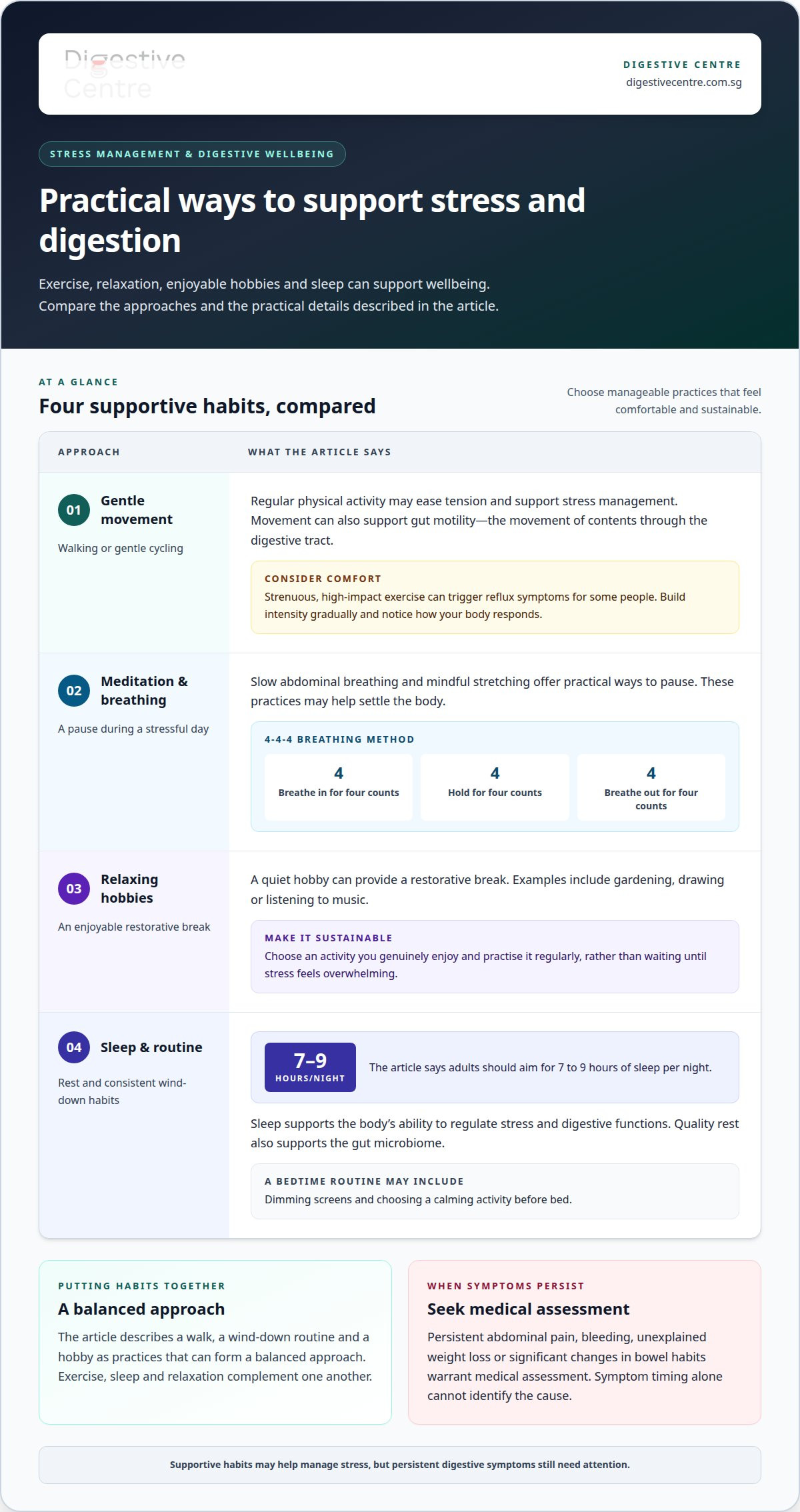
Regular physical activity, such as walking, can ease tension and support stress management. Choose sustainable movement, such as a walk or gentle cycling, instead of forcing an intense routine. Activity can also support gut motility, the movement of contents through the digestive tract. Enjoyable exercise is easier to maintain as part of everyday life, especially during chronic stress.
Start with manageable activity and notice how your body responds. A short walk after work, for example, can create a clear transition from a demanding day. Strenuous, high-impact exercise can trigger reflux symptoms for some people, so build intensity gradually and pay attention to your comfort. Regular movement can support mental wellbeing, but works best alongside rest and other relaxation practices.
Meditation, slow abdominal breathing and mindful stretching offer practical ways to pause during a stressful day. Try the 4-4-4 breathing method: breathe in for four counts, hold for four, then breathe out for four. A quiet hobby, such as gardening, drawing or listening to music, can also provide a restorative break. Choose an activity you genuinely enjoy, then practise it regularly rather than waiting until stress feels overwhelming.
Sleep supports the body’s ability to regulate stress and digestive functions. Adults should aim for 7 to 9 hours per night; a consistent bedtime routine can help, such as dimming screens and choosing a calming activity before bed. Quality rest also supports the gut microbiome, the community of bacteria that contributes to digestive health. Exercise, sleep and relaxation complement one another, so a walk, a wind-down routine and a hobby can form a balanced approach.
These habits support wellbeing, but persistent digestive symptoms still deserve attention. If a particular movement reliably brings on discomfort, adjust the pace or activity and track the pattern. Combining practical stress-management techniques with awareness of your body can help you find a sustainable routine.
Stress responses and digestive changes
The digestive effects of stress depend partly on whether the response is brief or ongoing. The body’s fight-or-flight response can change gut movement, appetite and bowel habits.
Acute and Chronic Stress Responses
Acute stress is a short-lived response to a trigger, while chronic stress repeatedly activates the body’s stress systems. A tense presentation may temporarily disrupt digestion as the body releases hormones such as cortisol and adrenaline. Ongoing worry can repeatedly affect digestive function, contributing to bloating, constipation, stomach pain or diarrhoea.
This difference matters: symptoms after one stressful event may settle as the situation passes, while recurring symptoms deserve attention. Note whether discomfort appears only before presentations or continues on calmer days. Stress can worsen symptoms, but timing alone does not establish their cause.
Stress, Appetite, and Bowel Movements
Stress may speed up or slow down gut motility, the movement of food and waste through the digestive tract. Faster intestinal movement can bring urgency or diarrhoea; slower movement may contribute to constipation. Stress can also affect appetite, making someone feel less hungry or changing their usual eating habits.
These changes vary between people and situations. Someone facing a deadline, for instance, may skip lunch and then notice discomfort or altered bowel movements. Tracking meals, stress triggers and symptoms can help show whether patterns repeat. This gives a clinician useful context without assuming stress explains every change.
Stress and the Gut Microbiome
The gut microbiome is the community of bacteria living in the digestive tract. Stress may alter its balance, which could contribute to digestive discomfort and changes in gut function. The relationship is complex: a change in symptoms alongside stress doesn’t prove that stress caused a microbiome change or a disease.
Research suggests a possible link between stress and gut bacteria, but the evidence described here does not establish a specific effect for every person. Regular habits, including balanced meals and adequate hydration, support digestive health. Persistent symptoms or marked bowel changes still warrant medical assessment rather than reliance on microbiome explanations alone.
If ongoing reflux is part of your symptoms, arrange a review of persistent reflux.
Digestive Centre
Digestive Centre can assess ongoing digestive symptoms and discuss appropriate next steps. Stress may contribute to discomfort, but persistent pain, bleeding, unexplained weight loss or lasting changes in bowel habits warrant medical attention rather than being attributed to stress alone.
Assessment may include gastroscopy or colonoscopy when appropriate. For ongoing reflux symptoms, GERD and acid reflux treatment, including LINX, may be relevant options. The appropriate approach depends on your symptoms and clinical assessment, not stress patterns alone.
If digestive symptoms are affecting your daily life, contact Digestive Centre to discuss your concerns.
Take a Clear Next Step for Your Digestive Health
Understanding how stress affects digestion can help you make sense of patterns, but it cannot establish the cause of ongoing symptoms. Treat stress as one part of the picture, not a reason to dismiss persistent discomfort or changes in bowel habits. Discuss what you are experiencing and how it affects daily life, so an assessment can consider both possible triggers and digestive conditions.
Digestive Centre can help you explore suitable assessment and care based on your symptoms. You don’t need to have a complete explanation before seeking support. Contact Digestive Centre to discuss your concerns and consider what to do next. A clearer understanding can help you move forward with confidence and a plan suited to your needs.
Frequently Asked Questions
What Happens in Your Gut When Your Body Is Stressed?
When the body responds to a perceived threat, digestive activity can temporarily change. Before a job interview, for example, you might feel nauseated or lose your appetite, while someone else may need the toilet urgently. Reactions vary between people and occasions. If symptoms continue after the pressure has passed, do not assume stress is the only explanation.
How does stress affect the digestive system and gut-brain axis?
Stress can influence gut activity through signals between the brain and digestive tract, while gut sensations can also affect how you feel. This two-way communication helps explain why discomfort may feel more noticeable during an anxious moment. Note whether symptoms change with mood, meals or sleep. Those details can help a clinician understand the broader pattern.
What digestive symptoms can stress cause?
Stress may be accompanied by nausea, abdominal discomfort, cramping, bloating, constipation or diarrhoea. You might notice a change before a presentation, during a difficult commute or after a demanding day. Symptoms and timing vary, and symptoms alone cannot establish their cause. Record which symptoms occur, when they start and whether they interrupt eating, sleep or everyday activities.
What treatments can reduce stress-related digestive symptoms?
Care depends on your symptoms and whether a digestive condition also needs attention. A clinician can assess persistent reflux, pain or changes in bowel habits, then discuss appropriate management. For ongoing distress, cognitive behavioural therapy may help people cope with symptoms, and relaxation therapy may be used alongside it. Treatment should address digestive concerns directly, rather than treating every symptom as stress alone.
Which stress-management techniques have evidence for improving digestion?
Mindfulness-based stress reduction may improve some irritable bowel syndrome symptoms, including constipation, diarrhoea and bloating. Relaxation therapy combined with cognitive behavioural therapy may also help with gastrointestinal disorders. Yoga is another option, though findings on symptom improvement are mixed. Choose a manageable practice, such as guided breathing or gentle stretching, and notice how it fits alongside appropriate care for digestive symptoms.
Medical disclaimer. This guide is general health information from Digestive Centre and is not a substitute for a consultation. Symptoms and treatment options differ from person to person. For advice about your own condition, book a consultation with the clinic. In an emergency, call 995.

































