

A chronic condition doesn’t automatically rule out weight-loss support, but it can affect which approach is suitable. Nutritional counselling for weight loss in Singapore can help you shape a meal plan around your health needs, routine and goals. A useful starting point is an assessment that considers your condition and any treatment that may affect eating or weight.
It’s understandable to want clear guidance before changing your diet, especially when managing a long-term health issue. Your plan should be practical and responsive to your health, not a one-size-fits-all set of food rules.
This guide covers what a consultation and meal planning may involve, how doctor-supervised weight-management programmes fit in, and what to discuss with a nutrition professional. It also explains how chronic conditions can affect suitability, so you can consider the next step with a clearer picture of your options.
Key Takeaways
- Learn how to discuss reducing sugar and refined carbohydrates in a way that fits your eating habits and health needs.
- Understand which health factors can shape suitability for medically supervised weight loss, especially when you have a chronic condition.
- See how a nutritionist can use your goals, routine and health background to guide practical meal planning.
- Explore how nutritional counselling may fit alongside medical weight-management options when lifestyle support alone may not meet your needs.
What should I ask the nutritionist during the consultation?
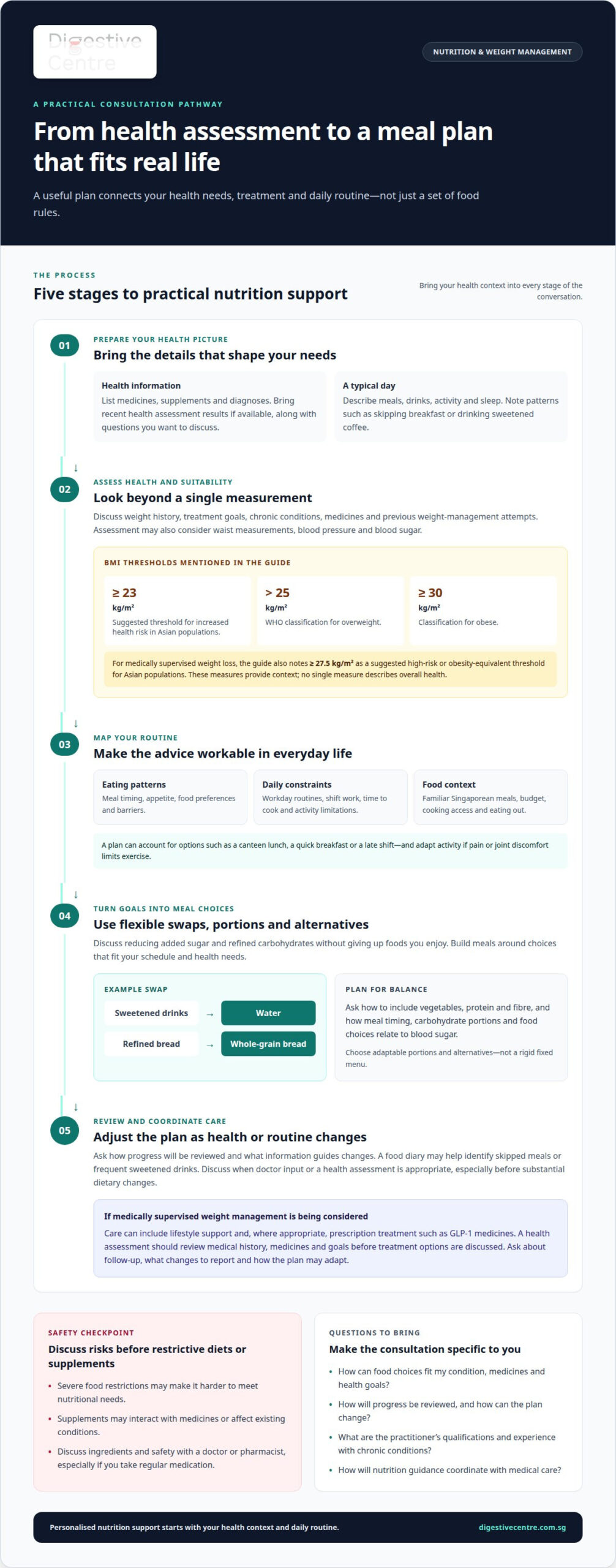
Ask how to reduce added sugar and refined carbohydrates without giving up foods you enjoy. For example, discuss swapping sweetened drinks for water or choosing whole-grain bread instead of refined bread. Ask how to include vegetables, protein and fibre in meals that fit your schedule. A practical plan should also account for familiar Singaporean meals, workday routines and appetite, rather than relying on rigid rules.
Discuss how obesity and related health risks are assessed. For Asian populations, a BMI of 23 kg/m² or more is a suggested threshold for increased health risk. The World Health Organization classifies a BMI above 25 kg/m as overweight. A BMI of 30 kg/m or higher is classified as obese. Ask how these measures fit alongside your medical history, waist measurements, blood pressure and blood sugar. No single measure describes your overall health.
Ask how healthier eating may support your health alongside weight management, particularly if you have diabetes, high blood pressure or another chronic condition. Discuss how meal timing, carbohydrate portions and food choices relate to blood sugar. Also ask whether a doctor’s consultation or health assessment is appropriate before making substantial dietary changes. Coordinated care can connect nutrition guidance with your medical needs.
When choosing a weight-loss dietitian in Singapore, ask about their nutrition qualifications, experience with obesity and chronic conditions, and approach to tailoring meal plans. Find out how progress is reviewed and how the plan can change when your lifestyle or health needs shift.
Ask about the risks before trying an extreme diet or weight-loss supplement. Severe food restrictions may make it harder to meet nutritional needs, while supplements may interact with medicines or affect existing conditions. Discuss ingredients and safety with a doctor or pharmacist, especially if you take regular medication.
Before meeting a dietitian, prepare a list of your medicines, supplements, diagnoses and questions. Bring recent health assessment results if available, and describe a typical day of meals, drinks, activity and sleep. Specific examples, such as skipping breakfast or drinking sweetened coffee, can make the discussion more useful.
Suitability for medically supervised weight loss
Suitability is assessed through health risks, weight history and treatment goals, not a single number. For Asian populations, a BMI of 27.5 kg/m² or more is a suggested threshold for high risk or obesity-equivalent. This threshold can help frame a discussion, but the assessment should also consider how weight affects your health and daily function.
Bring details of chronic conditions such as diabetes, high blood pressure or sleep apnoea to your consultation. Your clinician can consider how these conditions, current medicines and previous weight-management attempts shape possible approaches. Mention symptoms, treatment changes and any difficulties with eating or exercise. This information helps identify relevant precautions and what may need monitoring during a programme.
Medically supervised care can include lifestyle support and, where appropriate, prescription treatment such as GLP-1 medicines. A health assessment should review your medical history, medicines and goals before discussing treatment options. Ask what follow-up involves, which changes should be reported, and how the plan may adapt if blood sugar, appetite or another health measure changes.
Suitability also depends on whether a programme fits your routine. Discuss meal planning, activity, sleep and barriers such as shift work or joint discomfort. For example, a walking plan may need adjusting if pain limits exercise. A nutrition professional can translate medical advice into practical food choices, while a doctor considers clinical factors.
Ask how the team coordinates nutrition guidance with medical care, especially if you manage more than one condition. A useful discussion should explain the intended role of each component, the monitoring process and signs that warrant review. If you’re considering structured medical support, explore medical weight-management support as part of that conversation.
Nutritionist consultations and meal planning
A consultation turns your health goals and daily routine into practical nutrition steps. Meal planning translates those steps into choices you can use at home, at work or when eating out.
Consultation Components
A first appointment typically explores your goals, eating patterns, medical history and lifestyle. You may discuss meal timing, appetite, food preferences and barriers such as shift work or limited time to cook. These details help tailor advice to your actual routine.
Ask how progress will be reviewed and what information will guide adjustments. For example, a nutrition professional may use a food diary to identify skipped meals or frequent sweetened drinks. Discuss how your health conditions and medicines affect the advice, and whether doctor input should be part of your care.
Meal Planning Support
Meal-planning support can turn general nutrition goals into meals and snacks suited to your schedule. Discuss familiar foods, budget, cooking access and meals eaten away from home. A plan might include options for a canteen lunch, a quick breakfast or a late shift.
Look for guidance on adapting portions and food choices, rather than relying on a fixed menu. Ask for alternatives when ingredients are unavailable or your preferences change. For instance, a nutritionist can help you choose another protein source or vegetable while keeping the meal balanced.
Finding Registered Practitioners
In Singapore, hospital and clinic services may provide dietitian or nutrition support for weight management. Ask about the practitioner’s qualifications, experience with weight concerns and approach to chronic conditions. Clarify whether the consultation includes personalised meal planning and follow-up.
Before booking, ask how the practitioner’s credentials are documented and who oversees care if medical concerns arise. A useful first discussion should explain how nutrition advice fits your goals, health history and routine. Choose support that offers clear, practical steps and a way to review the plan as your needs change.
What does nutritional counselling for weight loss in Singapore include?
Nutritional counselling connects your health goals with practical food choices and lifestyle changes. The process usually moves from understanding your needs to setting priorities, planning meals and reviewing what works in daily life.
An initial discussion may cover your eating patterns, medical history, medicines, preferences and weight-management goals. A nutrition professional may ask about a typical weekday, such as breakfast before work, lunch at a food court and dinner after a late shift. This context helps identify realistic adjustments instead of relying on a generic menu.
Next, you can work together on specific nutrition priorities. These might include reducing sweetened drinks, adjusting portions, adding vegetables to meals or choosing a more filling snack. The focus is on changes that suit your routine and food preferences. If you often buy lunch, planning balanced options from food stalls may be more useful than assuming you cook every meal.
Meal planning can turn those priorities into flexible choices for different situations. A plan might outline breakfast options, workday lunches and simple dinners, with alternatives for busy days. Ask how to adapt portions, manage family meals and make choices when eating out. Practical guidance should explain the reasoning behind food choices, so you can adjust rather than depend on a fixed menu.
Follow-up discussions can review what felt manageable and where the plan needs adjustment. For example, if a suggested breakfast doesn’t fit your commute, the nutrition professional can explore a portable alternative. Changes in appetite, schedule or health needs may also prompt a review. Progress is considered alongside your ability to sustain the agreed habits.
For tailored guidance on food choices and weight-management goals, arrange a nutritional counselling consultation.
Digestive Centre: GLP1s and Medical Weight management and GLP1s
Digestive Centre offers medical weight management, GLP-1 treatments and nutritional counselling for people seeking structured support. These options may be relevant if nutrition and lifestyle changes alone haven’t addressed your weight-management needs, or if health concerns make medical guidance important.
Nutritional counselling can translate goals into practical eating habits, while medical weight management considers whether additional clinical approaches are suitable. The next step depends on your health history, current medicines, weight-related concerns and preferences. Discuss these with your care team to guide a considered conversation about available options.
If you’re exploring support, contact Digestive Centre to discuss your weight-management needs.
Choose a Starting Point That Fits Your Life
If you’re considering nutritional counselling for weight loss in Singapore, start by identifying what you most want help changing. You might want to eat more consistently during long workdays, understand how food choices relate to a health condition, or find a manageable approach to weight management. A clear priority can focus the first conversation and make support relevant to everyday life.
You don’t need to plan every meal or solve every challenge before seeking guidance. Start with one concern that matters to you now, and be open about what has been difficult. From there, you can discuss a suitable path forward with a healthcare team. Digestive Centre provides medical weight-management support alongside digestive services such as gastroscopy and colonoscopy, and GERD and acid reflux treatment.
Contact Digestive Centre to discuss your needs. A considered first step can help you move towards support that fits your health priorities.
Frequently Asked Questions
Can I join the programme if I have a chronic condition?
A chronic condition doesn’t automatically rule out support, but it changes the clinical review. The care team considers how the condition is managed, your current medicines and symptoms, and whether dietary changes could affect treatment. For example, someone using glucose-lowering medicines may need nutrition advice coordinated with their prescribing doctor. Share your diagnoses and recent treatment changes before a plan is set.
How many sessions are there?
The number of sessions depends on your goals, health needs and progress. An initial appointment can identify priorities, while follow-up visits may address barriers such as shift work or changing appetite. Ask how the proposed schedule will work and what milestones will guide adjustments, so you understand the plan before starting.
Who is eligible?
Eligibility is considered through an individual health and weight-management assessment, rather than one BMI value alone. Relevant factors include weight-related health concerns, medical history, previous approaches, medicines and readiness to build sustainable habits. A clinician can assess whether nutrition guidance fits your needs or whether doctor-supervised medical weight management should also be discussed.
Who is it for?
Nutritional counselling suits people seeking practical food guidance to support weight loss, particularly when work, family meals or health concerns make changes hard to sustain. It may also complement medical weight management. For example, someone with irregular shifts may benefit from meal strategies that adapt to changing schedules rather than a rigid daily menu.
How much does weight loss nutrition counselling cost in Singapore?
The cost of nutritional counselling for weight loss in Singapore depends on the case and is provided after a quote request. Factors include the consultation’s scope, assessment needs and any follow-up involved. If counselling is part of a broader medical weight-management discussion, ask for a clear breakdown of the proposed services before deciding how to proceed.
Does MediSave, insurance, or CHAS cover dietitian consultations in Singapore?
Coverage for dietitian consultations through MediSave, insurance or CHAS can vary by service and applicable terms. Don’t assume a standalone nutrition appointment is treated like a medical procedure or another part of care. Review your insurance policy and the relevant scheme conditions to understand whether the specific consultation is eligible and what documentation or limits may apply.

































