
A colonoscopy for IBS symptoms can’t confirm irritable bowel syndrome, because IBS doesn’t cause visible changes to the bowel lining. It can, however, look for other causes of similar symptoms, including inflammatory bowel disease and precancerous polyps, and allow a tissue sample to be taken if needed. Colonoscopy can help investigate symptoms, but it does not diagnose IBS itself.
It’s understandable to want a clear explanation for cramping or changes in bowel habits, especially when symptoms keep returning. A colonoscopy may help rule out conditions that need different care, while your symptoms and medical history remain central to an IBS assessment.
Read on to learn what a colonoscopy can detect, when a gastroenterologist may consider it, and which warning signs matter. You’ll also find out how bowel preparation can affect your diet and comfort, and how the examination can help distinguish IBS-like symptoms from inflammatory bowel disease.
Key Takeaways
- Keep track of bowel changes and other symptoms to give your gastroenterologist a clearer picture of what may need investigation.
- Blood in the stool, unexplained weight loss, iron deficiency or symptoms that begin later in life warrant timely medical assessment.
- Prepare for a temporary diet change: colonoscopy preparation may require clear liquids for at least one day beforehand, according to the National Institute of Diabetes and Digestive and Kidney Diseases.
- If symptoms continue despite reassuring test results, discuss what further assessment may help explain them.
What can a colonoscopy detect?
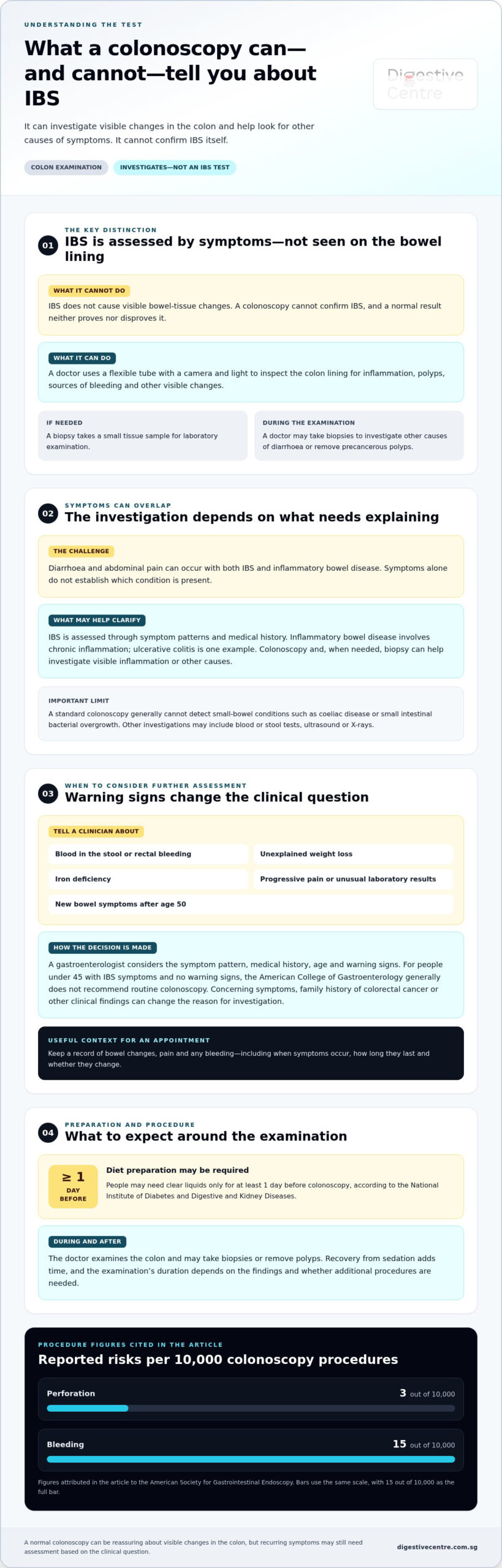
A colonoscopy examines the colon lining for inflammation, polyps, sources of bleeding and other visible changes. It can investigate conditions that resemble IBS, but it cannot confirm IBS itself.
Colonoscopy Findings and Biopsy
During a diagnostic colonoscopy, a flexible tube with a camera and light is used to inspect the colon. If needed, a biopsy takes a small tissue sample for laboratory examination. These steps can help investigate symptoms such as persistent diarrhoea, which may indicate inflammation or another condition requiring different care. IBS doesn’t cause visible bowel-tissue changes, so a normal colonoscopy neither proves nor disproves IBS.
During the examination, a doctor may take biopsies to investigate other causes of diarrhoea or remove precancerous polyps. According to the American Society for Gastrointestinal Endoscopy, perforation occurs in 3 out of every 10,000 colonoscopy procedures, while bleeding occurs in 15 out of every 10,000 procedures.
Warning Signs and Colorectal Cancer Screening
Warning signs are symptoms or findings that may call for investigation beyond an IBS assessment. Blood in stool, unexplained weight loss, iron deficiency, progressive pain or unusual laboratory results can prompt a doctor to consider colonoscopy. New bowel symptoms after age 50 are also a diagnostic consideration.
For people in Singapore with bowel symptoms, assessment should be guided by those symptoms and personal risk, not postponed while waiting for a routine screening age. Symptoms such as rectal bleeding need clinical attention because they can have causes other than IBS.
IBS diagnosis usually draws on symptoms and medical history, including abdominal cramping and changes in stool appearance or bowel frequency. A clinician may use the Rome criteria to assess symptom patterns and consider dietary evaluations. A colonoscopy may help rule out inflammatory bowel disease or colorectal cancer, but it does not diagnose IBS.
Other investigations may include blood and stool tests, ultrasound or X-rays. A standard colonoscopy generally cannot detect small-bowel conditions such as coeliac disease or small intestinal bacterial overgrowth, so test selection depends on the suspected cause.
Preparation can affect diet: according to the National Institute of Diabetes and Digestive and Kidney Diseases, people may need clear liquids only for at least 1 day before colonoscopy. During the procedure, the doctor examines the colon and may take biopsies or remove polyps; afterwards, recovery from sedation adds time. The examination’s duration depends on findings and whether additional procedures are needed.
Whether MediSave or insurance can be used depends on applicable eligibility rules and the individual policy. The procedure’s clinical purpose alone doesn’t determine whether a particular payment route applies.
Distinguishing IBS from inflammatory bowel disease
Diarrhoea and abdominal pain can occur with both irritable bowel syndrome and inflammatory bowel disease. This overlap can make symptoms difficult to interpret, but the conditions affect the digestive system differently. IBS is assessed through symptom patterns and medical history, while inflammatory bowel disease involves chronic inflammation. Ulcerative colitis is one example.
Rectal bleeding is an important difference to report, not a symptom to assume is IBS. Persistent diarrhoea, abdominal pain and rectal bleeding can point to inflammation or another cause that needs assessment. Symptoms alone don’t establish which condition is present. Their duration, pattern and combination help clinicians decide which investigations may clarify the cause.
A colonoscopy can help rule out inflammatory bowel disease or colorectal cancer when symptoms resemble IBS. It allows a doctor to look for changes in the colon that may support another diagnosis. A biopsy may also help investigate inflammation when needed. This differs from confirming IBS: IBS doesn’t create visible tissue changes for colonoscopy to identify.
A normal colonoscopy can be reassuring about visible changes in the colon, but it doesn’t automatically explain recurring symptoms or exclude every underlying condition. Further assessment depends on the symptoms and the question being investigated. For example, ongoing diarrhoea may call for a different evaluation than bleeding or persistent abdominal pain. Blood and stool tests may also contribute to the assessment.
Keep a clear record of bowel changes, pain and any bleeding to describe during a consultation. Include when symptoms occur and whether they persist or change. This detail helps connect the symptom pattern with examination findings and supports a more focused discussion about possible causes. For an informed review of digestive symptoms, consider a specialist digestive assessment that can clarify whether further investigation is appropriate.
Colonoscopy for gastrointestinal symptoms
The decision to investigate gastrointestinal symptoms starts with the clinical question, not the IBS label. A gastroenterologist considers the symptom pattern, medical history, age and warning signs. The aim is to choose an examination that can detect a suspected disorder, such as inflammatory bowel disease, rather than use colonoscopy to confirm irritable bowel syndrome. A recent change in bowel habits, persistent abdominal pain or bleeding can affect that assessment.
For people under 45 with IBS symptoms and no warning signs, the American College of Gastroenterology generally doesn’t recommend routine colonoscopy. This doesn’t mean the procedure is never appropriate below that age. A family history of colorectal cancer, concerning symptoms or other clinical findings can change the reasons for investigation. The relevant question is what a colonoscopy would help identify in that person’s case.
Colonoscopy is one option, not the only way to investigate digestive symptoms. Depending on the suspected cause, blood or stool tests may provide useful information. A gastroenterologist can also discuss whether CT or MR scans may be appropriate instead of proceeding directly to colonoscopy. These approaches answer different questions, so the choice depends on symptoms, examination findings and the condition being considered.
Before agreeing to the procedure, clarify its purpose: is it intended to investigate possible inflammation, assess a warning sign, or examine another suspected cause? Ask what the result could change in your care. If colonoscopy is being considered only to increase confidence in an IBS diagnosis, discuss how that potential benefit compares with the specific medical concern prompting it. Evidence is insufficient to determine whether colonoscopy makes IBS worse.
Clear reasoning helps keep the investigation focused. A discussion of gastrointestinal symptoms can help frame which findings matter and what assessment may follow.
What warning signs with IBS symptoms require urgent investigation?
Some changes call for assessment beyond a routine discussion of irritable bowel syndrome. Blood in stool, unexplained weight loss and iron deficiency can prompt a doctor to investigate another cause. Progressive abdominal pain, occult blood in stool or atypical laboratory results may also lead to a referral for colonoscopy. These findings don’t establish a diagnosis, but they change the questions an assessment needs to answer.
Pay attention to when symptoms began. The onset of IBS-like symptoms after age 50 is a diagnostic consideration, especially when bowel habits have changed persistently. Note whether pain is worsening, whether blood appears during bowel movements, and whether weight loss is unexplained. A clear record of these changes helps a clinician assess the pattern rather than relying on memory alone.
Persistent changes in bowel habits or unexplained abdominal pain also deserve medical assessment, particularly when they occur alongside other troubling symptoms. For example, ongoing diarrhoea combined with rectal bleeding raises a different concern from familiar, intermittent discomfort without bleeding. Reporting the full combination helps the clinician judge whether further investigation is appropriate.
Colonoscopy may be considered to investigate warning signs, including blood in stool, weight loss or iron deficiency. It can examine the colon for causes that may resemble IBS, such as inflammatory bowel disease or colorectal cancer. The reason for referral matters: colonoscopy investigates a potential concern rather than confirming IBS. A normal result also needs to be interpreted alongside symptoms and other findings.
Seek prompt clinical advice for fresh rectal bleeding, progressive pain, unexplained weight loss or a persistent bowel-habit change. Bring a symptom timeline and note any relevant medical history, including family history of colorectal cancer. These details help focus the review and clarify what investigation may follow. If concerning symptoms persist, arrange a digestive symptom assessment to discuss appropriate next steps.
Digestive Centre: Gastroscopy and colonoscopy
Digestive Centre offers gastroscopy and colonoscopy for people whose digestive symptoms need investigation. If persistent bowel changes, bleeding or unexplained abdominal pain have prompted discussion of a colonoscopy, this service may be a relevant next step. The procedure examines the colon and can help investigate causes of IBS-like symptoms, though it does not diagnose IBS itself.
Before proceeding, discuss the reason for the examination, your symptoms and medical history with a gastroenterologist. Understanding what the procedure is intended to assess can help you make an informed decision and prepare for the next stage of care.
For guidance about gastroscopy and colonoscopy, contact Digestive Centre or visit digestivecentre.com.sg.
Take the Next Step With a Clear Plan
Deciding whether a colonoscopy for IBS symptoms is appropriate starts with a focused conversation about your health priorities. Before an appointment, note what you most want clarified, such as whether persistent symptoms need further investigation or what a proposed procedure is intended to establish. This can keep the discussion practical and centred on the decision ahead.
Bring a concise record of changes in your bowel habits, symptoms that interfere with daily routines, and questions about preparation or follow-up. You can also discuss how your medical history affects the assessment and what the next step would be after the findings. The aim is a clear, informed plan, not a procedure by default.
Contact Digestive Centre to discuss your symptoms and the options relevant to your situation. Contact Digestive Centre to discuss your symptoms, and take the next step with greater clarity.
Frequently Asked Questions
Can colonoscopy make IBS worse?
There isn’t enough evidence to determine whether colonoscopy itself worsens IBS. Bowel preparation can cause bloating and gas, which may temporarily aggravate existing discomfort. Tell the clinician about constipation-predominant IBS or previous difficulties with preparation before starting the prescribed regimen. This information can help shape preparation advice and clarify which symptoms to expect during bowel cleansing.
Is colonoscopy needed for bowel symptoms, joint pain, and suspected Sjögren’s or colitis?
Joint pain or suspected Sjögren’s syndrome alone doesn’t make colonoscopy the right test for that condition. Sjögren’s can affect moisture-producing glands and cause dry eyes, mouth or nasal passages, alongside joint pain and fatigue. Colonoscopy examines the colon, so it may be considered when bowel symptoms raise concern for colitis. A clinician assesses digestive symptoms alongside the broader medical history.
Should people with irritable bowel syndrome have a colonoscopy?
No. An IBS diagnosis alone doesn’t mean everyone needs a colonoscopy. For example, someone with a familiar symptom pattern and no warning signs may be assessed through symptoms and medical history. A colonoscopy may be considered if there’s a separate concern, such as a family history of colorectal cancer or unexplained bleeding. Its purpose is to investigate that concern, not routinely verify IBS.
What are the risks?
Colonoscopy has uncommon but important risks, including perforation and bleeding. According to the American Society for Gastrointestinal Endoscopy, perforation occurs in 3 out of every 10,000 procedures, and bleeding occurs in 15 out of every 10,000 procedures. The possibility of bleeding is relevant when a biopsy or polyp removal is performed. Discuss personal health factors and medication use before the procedure.
Do IBS symptoms require a colonoscopy for diagnosis?
No. A colonoscopy for IBS symptoms cannot establish IBS because the syndrome doesn’t produce visible bowel-tissue changes. Diagnosis instead draws on the symptom pattern and medical history. For instance, a clinician may ask how abdominal pain relates to bowel movements and whether stool frequency or appearance has changed. Other investigations can address suspected causes, but colonoscopy’s role is to examine the colon.
When is colonoscopy recommended for people with IBS symptoms?
Colonoscopy may be recommended when symptoms include blood in stool, unexplained weight loss, iron deficiency or progressive pain, or when a clinician suspects inflammatory bowel disease. The American College of Gastroenterology generally doesn’t recommend routine colonoscopy for people under 45 with IBS symptoms and no warning signs. Age, family history and the reason for investigation help distinguish symptom assessment from colorectal cancer screening.