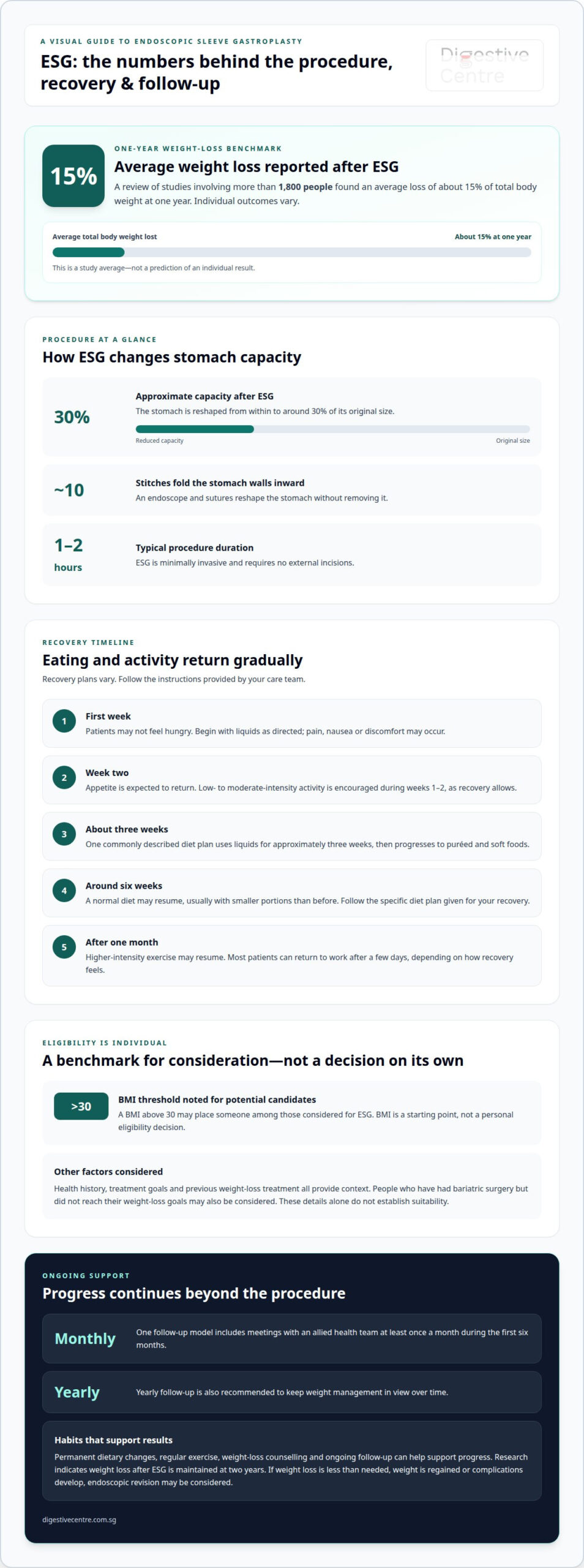
A useful benchmark for how much weight you can lose with ESG is about 15% of your total body weight at one year. A review of studies involving more than 1,800 people found this average result, though individual outcomes vary. The procedure changes the stomach’s shape to help limit how much it can hold.
If you’re considering endoscopic sleeve gastroplasty (ESG), the headline figure is only part of the picture. How much weight you can lose depends on factors such as your health, eating habits and activity. Understanding the procedure and its follow-up can help you set realistic expectations.
This article explains how ESG works, who may be considered, and how follow-up and lifestyle changes can support weight-loss results over time.
Key Takeaways
- Eligibility involves more than a BMI threshold; previous weight-loss treatment and individual health factors can also shape whether ESG is considered.
- Recovery brings gradual changes to eating, and appetite may shift as the stomach heals.
- Long-term progress depends on building sustainable eating and activity habits, alongside ongoing follow-up.
- ESG reshapes the stomach from within, without external incisions, to help limit how much it can hold.
ESG eligibility and BMI threshold
A BMI above 30 may place someone among the potential candidates for endoscopic sleeve gastroplasty (ESG), according to Penn Medicine. This threshold is a starting point for consideration, not a personal eligibility decision on its own. BMI compares weight with height, so it cannot describe every aspect of a person’s health or weight-loss history. Two people with the same BMI may have different medical circumstances and treatment needs.
Previous treatment matters too. Penn Medicine notes that potential candidates may include people who have had bariatric surgery but didn’t reach their weight-loss goals. That history can inform a discussion about what has already been tried and what outcome the person hopes to achieve. A past procedure alone does not automatically determine whether ESG is suitable.
In practice, an eligibility discussion needs to connect the BMI threshold with the person’s health history and treatment goals. For example, someone with a BMI above 30 and prior bariatric surgery would still need an individual assessment; those details alone don’t establish suitability. The aim is to understand whether ESG fits the person’s circumstances and whether its approach aligns with their weight-loss goals.
- BMI: Penn Medicine identifies a BMI greater than 30 as a potential-candidate threshold.
- Previous bariatric surgery: People who did not meet their weight-loss goals after surgery may also be considered.
- Personal assessment: BMI and treatment history provide context, while the individual’s health and goals inform the decision.
For readers comparing obesity treatments in Singapore, it helps to distinguish a screening benchmark from a final decision. If you’re considering ESG, the appropriate treatment and its cost depend on your individual case.
Recovery and appetite changes
After ESG, appetite can change before eating returns to a comfortable routine. Penn Medicine says patients may not feel hungry during the first week, with appetite expected to return in week two. Smaller portions help accommodate the stomach as it heals. Discomfort may continue for a few weeks, so recovery is gradual rather than an immediate return to usual meals.
Pain, nausea and discomfort are possible side effects after the procedure. Penn Medicine notes that discomfort may last a few weeks, while some patients experience pain and nausea for a few days. Keep these symptoms in mind when planning work, exercise and daily activities. Follow your care team’s guidance if symptoms affect eating or hydration.
Diet progression is staged. Patients begin with liquids, then move through puree and soft foods before returning to solid meals. One commonly described plan uses a liquid-only diet for approximately three weeks, followed by puree and soft foods. A normal diet may resume around six weeks after ESG, with smaller portions than before. Follow the specific instructions provided for your recovery.
Plan for a gradual return to activity. Most patients can return to work a few days after ESG, depending on how recovery feels. Penn Medicine describes a gradual return to regular activities; wait to resume heavy exercise until your recovery plan allows it. For example, a desk-based workday may be easier to resume than a physically demanding shift.
Eating pace matters as portions change. Choose the prescribed texture at each stage, eat slowly and pause if you feel full or uncomfortable. Leave time between meals rather than testing larger portions too soon. A staged diet and gradual return to exercise support recovery as appetite adjusts. Follow the clinical instructions for your procedure, symptoms and healing.
Lifestyle modification and follow-up
ESG changes stomach capacity, but eating and activity habits influence how that change translates into weight loss. Penn Medicine recommends permanent dietary changes, regular exercise and weight-loss counselling after ESG. These habits support treatment beyond the procedure itself, including when appetite or routines shift. Planning balanced meals, for example, can help make smaller portions part of your daily routine.
Follow-up gives that plan structure. One follow-up model includes meetings with an allied health team at least once a month during the first six months. Regular appointments can review eating patterns, activity, progress and barriers, then adjust support as needed. Penn Medicine also recommends yearly follow-up after ESG, keeping weight management in view beyond the initial recovery period.
Exercise should build progressively. Low- to moderate-intensity activity is encouraged during weeks 1-2 after ESG, while higher-intensity exercise may resume after one month. This gives the body time to recover before activity becomes more demanding. A gradual return, such as starting with gentle movement before increasing intensity, can make exercise easier to sustain as a long-term habit.
Weight-loss results reflect several connected factors: how consistently someone follows dietary changes, their activity habits and their engagement with follow-up. Appetite and portion size also affect daily food intake. A smaller stomach capacity can support smaller meals, while ongoing guidance can help identify routines that are difficult to maintain and refine them over time.
Research indicates that weight loss after ESG is maintained at two years. Ongoing lifestyle changes and follow-up matter because weight management continues beyond the initial treatment period. If someone loses less weight than needed, regains weight or develops complications, Penn Medicine says endoscopic revision may be considered. Continued monitoring is useful, rather than treating the procedure as a one-time solution.
What endoscopic sleeve gastroplasty is
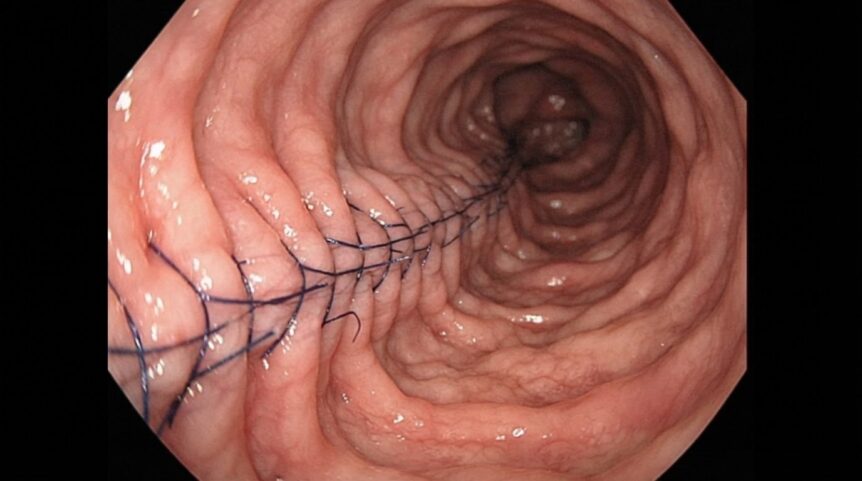
Endoscopic sleeve gastroplasty (ESG) reshapes the stomach from within, using an endoscope and sutures. Penn Medicine describes it as a minimally invasive procedure requiring no incisions. During ESG, about 10 stitches fold the stomach walls inward, reducing its capacity to around 30% of its original size. This creates a smaller stomach without removing it.
The procedure typically takes one to two hours. Sutures change the stomach’s shape so it holds less food, supporting smaller portions. Penn Medicine also describes ESG as reversible and says patients may still qualify for bariatric surgery later. ESG reshapes the stomach, while a surgical gastric sleeve is an operation.
ESG weight-loss results should be understood on their own terms. UCLA Health says most studies show average total weight loss of 15-20% after ESG. That figure describes ESG, not a direct comparison with gastric sleeve surgery or weight-loss medication. The approaches differ: ESG reshapes the stomach endoscopically, surgery is an operative approach, and medication uses drug treatment. Their results aren’t interchangeable measures.
To compare options, consider how each works and what the treatment involves. ESG uses internal sutures without incisions; bariatric surgery involves an operation, while medication does not reshape the stomach. These differences affect the treatment experience and follow-up needs. Also consider your health history, weight-loss goals and the lifestyle changes each approach requires.
ESG is therefore an endoscopic option between lifestyle treatment alone and operative approaches, not a promise of a particular result. Its defining features are stomach reshaping, internal sutures, and no external incisions. To explore whether this approach fits your weight-management goals, discuss endoscopic sleeve gastroplasty with a medical team.
Digestive Centre: Gastroscopy and colonoscopy
Digestive Centre provides gastroscopy and colonoscopy for people who need diagnostic assessment of digestive concerns. These procedures address a different need from choosing a weight-loss treatment, but digestive symptoms may be relevant to a broader care discussion.
If you’re exploring weight management, Digestive Centre also offers medical weight management and GLP1 treatments. A discussion can help you understand the available approaches alongside your health goals and history. For reflux concerns, the centre provides GERD and acid reflux treatment, including LINX.
If you’re considering medical weight-management options or have digestive symptoms, contact Digestive Centre to discuss your needs and the available services.
Take the next step with a clear plan
Understanding how much weight you can lose with ESG is one part of deciding whether it fits your goals. Before choosing a treatment, consider what you want it to help you change, what support could make new habits sustainable, and how you feel about the recovery process. These priorities can make a medical discussion more focused and useful.
Your health history and weight-management goals also shape which options may be appropriate. An individual assessment can connect those factors with a treatment plan, including whether ESG suits your circumstances. Results vary from person to person, so use published averages as context, not as a personal prediction.
If you’re ready to explore the procedure in Singapore, contact Digestive Centre to discuss ESG. A considered next step can help you move forward with greater clarity and confidence.
Frequently Asked Questions
What is endoscopic sleeve gastroplasty?
Endoscopic sleeve gastroplasty is a weight-loss procedure that reshapes the stomach using an endoscope and internal sutures. It reduces the space available for food without removing part of the stomach. For someone considering treatment, this means ESG differs from an operation that removes stomach tissue. The intended change is a smaller stomach capacity, which can support smaller meals as part of ongoing weight management.
How much weight can I expect to lose with ESG?
The question of how much weight you can lose with ESG has no single personal answer. UCLA Health reports that most studies show average total weight loss of 15-20% after the procedure. That range is a study average, not a prediction for an individual. Your starting weight, eating patterns, activity habits, and follow-up all affect how results develop over time.
Will I need to follow a specific diet following surgery?
Yes. After ESG, eating follows a staged progression while the stomach heals. Patients begin with liquids, then advance through puree and soft foods before returning to solid foods. Plan meals around the texture allowed at each stage rather than moving straight to regular meals. Follow your recovery instructions, and raise difficulties with eating during follow-up.
How is the ESG performed?
ESG is performed endoscopically, using a flexible camera-equipped instrument passed through the digestive tract rather than abdominal incisions. The clinician places internal sutures to reshape the stomach. The procedure typically takes one to two hours. Because it works from inside the stomach, ESG differs from bariatric operations that involve external surgical access or removal of stomach tissue.
Is the ESG a permanent procedure?
Penn Medicine describes ESG as reversible, so it does not involve irreversible removal of stomach tissue. The same source notes that patients may still qualify for bariatric surgery later. Reversibility does not mean the stomach’s shape changes back on its own or that results require no ongoing care. Discuss what reversibility means for your treatment plan and future options during clinical assessment.
What is endoscopic sleeve gastroplasty (ESG) and how does it work?
ESG uses sutures to fold the stomach inward and reduce its capacity. The smaller space can help limit portion size, while dietary changes and follow-up support weight management. ESG does not remove the stomach. When comparing procedures, consider its internal suturing approach alongside recovery demands, long-term habits and potential weight-loss results.