
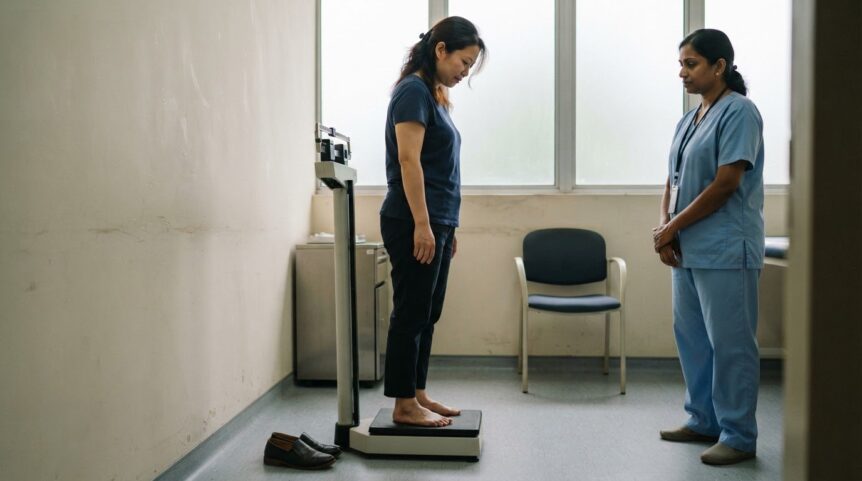
What if maintaining weight loss doesn’t require counting every calorie? The practical answer to how to maintain weight loss after treatment is to build sustainable eating and activity habits, then monitor your weight so you can notice changes early. A range of around 2 kg allows for normal weight fluctuations without making daily numbers the focus.
It’s understandable to want a clear calorie target after treatment, but calorie counting is one tool, not the only way to manage your intake. Regular meals, balanced food choices and consistent activity can also help you maintain a routine.
This guide explains how to approach food, activity, calorie tracking and weight monitoring in Singapore. You’ll learn how to make these habits manageable, what physical activity targets the Centers for Disease Control and Prevention recommends for adults, and how to use a personal maintenance range as a practical guide.
Key Takeaways
- Build meals around protein-rich foods and a variety of plant foods to support satisfying, sustainable eating habits.
- Make regular movement part of your routine, including activities that help preserve strength and muscle.
- Use calorie tracking as a tool to understand eating patterns; it doesn’t have to be a permanent requirement.
- Weigh consistently and focus on the trend over time, so you can respond to changes before they become harder to manage.
1. Foods that may help maintain a healthy weight
Build meals around protein and fibre-rich foods to support a satisfying eating pattern after treatment. Choose fish, eggs, tofu, beans, chicken or low-fat Greek yogurt for protein. After stopping semaglutide, protein-containing meals may help slow digestion. Pair them with vegetables, fruit, whole grains, nuts or seeds. For example, serve fish with brown rice and vegetables, or add tofu and beans to a meal with leafy greens.
A useful plate guide is to fill two thirds with whole grains, vegetables, fruits, beans, nuts and seeds. These foods add variety and fibre, while helping meals feel filling. Include options such as oats, brown rice, lentils, leafy vegetables and fresh fruit. Some research suggests choosing lean meat, fish, poultry, vegetables and fruit instead of sugary foods and refined options may support steadier insulin levels and a healthy weight.
Variety can make healthy eating easier to sustain. Aim for 30 different plant-based foods a week, counting foods such as grains, legumes, vegetables, fruit, nuts and seeds. Add a fermented food or drink every day, such as yogurt or another fermented choice. These small additions can broaden the range of foods in your routine and support gut microbes.
For hydration, drink water when thirsty and consider 8 to 10 cups of sugar-free drinks per day to meet fluid needs. Water, unsweetened tea and other sugar-free drinks can fit this approach. Fibre-rich foods such as beans, vegetables, fruit and whole grains also support digestion and can contribute to fullness. This may help with appetite and keeping portions comfortable, rather than relying on fewer calories through restrictive eating. If your appetite or digestion changes after treatment, note which foods feel comfortable and discuss persistent difficulties with your healthcare professional.
2. Physical activity for weight maintenance
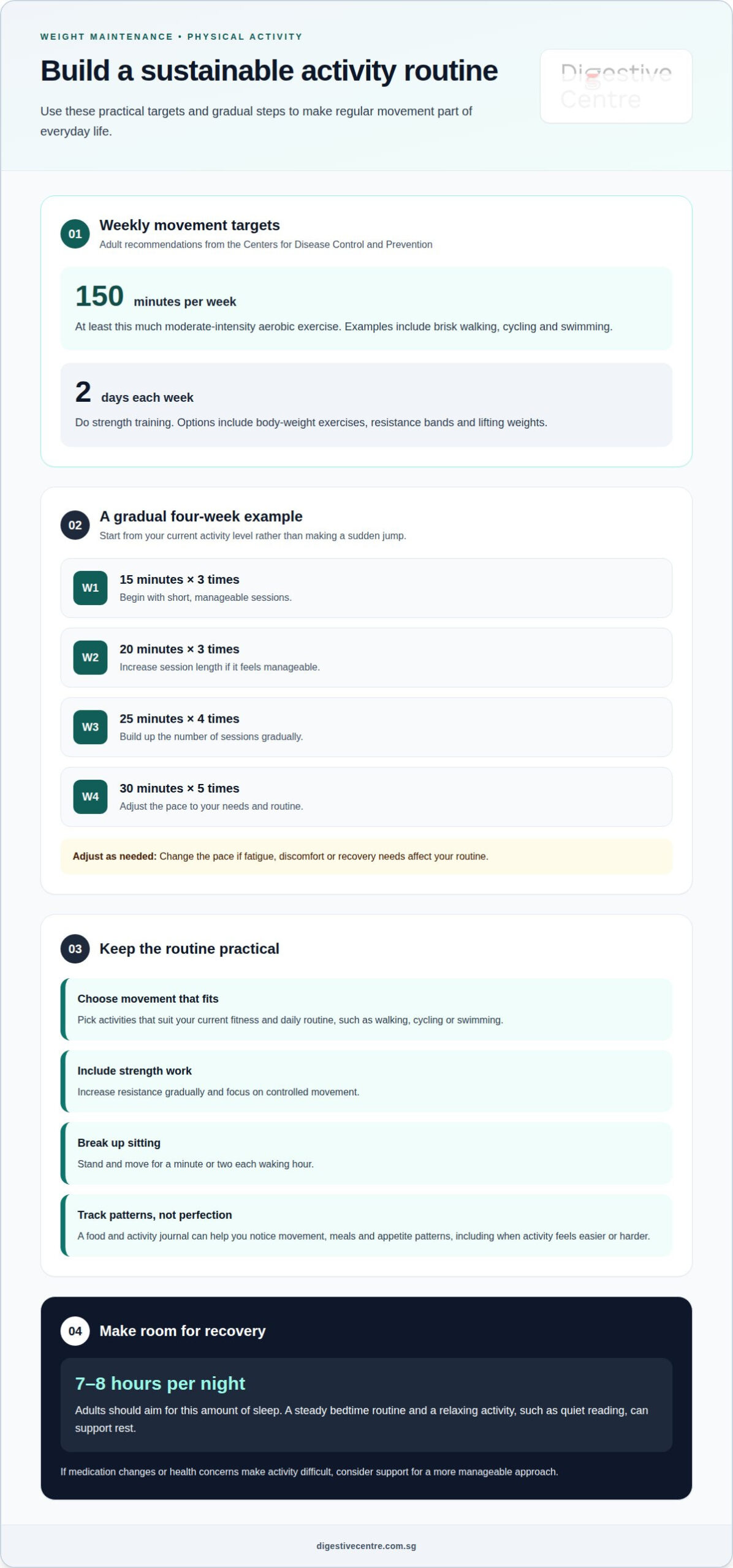
Regular movement supports a balanced lifestyle after treatment, while strengthening habits that can help prevent weight regain. According to the Centers for Disease Control and Prevention, adults should get at least 150 minutes of moderate-intensity aerobic exercise per week. Brisk walking, cycling and swimming are examples; choose activities that fit your current fitness and daily routine.
Strength matters too. The Centers for Disease Control and Prevention recommends that adults do strength training 2 days each week. Body-weight exercises, resistance bands and lifting weights are options. Building strength supports muscle, which is relevant during losing weight because some weight lost with GLP-1 receptor agonist treatment may come from muscle. Increase resistance gradually and focus on controlled movement.
Start from your current activity level rather than making a sudden jump. One example is 15 minutes of activity three times during the first week, then 20 minutes three times the next week. A later progression could be 25 minutes four times during the third week, followed by 30 minutes five times during the fourth week. Adjust the pace if fatigue, discomfort or recovery needs affect your routine, where supportive therapies like those from Body Therapist can assist with muscle recovery and body contouring as your physical habits develop.
A food and activity journal can reveal patterns after medication changes. Record movement, meals and appetite, then note when activity feels easier or harder. For example, a short walk after lunch may fit better than a longer session after work. Break up sitting by standing and moving for a minute or two each waking hour.
Sleep and stress also shape daily habits. Adults should aim to sleep between seven and eight hours per night. A steady bedtime routine and a relaxing activity, such as quiet reading, can support rest. If medication changes or health concerns make activity difficult, support for sustainable weight-management habits can help you consider a more manageable approach.
Calorie counting and weight management
Calorie counting can show how portions and everyday choices contribute to your intake, but it isn’t essential for everyone. One practical way to approach how to maintain weight loss after treatment is to use calorie records as a tool, not a permanent rule. If tracking helps, record meals, snacks, drinks and portions regularly. Include cooking oil, sauces and second helpings, which are easy to overlook. A brief diary can reveal patterns without requiring every meal to be perfect.
Weight regain after stopping GLP-1 receptor agonist medication is common. One analysis found people had regained 60% of their original weight loss by 52 weeks after stopping medication. A model projected regain would plateau at 75% of the original weight loss from 60 weeks after stopping medication. These findings describe groups, not an individual forecast. The analysis examined 48 studies, underscoring why continued weight-management habits matter.
Calorie needs can change as body weight changes, so an intake that supported weight loss may later contribute to regain. Exercise and everyday movement also affect energy needs. If you’re considering how to maintain weight loss after treatment, review calorie records alongside weight trends, hunger and activity levels. If detailed tracking feels burdensome, planning regular meals may help reduce unplanned eating when hunger builds.
Calorie-controlled meal plans can provide structure, but an appropriate plan depends on your health needs, food preferences and activity. A registered dietitian can help tailor portions and meal timing to these factors. Avoid adopting a restrictive plan simply because it worked during treatment; aim for a sustainable pattern that supports adequate nourishment.
Contact a doctor or registered dietitian if your weight starts rising quickly or side effects disrupt eating, drinking or exercise. Bring a food and activity record, along with notes about symptoms and medication changes. These details can help identify patterns and make a discussion about next steps more focused.
4. Weight monitoring and maintenance ranges
Weight monitoring works best as a trend, not a verdict on one morning’s reading. Body weight naturally fluctuates, so aim to stay within a range of around 2 kg or 4 lb rather than expecting the scale to show one exact number. Weigh under similar conditions each time, such as using the same scale at a consistent time. That makes changes easier to interpret.
Choose a rhythm you can sustain. Daily or weekly weigh-ins can help you notice a gradual upward trend; weekly checks may feel less intrusive. While taking weight-loss medication, tracking weight once a week can help follow progress until you reach and maintain a healthier weight. If weighing increases anxiety or affects eating, discuss a different monitoring approach at a planned appointment.
For waist size and health markers, use the schedule in your care plan and record measurements consistently. The timing should reflect your health needs and treatment, rather than an arbitrary routine. At follow-up, compare results with earlier readings and discuss changes alongside activity, eating habits, strength and muscle. Weight gain after stopping treatment may be easier to address when a sustained change is noticed early.
Studies modelling outcomes after stopping GLP-1 receptor agonists projected that people would sustain 25% of their initial weight loss long term. In the model, someone who lost a fifth of their body weight would retain a reduction of around 5%. These are model projections, not individual predictions. The practical takeaway is to use your own maintenance range and health measures, not a projected average, as the basis for discussing progress.
Keep a simple record of weigh-ins, waist measurements and relevant health markers. Add notes when routines change, such as less walking or fewer strength sessions, so you can see what may contribute to a shift. For tailored monitoring alongside treatment, explore medical weight-management support.
Digestive Centre: GLP1s and Medical Weight management and GLP1s
Digestive Centre offers GLP1s and medical weight management for people seeking clinical support with weight loss and maintenance. Consider discussing ongoing care if your weight is rising after treatment, appetite has changed, or you’re unsure how to manage medication and lifestyle habits together.
Weight maintenance can involve more than calorie tracking. A medical weight-management discussion can consider your treatment history, eating patterns, activity, weight trends and health needs. This helps shape possible next steps around your circumstances rather than relying on a one-size-fits-all target. Bring recent weight records and questions about treatment changes to make the conversation more focused.
For personalised support with medical weight management, contact Digestive Centre to discuss your needs.
Build a maintenance plan that can adapt
Turn what you’ve learned about how to maintain weight loss after treatment into a routine you can sustain. Choose a few habits to prioritise, then decide what changes would prompt you to review your plan. For example, note when appetite, energy, eating patterns or weight trends shift, and bring those observations to a clinical discussion.
Digestive symptoms can also affect eating and activity. Digestive Centre offers GERD and acid reflux treatment, as well as gastroscopy and colonoscopy. These services address digestive concerns, while medical weight management provides clinical support for people seeking help with weight-related care.
There’s no need to make every adjustment at once. A clear conversation can help you identify the questions that matter most and consider a practical next step. Contact Digestive Centre to discuss your needs and explore an appropriate path forward. Steady, informed decisions can help you keep moving towards long-term wellbeing.
Frequently Asked Questions
Do you need to count calories?
No, calorie counting is optional. It can help you understand patterns, but it isn’t essential for everyone. For example, if evening snacks are becoming frequent, briefly recording their timing and context may reveal whether fatigue, stress or skipped meals contribute. You can then adjust your routine without tracking every bite indefinitely. Choose an approach that provides useful information without making eating feel burdensome.
Is it possible to keep weight off after stopping semaglutide?
Yes, weight maintenance after stopping semaglutide is possible, and it benefits from continued attention to routines rather than treating the end of medication as the end of care. Keep planned follow-ups and discuss changes in appetite, eating or weight early. A maintenance plan can also account for changes in activity, health and daily schedule, so adjustments are practical rather than reactive.
What does “after treatment” mean for weight loss, including after GLP-1 medications, bariatric surgery, or a structured program?
“After treatment” means the transition from active weight-loss care into ongoing maintenance, not necessarily the end of all clinical support. It may follow a change or stop in GLP-1 medication, recovery after bariatric surgery, or completion of a structured programme. The transition looks different for each approach, so follow-up should reflect the treatment received and the person’s continuing health needs—which, for those managing changes in skin laxity following major weight loss, might also include exploring body contouring options with practices such as Tseng Plastic Surgery.
How common is weight regain after stopping weight-loss medication, and how quickly does it happen?
Weight regain after stopping weight-loss medication is common, but its pace varies. Changes may appear in the months after stopping, influenced by appetite, eating patterns, activity and the treatment plan. A single weigh-in cannot show the full trend. Record measurements regularly and discuss a sustained upward change during follow-up to identify when your maintenance approach may need review.
What diet and portion sizes help maintain weight loss long term?
There is no single portion size that suits everyone. A practical approach is to serve one meal, eat without rushing, and pause before deciding whether to have more. For example, at a restaurant, set aside part of a large serving before eating if it exceeds your usual appetite. Build meals from satisfying foods and adjust portions to hunger, activity and health needs rather than following a rigid template.
How much physical activity and strength training are recommended to prevent weight regain?
The Centers for Disease Control and Prevention recommends at least 150 minutes of moderate-intensity aerobic exercise weekly, plus strength training 2 days each week. Brisk walking can contribute to aerobic activity, while resistance bands or body-weight movements can build strength. Spread sessions across your schedule and adapt exercises to your abilities. Consistency matters more than trying to fit all activity into one demanding workout.
Medical disclaimer. This guide is general health information from Digestive Centre and is not a substitute for a consultation. Symptoms and treatment options differ from person to person. For advice about your own condition, book a consultation with the clinic. In an emergency, call 995.

































