
Gallbladder removal changes how bile reaches your gut, but it doesn’t mean you have to accept ongoing digestive discomfort. A cholecystectomy is surgery to remove the gallbladder, so bile flows from the liver into the small intestine instead of being stored in the gallbladder. Managing digestive issues after cholecystectomy often starts with smaller meals and a gradual return to higher-fibre foods as your body adjusts.
It’s understandable to wonder why familiar meals may suddenly cause bloating, loose stools or discomfort, or why constipation can develop during recovery. This article explains how meal size and fat intake can affect digestion, how to increase fibre gradually, and how anaesthesia, reduced activity and opioid pain medicines can contribute to constipation after surgery. You’ll also learn what post-cholecystectomy syndrome means and which persistent symptoms it may involve, including abdominal pain, indigestion or diarrhoea. The aim is to help you understand these changes and make dietary adjustments with greater confidence.
Key Takeaways
- Smaller, more frequent meals may feel easier to digest after gallbladder removal; notice how higher-fat foods affect you.
- Increase fibre gradually and pay attention to how your digestion responds as you reintroduce foods.
- Constipation can follow surgery because of factors such as anaesthesia, reduced activity and opioid pain medicines.
- Ongoing symptoms can have different causes; learn what post-cholecystectomy syndrome involves and how gastroscopy or colonoscopy may help assess digestive concerns.
Smaller, more frequent meals after gallbladder removal
After gallbladder removal, bile flows continuously from the liver into the small intestine. The gallbladder no longer stores bile and releases it in concentrated amounts during meals. As a result, large or high-fat meals may be harder to digest. During the first month or so, heavier meals can trigger bloating, gas, loose stools, diarrhoea or mild indigestion.
Smaller, more frequent meals can help avoid overwhelming your digestive system. Try four to six modest meals throughout the day instead of a few large ones. For example, have a small breakfast, lunch and dinner, with lighter snacks between meals. Eat slowly and chew thoroughly. Limit fried or greasy foods and fatty sauces, especially if they worsen your symptoms. Keep a simple food and symptom record to identify personal triggers.
During recovery, some people find bland foods such as rice, toast, bananas, soup and pasta easier to tolerate. Add other foods gradually rather than changing several parts of your diet at once. Your digestive system often adjusts to the changed bile flow within weeks or months, though heavier meals may remain uncomfortable early on. Lean proteins such as fish, tofu, eggs or skinless chicken offer meal options without relying on fried foods.
For bile acid diarrhoea, a lower-fat diet and smaller, frequent meals may help reduce symptoms. If diarrhoea is severe or continues, seek medical assessment to discuss its cause and appropriate management. Dietary changes may ease symptoms, but persistent bowel changes need attention.
Arrange a medical assessment if digestive problems continue for six months or more after gallbladder surgery. Seek prompt care for jaundice, fever or chills, worsening abdominal pain, or severe nausea and vomiting. These symptoms need assessment, not dietary adjustments alone. For milder symptoms, note when they occur, what you ate, and whether meal size or fat content seems to matter. This record can help clarify which changes are useful during recovery.
Gradually increasing dietary fibre
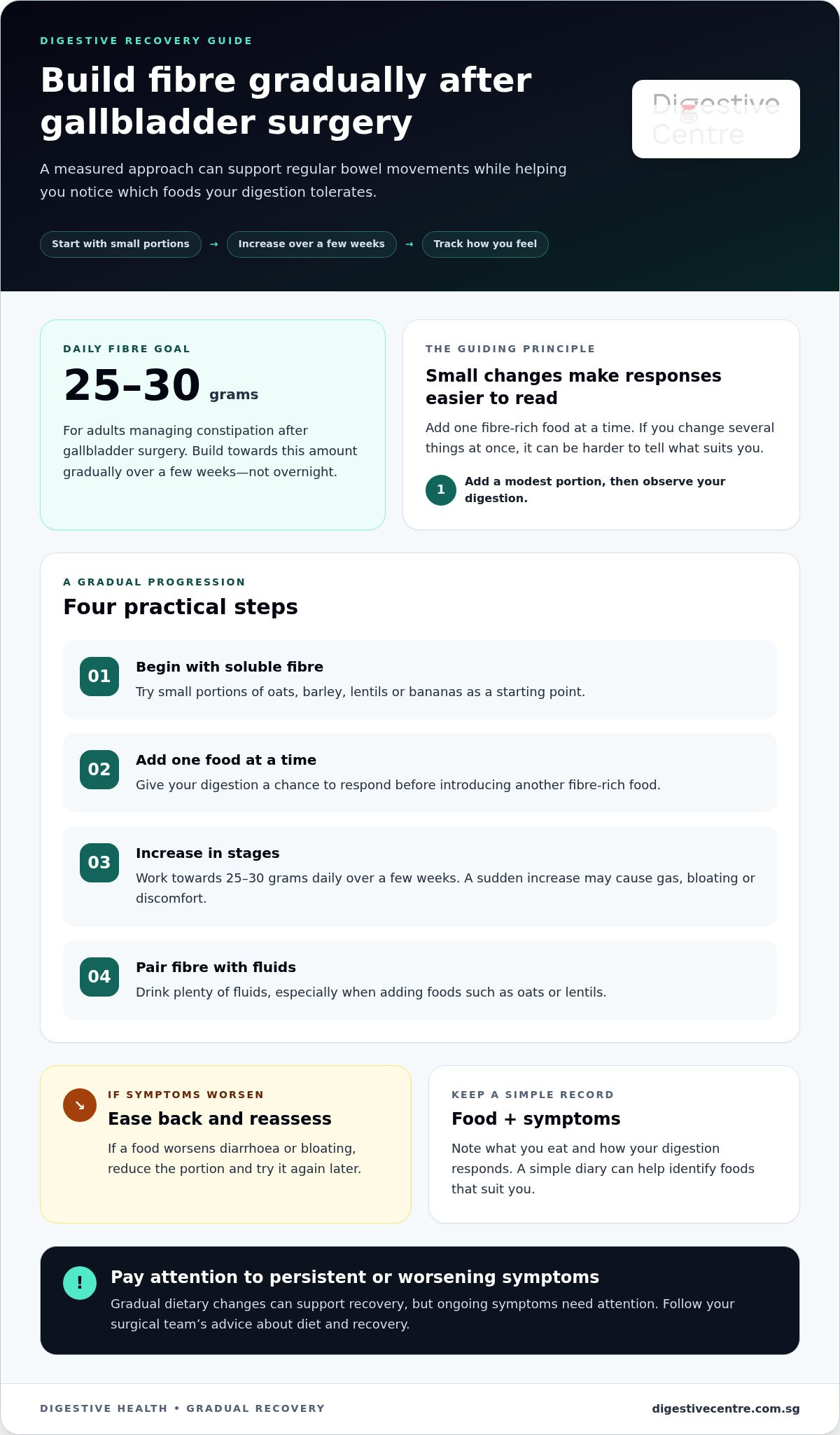
Fibre can support regular bowel movements after gallbladder surgery. Increase it gradually, since a sudden change may cause gas, bloating or discomfort. Soluble fibre is a useful starting point. Try small portions of oats, barley, lentils or bananas, then observe how your digestive system responds. Add one fibre-rich food at a time so you can identify which foods suit you during recovery.
Adults managing constipation after gallbladder surgery can aim for 25-30 grams of fibre daily. Build towards that amount over a few weeks, rather than changing your diet overnight. Pair fibre with plenty of fluids, especially when adding foods such as oats or lentils. If a food worsens diarrhoea or bloating, reduce the portion and try it again later. A simple food and symptom diary can help track those responses.
Returning to a healthy eating pattern is gradual. Begin with simple foods during recovery, then reintroduce a broader range of foods as tolerated. For example, add a modest serving of cooked vegetables before trying a larger portion of beans. If you’re recovering from laparoscopic gallbladder surgery, follow your surgical team’s advice about diet and recovery. The same principle applies after gallbladder removal for gallstones: progress according to your symptoms, not a rushed timetable.
Movement can also support bowel regularity. Start with short, gentle walks when you feel able, then gradually return to more activity. Light walks after surgery can help reduce the risk of complications such as blood clots. Avoid strenuous exercise until your surgical team says it’s appropriate. Activity, fluids and gradual dietary changes can all help, but none replaces attention to symptoms that persist or worsen.
Fibre supplements such as psyllium may help increase fibre intake, but take them with plenty of water. Ask a gastroenterologist before using digestive enzyme or ox bile supplements. Discuss probiotics with a healthcare professional before adding them, since they don’t replace gradual fibre intake or assessment of ongoing symptoms. For those interested in exploring root-cause, integrative health approaches alongside conventional care, resources like westridgeholistic.com offer guidance on holistic wellness and digestive support. A measured approach can help you identify whether a supplement suits your bowel pattern.
Causes of post-surgery constipation
Constipation can follow gallbladder surgery for reasons beyond dietary changes. Anaesthesia may slow bowel activity, while reduced movement during recovery can make stools harder to pass. Opioid pain medicines can also contribute. For example, someone who is resting more and taking prescribed opioid pain relief may notice fewer bowel movements after the procedure. These factors can occur together, so consider changes in activity, medicines and bowel habits.
Support digestive health with regular fluids and fibre-rich foods, increasing fibre gradually to limit gas and bloating. Short walks, as comfortable, help restore movement after surgery. A regular bathroom routine can also help: try sitting at similar times each day, preferably after meals. Moderate exercise for 30 minutes on most days can stimulate bowel muscles once you’re recovering enough for that activity.
Pay attention to how long symptoms last. After gallbladder surgery, no bowel movement for more than three days may signal a problem, while being unable to pass gas or stool for more than 48 hours warrants medical advice. Diarrhoea lasting longer than three days can also point to infection or another complication. Fever, chills, jaundice, severe nausea or vomiting, and persistent or worsening abdominal pain need prompt medical attention.
Take care when driving during recovery. Don’t drive while taking pain medicine that impairs judgement. This applies even if the operation was laparoscopic and you feel able to resume normal activities. Persistent digestive problems also deserve assessment: seek medical advice if symptoms continue for a few weeks, especially if diarrhoea persists, or if digestive symptoms remain six months after surgery. A clinician can assess the pattern and consider causes beyond routine recovery. Record bowel movements, medicine use and discomfort so you can describe changes clearly during an appointment.
Definition and prevalence of post-cholecystectomy syndrome
Symptoms can continue after gallbladder removal as the intestine adjusts to bile flow. Post-cholecystectomy syndrome describes a group of symptoms after surgery, not one specific condition.
Defining Post-Cholecystectomy Syndrome
Post-cholecystectomy syndrome is reported in approximately 10% to 40% of patients after gallbladder removal. Symptoms may begin immediately after surgery or appear months or years later. They can include nausea, indigestion, acid reflux, gas, bloating, diarrhoea, abdominal pain or jaundice. The term matters because it describes symptoms needing assessment, rather than proving that the body has failed to adjust normally.
Possible Causes of the Syndrome
Several issues can contribute, including previously undiagnosed digestive diseases, bile-duct stones, biliary tract functional disorders, visceral hypersensitivity or surgical complications. For example, a stone in the bile duct may cause symptoms even after the gallbladder is removed. Because these causes differ, a physician considers the symptom pattern and medical history when deciding what evaluation is appropriate. The syndrome’s name alone doesn’t identify the cause. For patients interested in investigating broader underlying factors behind ongoing gut complaints, functional health practices like rootedfunctional.com focus on identifying the root causes of chronic digestive issues.
Some patients experience shoulder pain during the first day or two after gallbladder surgery. Pain that persists or worsens, or occurs with fever, chills, jaundice, severe nausea or vomiting, needs prompt medical attention. These symptoms may signal complications, so don’t treat them as ordinary digestive adjustment. Note when the pain started and whether it changes after meals or movement.
Risks and side effects of medicines for bile acid diarrhoea vary by medicine. Before starting treatment, ask the prescribing physician about possible side effects, interactions and symptoms that need review.
If digestive symptoms persist, arrange a specialist digestive assessment to help clarify possible causes and next steps.
Digestive Centre: Gastroscopy and colonoscopy
Digestive Centre offers gastroscopy and colonoscopy for people whose digestive symptoms need further assessment. If symptoms continue after gallbladder removal, these procedures may form part of an evaluation, depending on the symptoms and clinical findings. Persistent reflux, indigestion or bowel changes can have different causes, so assessment can help guide appropriate next steps.
Share when your symptoms began, how they’ve changed, and whether meals affect them. Include details such as ongoing diarrhoea, abdominal discomfort or reflux. This context helps the care team understand your concerns and consider whether gastroscopy or colonoscopy may be relevant.
Take the next step toward digestive comfort
Ongoing symptoms deserve a clear plan, not guesswork. A thoughtful approach to managing digestive issues after cholecystectomy starts with understanding what may be driving your symptoms and choosing next steps that fit your needs. Keep a record of changes and discuss persistent concerns with a medical professional.
Digestive Centre offers gastroscopy and colonoscopy, as well as GERD and acid reflux treatment. Its other services include GLP-1 treatments and medical weight management. These options address different health needs, so the appropriate next step depends on the concern being assessed.
If you’d like to discuss digestive symptoms or available assessment options, contact Digestive Centre. With informed guidance, you can move forward with greater confidence and focus on feeling well.
Frequently Asked Questions
What is a cholecystectomy?
A cholecystectomy is an operation to remove the gallbladder, often because of gallstones or related problems. The gallbladder stores bile made by the liver, and after removal, bile drains directly into the small intestine. The operation may be performed laparoscopically or through open surgery. Your surgical team’s instructions guide your recovery, including wound care, activity and when to resume your usual meals.
Can You Prevent PCS?
There isn’t one way to prevent post-cholecystectomy syndrome (PCS), because it can involve different underlying causes. These may include bile-duct stones, a digestive condition that was present beforehand, or a functional problem. Following post-operative instructions and attending scheduled follow-up can help identify concerns early. If new symptoms appear, note their timing and pattern so you can describe them clearly during assessment.
What Is Post-Cholecystectomy Syndrome and How Can You Manage It?
Post-cholecystectomy syndrome is a term for digestive or related symptoms that occur after gallbladder removal; it doesn’t identify one specific cause. Managing digestive issues after cholecystectomy starts with tracking symptoms, such as reflux after meals or recurring abdominal discomfort. Share your record with a healthcare professional, including when symptoms began and whether they are changing. Assessment can help determine whether further investigation or symptom-focused care is appropriate.
When Should You See a Doctor?
See a doctor for symptoms that persist, worsen or interfere with eating and daily activities. Seek prompt medical attention for jaundice, fever or chills, worsening abdominal pain, or severe nausea and vomiting after surgery. These warning signs need assessment, not continued dietary adjustments alone. If symptoms are milder, record their frequency, relation to meals and effect on bowel habits to support a focused discussion.
When should I call my healthcare provider?
Call your healthcare provider if you can’t pass gas or stool for more than 48 hours after surgery, or have no bowel movement for more than three days. Contact them about severe diarrhoea, persistent vomiting, increasing pain, dark urine or pale stools. These changes can signal a complication and deserve timely advice. Keep a note of when symptoms began and any medicines you’re taking.
What digestive symptoms are common after gallbladder removal, and how long do they last?
Common symptoms include gas, bloating, indigestion, abdominal discomfort and loose stools or diarrhoea. Short-term side effects often improve within a few days to weeks, while diarrhoea may continue for a few weeks to a few months. Digestive adjustment varies, and some people adapt to changed bile flow within weeks or months. Symptoms that persist, worsen or come with warning signs should be medically assessed.