

What if a swollen, tight abdomen isn’t simply trapped gas? Bloating is a feeling of fullness or pressure, sometimes with visible abdominal swelling. Gas can cause burping, flatulence or cramps. Persistent stomach bloating and gas lasting more than a week should be assessed by a healthcare provider, especially if symptoms are severe or accompanied by vomiting, bleeding or unexplained weight loss.
Occasional gas is part of digestion, but recurring discomfort can have several causes, from eating habits and constipation to food intolerance or another digestive condition. This guide explains what bloating feels like, which symptoms may accompany excess gas, and when to seek medical care. It also explains how breath tests measure gases after a person consumes a specific sugar, helping assess lactose or fructose intolerance and small intestinal bacterial overgrowth. Understanding possible causes can help you make sense of your symptoms and the next steps in getting them assessed.
Key Takeaways
- Review whether medicines, eating habits or constipation may be contributing, and note when symptoms began or worsen.
- Pay attention to changes such as persistent pain, altered bowel habits or unexplained weight loss, which can make medical assessment more important.
- Breath testing can help investigate certain food intolerances and bacterial overgrowth by measuring gases after a specific sugar is consumed.
- Assessment may combine your medical and dietary history with an examination and selected tests, based on your symptoms and health background.
When should bloating be treated by a doctor or healthcare provider?
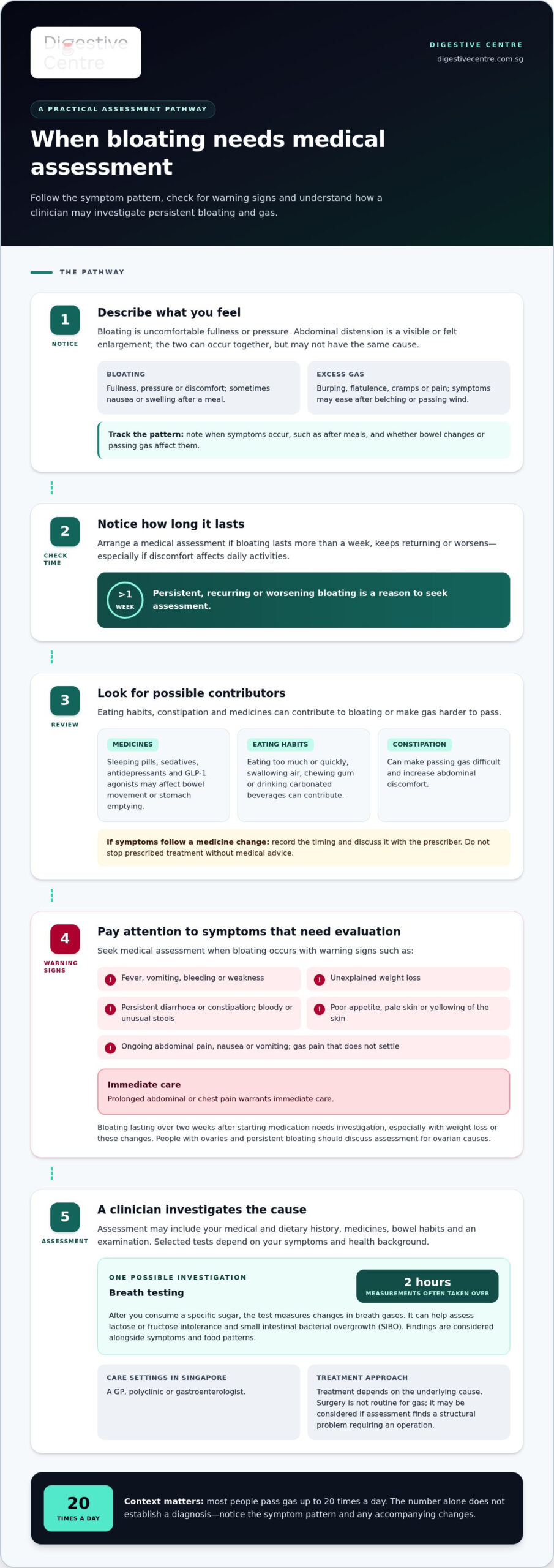
Arrange a medical assessment if bloating lasts more than a week, keeps returning or worsens. Persistent stomach bloating and gas needs more attention when new symptoms appear or discomfort affects daily activities.
Medication-Related Bloating
Medication-related bloating occurs when a medicine affects digestion or slows bowel movement. Sleeping pills, sedatives and antidepressants can lessen bowel contractions, while GLP-1 agonists may slow stomach emptying. If symptoms began after starting or changing medication, record the timing and discuss it with the prescriber. Don’t stop prescribed treatment without medical advice. Constipation can also make passing gas difficult and increase abdominal discomfort.
Warning Signs Requiring Medical Evaluation
Warning signs may indicate a condition that needs medical evaluation. Seek assessment for bloating accompanied by fever, vomiting, bleeding, weakness or unexplained weight loss. Persistent diarrhoea or constipation, bloody stools, unusual changes in stool, poor appetite, pale skin or yellowing of the skin also warrant attention. Bloating that lasts over two weeks after starting medication, especially with weight loss or these changes, needs investigation. People with ovaries and persistent bloating should discuss assessment for ovarian causes.
When Gas Symptoms Need Medical Attention
Gas symptoms need medical attention when they persist, worsen or interfere with daily activities. Contact a healthcare provider if gas pain does not settle, or if you have ongoing abdominal pain, nausea or vomiting. Prolonged abdominal or chest pain warrants immediate care. In Singapore, people can seek care through a GP, polyclinic or gastroenterologist. Consultation costs vary by care setting and whether investigations or procedures are needed.
Medical and Surgical Treatment Options
Treatment depends on the underlying cause, not bloating alone. A clinician may review medicines, bowel habits and diet, then investigate conditions such as irritable bowel syndrome, thyroid disorders or diabetes. If medication or constipation contributes, addressing that factor may ease symptoms. For ongoing issues, functional health practitioners—such as the team at 5280restorativemed.com—often focus on identifying root causes and restoring overall vitality. Surgery isn’t a routine treatment for gas; it may be considered if assessment identifies a structural problem that requires an operation. With persistent stomach bloating and gas, identifying the cause helps guide appropriate care.
What Are the Symptoms Of Excessive Gas & Bloated Stomach?
Bloating describes uncomfortable fullness or pressure, while abdominal distension means the abdomen looks or feels enlarged. These symptoms can occur together, but they don’t always have the same cause.
Abdominal Distension
Abdominal distension is visible or felt enlargement of the abdomen, often with tightness or pressure. It can become more noticeable after eating, as the digestive system processes food and gas builds up. Some people feel their abdomen swell even when its size appears unchanged. Tracking when distension occurs, such as after meals or at particular times, helps describe the pattern during medical assessment. Persistent or worsening changes deserve attention.
Common Bloating Symptoms
Bloating commonly involves fullness, abdominal discomfort and swelling after a meal. Nausea may occur, and symptoms can ease after belching or passing wind. The experience varies: one person may mainly notice pressure, while another sees visible distension. Eating too much or too quickly can contribute, as can swallowing air. A food and symptom record may help reveal whether particular meals or eating patterns precede the discomfort.
Symptoms of Excess Gas
Excess intestinal gas can cause frequent burping, flatulence, abdominal cramps or pain. Most people pass gas up to 20 times a day; the number alone doesn’t establish a diagnosis. Gas pain may arise when gas becomes trapped or moves poorly through the digestive system. Swallowing air while eating quickly, chewing gum or drinking carbonated beverages can contribute. Fermentation of carbohydrates by gut bacteria is another source of intestinal gas.
Notice which symptoms occur together and whether meals, bowel changes or relief after passing gas affect them. That detail helps explain the pattern during an assessment. If you’re exploring metabolic factors in your broader health, metabolic testing may be relevant to discuss with a healthcare professional.
Breath tests for food intolerances and bacterial overgrowth
Breath tests can help investigate whether particular sugars or intestinal bacteria contribute to digestive symptoms. Results are considered alongside food patterns, symptoms and other possible causes, including irritable bowel syndrome.
Breath Testing for Food Intolerances
A breath test measures changes in breath gases after you consume a specific sugar, helping assess how your digestive system handles it. Testing may investigate lactose or fructose intolerance, which can cause gas when these carbohydrates aren’t properly absorbed. Measurements are often taken over two hours. The findings can help connect symptoms with a trigger, but they’re interpreted alongside your history and symptom pattern.
Testing for Bacterial Overgrowth
A breath test can also help assess small intestinal bacterial overgrowth, or SIBO. This occurs when bacteria from the colon move into the small intestine, where they can ferment carbohydrates and produce excess gas. SIBO may be associated with gas, diarrhoea and weight loss. The test uses a specific sugar and measures breath gases over time, helping clinicians assess whether bacterial activity may contribute to symptoms.
Carbohydrate Malabsorption and Food Sensitivities
Carbohydrate malabsorption occurs when the digestive system doesn’t break down or absorb certain carbohydrates effectively. Lactose in dairy and fructose in some foods are examples that breath testing can assess. Wheat contains gluten, but breath tests don’t assess gluten-related disease such as coeliac disease. A clinician may consider other investigations when symptoms suggest it. Food sensitivity and intolerance aren’t interchangeable diagnoses, so matching tests to symptoms matters.
Keep a record of meals and symptoms, noting foods such as dairy, wheat, beans or fruit. A clinician may suggest an elimination diet, including a low-FODMAP approach, to explore food sensitivities. These changes can help identify possible triggers while avoiding unnecessary restriction. Breath test findings also need context: gas production, belching and symptom timing can guide interpretation, but no single result explains every cause of bloating.
What are the symptoms of bloating and gastric issues?
Persistent fullness, stomach pain, nausea and poor appetite can accompany bloating. The combination and timing help a doctor distinguish digestive discomfort from other gastrointestinal disorders.
Assessment begins with a detailed history. Describe when symptoms occur, how long they last, and whether eating, drinking, chewing or bowel movements affect them. Mention medicines, previous operations and any weight loss, vomiting or changes in your stools. These details help identify patterns, such as fullness after meals or discomfort alongside constipation.
Stool habits offer another useful clue. Passing hard or lumpy stools fewer than three times a week can signal constipation, according to Digestive Centre. A doctor may ask about stool frequency and consistency, pain, and whether passing stool relieves pressure. This helps assess whether slow bowel movement contributes to abdominal symptoms.
There’s no single list of tests for everyone with gas or bloating. Investigations depend on age, medical and surgical history, and symptom severity. A physical examination may be followed by blood tests, stool tests or scans. Blood testing can assess for coeliac disease, and the results help determine whether further investigation is appropriate.
Imaging can answer specific questions. An abdominal X-ray, CT scan or MRI may help assess stool or gas, inflammation, structural changes or masses. These tests aren’t interchangeable; the doctor selects an approach based on the suspected cause and clinical findings.
Upper endoscopy examines the oesophagus, stomach and first part of the small intestine for inflammation. During the procedure, tissue samples may be collected to assess for coeliac disease. Other specialised tests can examine gastrointestinal movement or pelvic floor function, though they’re used less commonly.
A tailored evaluation links symptoms with examination findings rather than relying on one result. For persistent digestive concerns, arrange a clinical assessment to discuss which investigations fit your symptoms and history.
Digestive Centre: Gastroscopy and colonoscopy
Digestive Centre offers gastroscopy and colonoscopy to evaluate digestive concerns when these investigations are appropriate. If bloating persists alongside symptoms such as upper abdominal discomfort, altered bowel habits or unexplained weight loss, discussing further assessment can help clarify what to investigate next.
Gastroscopy examines the oesophagus, stomach and first part of the small intestine. Colonoscopy examines the large bowel. These procedures assess different areas, so symptoms, medical history and findings guide which investigation may be suitable. Bloating alone doesn’t mean either procedure is needed; a clinician considers the overall picture before recommending tests.
For persistent symptoms or concerns about which assessment may fit, contact Digestive Centre or visit Digestive Centre online.
Take the Next Step Towards Digestive Clarity
Ongoing digestive discomfort can make meals and daily routines harder to enjoy. Keeping a clear record of when symptoms begin, what you eat and how your bowel habits change can make a medical discussion more focused. If persistent stomach bloating and gas continues to affect your comfort, consider seeking an assessment rather than relying on guesswork or restrictive food changes.
Digestive Centre offers medical weight management, including GLP-1 treatments, and GERD and acid reflux treatment. These services may be relevant when symptoms arise alongside weight-management medication or reflux concerns. A clinician can consider your symptoms and history when discussing suitable next steps.
Contact Digestive Centre to discuss your digestive concerns and take a considered next step towards greater comfort.
Frequently Asked Questions
What Is Bloating?
Bloating is an uncomfortable sensation of fullness, pressure or swelling in the abdomen. It may occur with visible distension, but the two aren’t identical: someone can feel bloated without seeing a change in abdominal size. For example, a tight feeling after a meal may be bloating even when clothing fits as usual. Describe both the sensation and any visible change when discussing your symptoms.
How are gas-related problems diagnosed?
Diagnosis starts by matching symptom patterns with medical history and examination findings. Before an appointment, note when discomfort occurs, what you ate, changes in bowel habits, medicines, and whether symptoms ease after a bowel movement. A doctor may select blood or stool tests, imaging, breath testing or endoscopy based on those details. Not everyone needs the same investigations; each test is chosen to address a specific clinical question.
If I have gas-related symptoms, is it possible for testing to be normal?
Yes. Tests can be normal even when symptoms are real, especially if a problem is intermittent or the chosen test doesn’t assess its cause. For example, a breath test evaluates certain sugar malabsorption or bacterial overgrowth, not every digestive disorder. A normal result is one part of the assessment. Tell your doctor if symptoms continue, change or interfere with eating and daily routines.
What are the symptoms of belching, bloating, distension and flatulence?
Belching is gas leaving through the mouth; flatulence is gas passed through the rectum. Bloating is the internal feeling of pressure or fullness, while distension describes visible abdominal enlargement. These symptoms may overlap, but one doesn’t automatically mean the others are present. For instance, someone may have frequent belching without abdominal swelling. Note which symptoms occur together and whether meals or bowel movements affect them.
What is intestinal gas and when do people have symptoms?
Intestinal gas is gas within the digestive tract, produced partly when gut bacteria ferment carbohydrates that weren’t fully digested. People may notice symptoms when gas accumulates, becomes trapped or moves poorly through the bowel. Meals containing fermentable carbohydrates can trigger symptoms for some people, while others have no clear food association. Gas itself is a normal part of digestion; discomfort and disruption are more useful to track.
What to ask your doctor?
Bring focused questions to make the appointment useful: “What causes fit my symptoms?” “Could my medicines or constipation contribute?” “Which tests would answer the main question, and what would each test assess?” Also ask what changes should prompt urgent review and how to track symptoms while awaiting results. Share your symptom timeline, medication list and any changes in appetite, stools or weight.

































