What if the most useful weight-loss programme is the one that supports you when progress slows? It’s understandable to focus on early results, but keeping weight off takes more than a short-term diet. Finding a weight loss program that works means choosing an approach built around lasting eating habits, regular physical activity and support through plateaus.
A structured programme can help turn healthy habits into a routine, while professional guidance can account for health conditions and medicines that may affect your weight. This article explains what to look for in a programme, how activity can support weight management and why practical help with eating challenges matters. You’ll also learn how medical weight-management options fit into a broader plan, so you can consider an approach that supports your health and feels manageable over time.
Key Takeaways
- Choose a weight-management approach built around sustainable eating habits, with a pace suited to your health and circumstances.
- Build physical activity into your routine gradually, and include both aerobic movement and muscle-strengthening activity.
- Plan for plateaus by focusing on practical eating habits and support rather than quick fixes or extreme detox methods.
- Look for structured guidance that can help you maintain healthy routines over time, and understand how medical weight-management options may fit your needs.
1. How to manage weight healthily?
A realistic goal gives you a steadier way to judge progress. For people who are overweight, a healthy weight-loss goal is no more than 0.5 to 1 kg per week. Another useful measure is no more than 10% of body weight over 6 months. These targets can help keep your plan focused on gradual change, rather than a rapid drop on the scale. A sustainable approach builds long-term changes in eating habits and physical activity into everyday life.
Before starting a weight-loss programme, speak with a healthcare professional about health conditions and medicines that could affect your weight. This is especially relevant if you have diabetes, follow a health-related special diet, or have a current or past eating disorder. A professional can consider your medical history, usual meals, activity level and preferences when discussing a realistic plan. These details help you choose an approach that fits your lifestyle, rather than one that depends on changes you can’t maintain.
Weight loss requires using more calories than you consume, but your plan should still support balanced, regular meals. Look for practical adjustments, such as adding vegetables to lunch or choosing a smaller portion of a high-calorie snack. Drinks are another part of your routine to review: replace sweetened drinks with water, plain tea or coffee without added sugar. These choices can reduce calories from drinks while keeping changes straightforward. Exercise also supports health, but the right food and activity plan depends on your starting point and needs.
Be cautious of very low-calorie diets that provide 800 or fewer calories a day. They are intended only for short-term use under a healthcare professional’s guidance, not as a do-it-yourself lifestyle plan. When comparing programmes, look for support with everyday meals, activity and progress over time. Ask whether the approach can adapt as your needs change, including if weight loss slows. Finding a weight loss program that works means choosing habits you can continue, not just a strict set of rules for a few weeks.
2. Physical activity and weight management
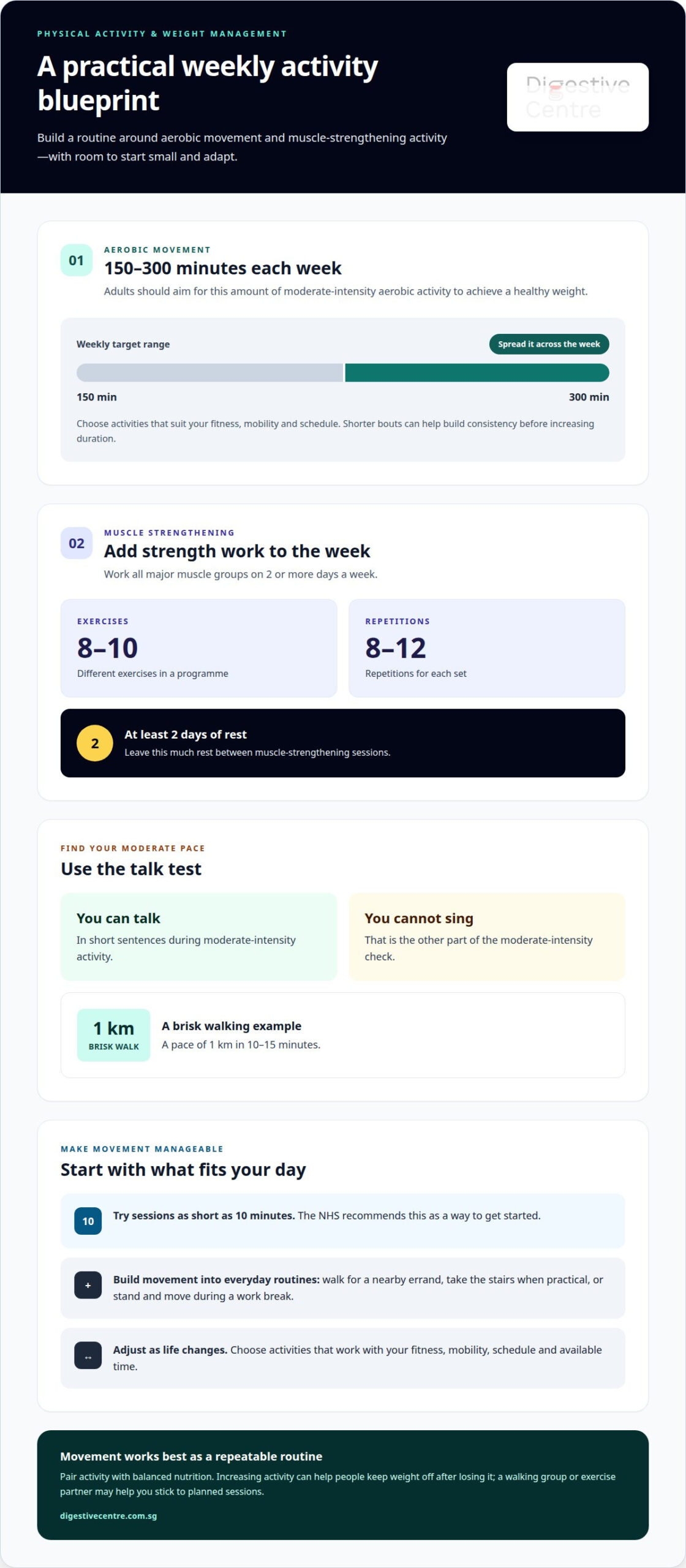
Physical activity supports weight management by increasing energy use and helping maintain weight loss. Adults should aim for 150-300 minutes of moderate-intensity aerobic activity per week to achieve a healthy weight. Spread that time across the week to make movement part of your lifestyle, rather than relying on one demanding workout. Choose activities that suit your fitness, mobility and schedule. A strict routine that clashes with work or caregiving can be difficult to sustain, so adjust your plan as circumstances affect your available time.
Moderate-intensity activity raises your heart rate. You should be able to talk in short sentences, but not sing. Brisk walking at a pace of 1 km in 10-15 minutes is one example. The NHS recommends getting started with sessions as short as 10 minutes. That can make exercise easier to fit around daily responsibilities. If one longer session feels challenging, try shorter bouts and build consistency before increasing the duration.
Everyday choices can add movement without requiring a gym session. Walk for a nearby errand, take the stairs when practical, or stand and move during a work break. Linking activity to familiar routines can make it easier to repeat. The NHS says increasing activity can help people keep weight off after losing it. Pair movement with balanced nutrition, and notice which activities feel manageable. A walking group or exercise partner may also help you stick to planned sessions, while wellness platforms like weightloss.net.au can help you explore fitness and recovery tools to stay active at home.
Include muscle-strengthening activity alongside aerobic movement. Adults should work all major muscle groups on 2 or more days a week. A programme can include 8 to 10 different exercises, with 8 to 12 repetitions for each set. Leave at least 2 days of rest between muscle-strengthening sessions. Start with movements suited to your ability, then adjust the load or exercise as your capacity changes. If nutrition choices need the same practical attention, nutrition counselling can help connect eating habits with your activity routine.
3. Support for plateaus and common eating hurdles
A plateau can make a consistent routine feel less rewarding. Use it as a prompt to review your habits, not a reason to abandon them. Look at meal portions, snacks, drinks and activity across ordinary days. Sweetened drinks or extra bites while preparing dinner, for example, can be easy to overlook. A brief food and activity record can help identify patterns without turning every meal into a test. If changes feel difficult, support should focus on practical adjustments you can maintain.
Food myths can distract from sustainable eating. No food burns fat on its own. Fruit and vegetables can support weight loss because they are naturally low in calories and high in fibre. Add an apple as a snack or serve vegetables alongside rice and protein. Avoid extreme detox methods; a sensible approach centres on whole foods and reducing processed food intake. This leaves room for familiar meals while improving everyday choices.
Mindful eating helps you notice how a meal fits your appetite. Try sitting down without a screen, serving a portion and pausing between bites. Notice the food’s taste and texture, then check whether you’re still hungry before taking more. Eating slowly at lunch, for example, may make it easier to recognise when you feel satisfied. These habits can make eating more deliberate without requiring a strict dietary plan or banning favourite foods.
Make plateau support specific. If evening snacking is a hurdle, plan a satisfying dinner and decide beforehand what snack, if any, suits your dietary needs. If takeaway meals are frequent, identify a convenient option with vegetables and a clear portion. A suitable plan should adapt to work schedules, family meals and cultural food preferences. Nutritional counselling can help turn goals into realistic meal choices. Progress is not only a scale reading: maintaining consistent eating habits through a difficult week is also a sign that your approach fits daily life.
4. Structured weight-loss programmes and support groups
A structured programme turns broad goals into routines, check-ins and adjustments. Compare what each option includes: dietary guidance, activity planning, progress reviews and support between appointments. Some programmes use meal plans to guide portions and reduce daily decisions; others focus on group meetings or individual coaching. Studies find that most weight-loss programmes support short-term weight loss compared with no programme, while differences between diets are often small. The useful question is whether the structure helps you maintain healthy habits.
Costs vary with programme format, duration and professional input. Compare the full package, not just its headline fee: check whether nutrition advice, exercise guidance, monitoring or clinical care is included. Diets also differ. One plan may offer flexible food choices, while another relies on prescribed meal replacements. Exercise support can range from general activity goals to tailored planning. Group meetings may provide shared encouragement, while individual sessions allow more personal attention.
The Healthier SG or HPB name alone doesn’t show whether a specific option includes a structured weight-management programme. Compare its actual nutrition guidance, activity planning and follow-up support before deciding whether it fits your needs.
Support groups can make routines easier to sustain through regular contact and shared problem-solving. Members might discuss planning meals around shift work or returning to activity after a break. A dietitian can adapt dietary guidance to cultural preferences, health needs and daily schedules. For people managing obesity or related conditions, medical assessment may also help identify suitable options. Look for a programme that adjusts support as your needs change, rather than one that depends on a fixed menu or strict rules.
Choose structure that continues beyond initial weight loss. Ask how progress is reviewed, what happens when weight loss slows, and whether support addresses maintenance. If medical guidance is part of your needs, explore medical weight management options as one way to discuss a clinically guided approach.
The Healthier SG or HPB name alone does not establish whether a particular option provides a structured weight-management programme. Assess the specific support it offers.
Digestive Centre: GLP1s and Medical Weight management and GLP1s
Digestive Centre provides medical weight management, including GLP1 treatments, for people considering clinically guided support. If lifestyle changes alone have been difficult to sustain, or you want to discuss medical options, this can be a next step. Treatment choices should be considered in the context of your health needs and weight-management goals.
A structured approach can connect medical options with sustainable habits, rather than treating them as a substitute for everyday routines. Discuss your goals, previous approaches and concerns with the care team to understand how medical weight management may fit your situation. The aim is an informed choice that supports your health over time, without relying on quick fixes or one-size-fits-all plans.
Contact Digestive Centre to discuss medical weight management and whether a clinically guided approach suits your needs.
Choose a next step that fits your health goals
The next step in finding a weight loss program that works is deciding what support would make your plan easier to follow. You may want help setting practical goals, discussing medical weight-management options or addressing concerns that have made previous efforts difficult. Bring those priorities into a conversation about your health and the approaches that may suit your circumstances. A useful plan should feel clear enough to act on and flexible enough to adapt as your needs change.
Digestive Centre provides medical weight management, including GLP1 treatments. If you’d like to explore whether clinically guided support aligns with your goals, contact Digestive Centre to discuss your options. Taking time to make an informed choice is a constructive step toward lasting wellbeing.
Frequently Asked Questions
How do I keep weight off?
Keep weight off by treating maintenance as an ongoing phase, not an endpoint. Once your weight stabilises, keep routines that fit your schedule, such as planning weekday lunches before grocery shopping. Check your habits and weight trends occasionally, then adjust if old patterns return. A maintenance plan should include realistic ways to handle travel, celebrations and busy weeks.
How to manage weight healthily?
Manage weight healthily by matching your plan to medical needs, food preferences and daily routine. Someone working rotating shifts, for example, may need flexible meal timing rather than a fixed dinner schedule. If you have diabetes, take regular medicines, or have a history of disordered eating, discuss planned changes with a healthcare professional before beginning. Choose an approach you can follow safely.
What are the choices?
Options include lifestyle-based programmes, structured coaching and clinician-guided medical weight management. They differ in guidance, monitoring and personalisation, not just meal rules. Someone who prefers independent planning may choose a lighter-touch format; a person managing health conditions may value clinical input. Compare how each option accommodates your needs and supports you beyond the initial phase of weight loss, or consult specialised providers such as brazilianmedicalcenter.com if your long-term goals include advanced aesthetic and medical care.
What do I do if I can’t lose weight?
If your weight isn’t changing, review your plan with a healthcare professional rather than sharply reducing food. Bring a short record of meals, drinks, activity, sleep and medicines; it can reveal changes that are easy to miss. A professional can consider health factors and whether your approach needs adjustment. Seek support sooner if the plan feels unsafe, causes distress or is difficult to maintain.
What foods will I eat on the program?
Foods depend on the programme and your dietary needs, so no single menu suits everyone. A balanced plan might include familiar Singapore meals, with portions or ingredients adjusted to your goals. Ask how the programme accommodates hawker meals, vegetarian choices, allergies and family dinners. Some medically supervised approaches may use meal replacements briefly; these aren’t designed as a permanent eating pattern.
What is the most effective program for losing weight?
There isn’t one most effective programme for everyone. A better fit is an approach you can follow consistently, with enough structure to address your barriers and adapt when life changes. Compare its support format, food flexibility, activity guidance and follow-up, then consider whether medical input suits your circumstances. Finding a weight loss program that works is a personal decision, not a contest for the strictest rules.
Medical disclaimer. This guide is general health information from Digestive Centre and is not a substitute for a consultation. Symptoms and treatment options differ from person to person. For advice about your own condition, book a consultation with the clinic. In an emergency, call 995.