

Faster isn’t automatically better: in Singapore, people who are overweight are advised to aim to lose no more than 0.5 to 1 kg per week. If you’re asking what is a healthy rate of weight loss, this steady range is a useful guide, while your progress should also be assessed alongside your daily habits and overall wellbeing.
It makes sense to want clear signs that your effort is working. But the scale is only part of the picture: food choices, movement, sleep and stress all influence how sustainable your routine feels. Very low-calorie diets can carry risks, so fast results are not necessarily a sign of a healthy approach.
This guide explains how to track habits and progress, what to know about very low-calorie diets, and how to choose practical lifestyle changes to support weight management over time. You’ll also learn when a measured, medically supported approach may help, so you can focus on progress that suits your health needs rather than chasing a number at any cost.
Key Takeaways
- Track eating, movement, sleep and stress alongside weight to spot patterns that can guide sustainable adjustments.
- Be cautious with very low-calorie diets, which can increase the risk of muscle loss and nutritional deficiencies.
- Build meals around fruit, vegetables and whole grains, and choose manageable changes over restrictive rules.
- Set realistic activity and lifestyle goals, then adjust your approach based on how your health and habits respond.
1. Tracking nutrition, physical activity, sleep and stress
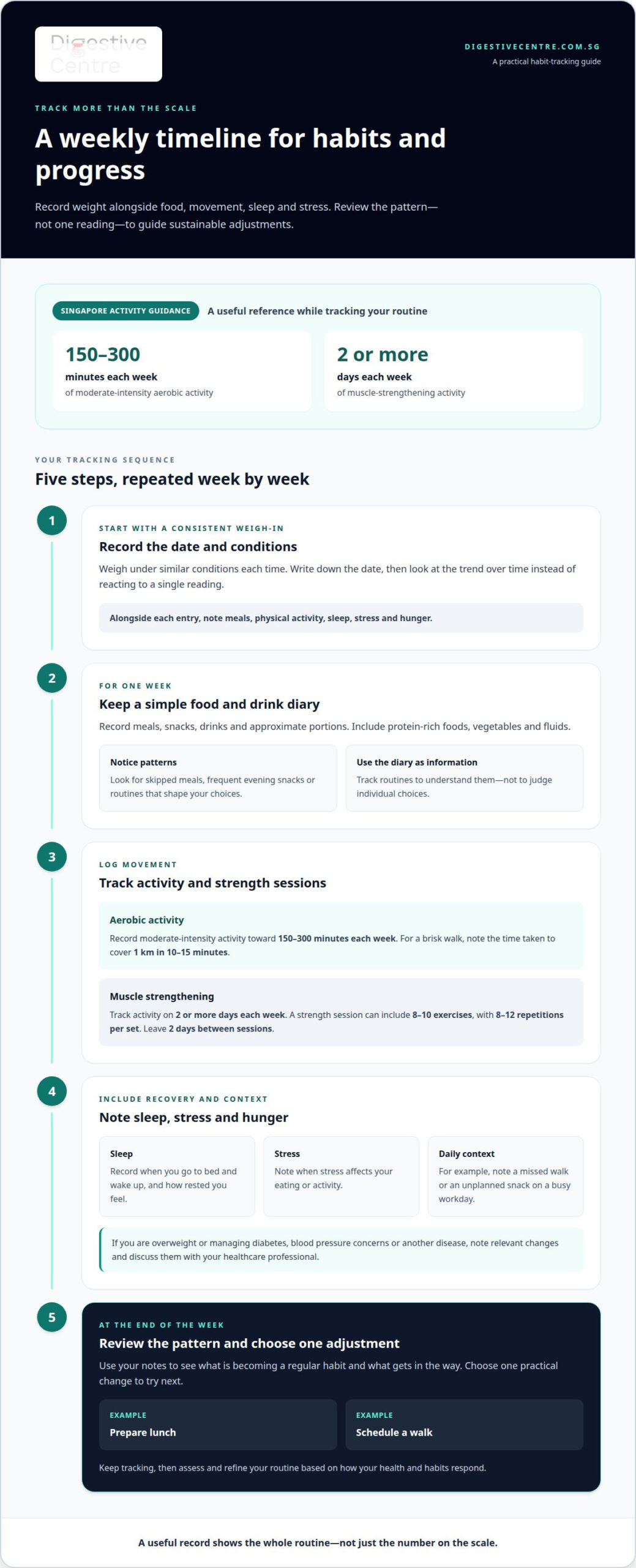
Track more than the scale. The Centers for Disease Control and Prevention advises people to lose weight gradually, at about 1 to 2 pounds a week, to improve the likelihood of keeping it off. Weigh under similar conditions and record the date, then review the trend instead of reacting to one reading. Pair each entry with notes on meals, physical activity, sleep, stress, and hunger.
In Singapore, aim for 150 to 300 minutes of moderate-intensity aerobic activity each week, alongside muscle-strengthening activity on 2 or more days. A brisk walk can make movement practical: cover 1 km in 10 to 15 minutes, then record the time. For strength sessions, choose 8 to 10 exercises and perform 8 to 12 repetitions per set. Leave 2 days between sessions. These details show whether activity is becoming a regular habit, rather than an occasional effort.
For one week, record meals, snacks, drinks and approximate portions. Include protein-rich foods, vegetables and fluids, then look for patterns such as skipped meals or frequent evening snacks. Use a diary to spot routines, not to judge individual choices. If you’re overweight or managing diabetes, blood pressure concerns or another disease, note relevant changes and discuss them with your healthcare professional.
Sleep and stress deserve as much attention as food and exercise. Record when you go to bed and wake up, and how rested you feel. Add a brief note when stress affects your eating or activity. For example, note whether a busy workday led you to miss a walk or have an unplanned snack. Review your entries weekly and choose one adjustment, such as preparing lunch or scheduling a walk. This helps turn general guidance into a routine you can assess and refine.
2. Very low-calorie diets and nutritional deficiencies
Very low-calorie diets of 800 calories or less may slow metabolism and affect your ability to exercise. Severe restriction can also increase muscle loss alongside fat, especially without adequate protein and physical activity. Nutrient shortfalls may contribute to fatigue, hair loss, dehydration, nausea, electrolyte imbalances, menstrual changes, or longer-term bone problems. Rapid loss isn’t automatically healthier.
Calories matter because weight loss requires using more energy than you consume. A practical approach is a moderate daily calorie deficit, rather than extreme restriction. A suggested deficit for realistic weight loss is 500 to 750 calories each day, but your needs depend on factors such as body size, activity, and health. Portion control can help: serve a planned portion, eat slowly, and include vegetables to add volume to meals.
Choose satisfying meals with fewer calories, not a diet built around deprivation. Recipes with fewer than 600 calories per portion can help with meal planning. Plain water or plain tea can replace higher-calorie drinks. Avoid assuming that consuming less than 1,000 to 1,200 calories per day is a safe shortcut; very low intake may be counterproductive. Consider seeking medical guidance when deciding whether meal replacements are appropriate.
Is the recommended weight-loss rate different for older adults or people with medical conditions? Age alone doesn’t set a different target, but health conditions, medicines, mobility, and nutritional needs affect a suitable plan. Does a healthy rate depend on starting weight or BMI? Yes, starting weight affects how a loss translates proportionally, while BMI is only one part of assessing health. When should you consult a doctor or dietitian? Speak with a healthcare professional before lifestyle changes if you have a medical condition, follow a special diet, or have a current or past eating disorder. Nutritional counselling can help you plan balanced choices and avoid overly restrictive habits.
3. How to manage weight healthily?
Build meals around vegetables, fruit and whole grains, then adjust portions to suit your routine. Mayo Clinic recommends at least four servings of vegetables and three servings of fruit per day. Add vegetables to familiar meals, such as leafy greens with rice or sliced vegetables in a noodle dish. Choose whole-grain options where practical, and pair them with a protein source for a more balanced plate.
Paying attention to portions can make healthy eating easier without ruling out favourite foods. Serve a meal onto a plate instead of eating from a large packet, and pause before having seconds. If you often feel hungry soon after eating, consider whether your meal included enough vegetables, whole grains and satisfying protein. A sustainable eating pattern leaves room for foods you enjoy rather than relying on strict rules that are hard to maintain.
A food diary can reveal habits that are easy to miss in the moment. Record meals, snacks and drinks, along with the circumstances, such as eating while working or feeling stressed. Then look for a practical pattern: perhaps you skip lunch and snack frequently in the evening. Use that insight to plan a more filling lunch or prepare a snack in advance. Treat the record as information, not a scorecard.
Mindful eating brings attention back to the meal. Sit down, reduce distractions, and notice flavour, hunger, and fullness as you eat. For example, put down your utensils between bites and check whether you’re still hungry before serving more. Review progress through repeatable habits, not a single meal or weigh-in. For people with overweight or obesity, losing 5 to 10% of body weight can improve blood pressure and cholesterol and reduce diabetes risk. A balanced approach supports broader health, including factors connected with heart disease, while keeping daily eating manageable.
4. Lifestyle changes to support a healthy weight
Lasting progress often starts with a realistic change you can repeat. The Centers for Disease Control and Prevention recommends focusing on two or three weight-management goals at a time. Choose actions that fit your routine, such as taking the stairs or preparing lunch before work. Keep the effort manageable, then build on it when the habit feels established.
Start with one or two small lifestyle changes instead of overhauling every routine. For example, plan a 15-minute evening walk or replace a sugary drink with water. The CDC uses a 15-minute evening walk as an example of a specific short-term goal. Put the activity in your calendar, and note whether the timing works with your daily schedule.
Early scale changes can be misleading. Some people may lose 2.2 kg to 5 kg in the first week of a weight-loss plan, partly because of water loss. That initial shift doesn’t necessarily show the pace of fat loss that follows. Track the longer-term trend alongside energy, meals, and activity, rather than reacting to a single morning’s measurement.
Make sleep part of the plan, too. The CDC recommends turning off electronic devices at least 30 minutes before bedtime as one strategy for getting enough sleep. Try charging your phone outside the bedroom or setting a reminder before bed. Pair that step with a consistent wind-down routine, such as reading or preparing clothes for tomorrow’s walk.
Choose a next step that feels practical, not punishing. If you’re ready for guidance tailored to weight management, explore your support options and discuss how to make sustainable habits fit your health needs.
Digestive Centre: Gastroscopy and colonoscopy
Digestive Centre offers medical weight management, including GLP1 treatments and gastric balloons, for people considering clinician-supported options alongside lifestyle changes. If progress feels difficult to sustain or you want to discuss structured approaches to weight management, this can be a practical next step. A clinician can discuss your health goals and which options may suit your circumstances.
Gastroscopy and colonoscopy are diagnostic procedures, not weight-loss treatments. They may be relevant when digestive symptoms or concerns need assessment, but their role differs from weight-management support. Choosing the right next step starts with understanding what you want assessed or addressed.
For a discussion about medical weight management or digestive investigations, contact Digestive Centre.
Make your next step personal
Your next step can be a clearer conversation about your health priorities, not just the number on the scale. Consider what you want to improve, which routines feel manageable and what has made change difficult before. Sharing these priorities helps keep the discussion focused on your circumstances. Understanding what constitutes a healthy rate of weight loss is part of setting goals that consider both progress and wellbeing.
Digestive Centre offers medical weight management, GLP1 treatments, gastroscopy and colonoscopy, and GERD and acid reflux treatment. These services address different needs, from weight-management support to digestive concerns. If you’d like to explore a suitable next step, contact Digestive Centre to start a conversation about your health goals.
Steady, informed decisions can help you move forward with greater confidence. Choose a next step that feels right for you.
Frequently Asked Questions
How to manage weight healthily?
Manage your weight with a routine you can maintain: plan balanced meals, choose regular movement and review your progress over time. For example, prepare a simple weekly meal plan and schedule walks around work or family commitments. If your weight or health needs change, reassess your routine rather than turning to severe restriction. A healthcare professional can help adapt your approach if a medical condition or special diet affects your choices.
What is a healthy rate of weight loss per week for adults?
For adults who are overweight in Singapore, a commonly advised target is no more than 0.5 to 1 kg per week. The Centers for Disease Control and Prevention advises gradual loss of about 1 to 2 pounds a week to improve the likelihood of keeping it off. These figures are general guides; weekly scale changes can vary, so consider the trend alongside how your routine feels.
How many kilograms per week is considered safe weight loss?
For people in Singapore who are overweight, the suggested range is 0.5 to 1 kg per week, with an upper aim of no more than 1 kg weekly. A single week may look different because body weight can fluctuate. Compare measurements taken under similar conditions and review the pattern across several weeks, rather than trying to force the scale into the same change every week.
What calorie deficit is needed for gradual, healthy weight loss?
A suggested deficit for realistic weight loss is 500 to 750 calories each day. A deficit means taking in fewer calories than your body uses, through food choices, activity, or both. Your energy needs depend on factors such as body size and activity. Avoid treating a calculator’s estimate as a personal prescription; use it as a starting point for shaping balanced meals and sustainable portions.
How can you lose weight safely through diet and exercise?
Combine filling, balanced meals with activity that fits your current ability. Singapore guidance recommends 150 to 300 minutes of moderate aerobic activity weekly, plus muscle-strengthening activity on 2 or more days. Begin with a manageable walk, then build duration or pace as your fitness allows. Include vegetables, fruit, and whole grains in meals, and keep a simple record of activity to identify routines you can sustain.
What are the risks of losing weight too quickly?
Rapid weight loss can increase muscle loss, slow the body’s calorie-burning rate and make nutrient deficiencies more likely. Very low-calorie diets may also affect your ability to exercise. Crash dieting can lead to nausea, dehydration, electrolyte imbalances and menstrual irregularities; osteoporosis is a possible long-term concern. If a restrictive plan affects your energy, daily functioning or eating habits, seek guidance from a healthcare professional.

































